James, “Current Conflicts in Law and Religion”

Last month, Vandeplas Publishing released “Current Conflicts in Law and Religion” by Vaughn E. James (Texas Tech University School of Law). The publisher’s description follows:

The core of Current Conflicts in Law and Religion takes the reader through eleven hot-topic issues in law and religion in twenty-first century society:
• The role of religious voices in the political debate;
• Religious voices in the abortion rights debate;
• The legalization of same-sex marriage in the United States;
• The ordination of LGBT clergy;
• Prayer and religious exercises in the public schools;
• The place of the phrase “Under God” in the Pledge of Allegiance;
• Evolution versus Creationism;
• The place of Intelligent Design in the public school curriculum;
• The patient’s right to refuse medical treatment based on religious belief;
• The Affordable Care Act, RFRA and the Free Exercise Clause; and
• International issues in law and religion.

Professor James has presented in this one book a review of at least eleven hot-topics in law and religion in contemporary society. Yet, the cases the book covers span a vast expanse of time. They are as old as Reynolds v. United States (1879), and as new as Burwell v. Hobby Lobby Stores, Inc. (2014).

Two things set this book apart from others that discuss these two clauses of the Constitution. First, the book devotes a lengthy first chapter to discussing the basic tenets of some world religions. Some of these religions are well-known and often talked about; their tenets are well-known, even to non-adherents. Others are not-so-well-known, are even obscure; their tenets are hardly known or talked about.  Second, the book begins each chapter with a true story (with names and places changed or otherwise disguised) that depicts one or more of the current conflicts in law and religion.

“Islam and the Law of Armed Conflict: Essential Readings” (Shah, ed.)

In July, Edward Elgar Publishing will release “Islam and the Law of Armed Conflict: Essential Readings” edited by Niaz A. Shah (University of Hull, UK). The publisher’s description follows:

This important collection reveals a multiplicity of perspectives on the Islamic law of war and peace. Prefaced by an original introduction, the carefully selected works demonstrate how the concept of Jihad is interpreted or misinterpreted. They also examine the rules applicable during the conduct of armed conflict and the significance of peace and security within Islamic tradition. The collection provides valuable insights into the compatibility of the Islamic law of war and peace and the law of armed conflict, demonstrating how the former could minimise unnecessary human suffering during armed conflict. This book is an essential source of reference for everyone interested in this vital relationship.

Supreme Court Rules Against Abercrombie & Fitch in Headscarf Case

The Supreme Court yesterday decided a case we’ve discussed here at CLR Forum (including in this podcast), EEOC v. Abercrombie & Fitch, concerning the department store’s decision not to hire a job applicant because her head scarf conflicted with the store’s “look policy,” which prohibited all “caps.”  The rejected applicant sued pursuant to a federal nondiscrimination provision that prohibits “disparate treatment” on the basis of religion, among other categories. There was a dispute in the case about what the employer knew about the applicant’s reasons for wearing the headscarf and about whether the prospective employee must so inform the employer before bringing a claim.

The decision is short and not especially interesting. In an opinion by Justice Scalia, the Court held (8-1, with Justice Alito concurring only in the judgment and Justice Thomas concurring in part and dissenting in part) that in order to prevail on a disparate treatment claim under the “disparate treatment” provision of Title VII, a plaintiff need not show that a defendant had “actual knowledge” of the plaintiff’s need for a religious accommodation. The plaintiff need only show that the need for an accommodation was a “motivating factor” in the decision. Much of the rest of the majority’s opinion was consumed with interpreting the meaning of “because of” in the statutory phrase, “fail or refuse to hire…any individual…because of such individual’s…religion….” According to the Court, the provision prohibits certain motives, irrespective of the actor’s state of knowledge. The decision accords with what many scholars believe is the primary function of antidiscrimination statutes–to smoke out and punish illicit motivations, irrespective of what is known or not known as a factual matter.

One mildly interesting section of the opinion responds to Abercrombie’s claim that a religion-neutral policy like the Look Policy cannot “intentionally discriminate” against religion. As in the case of the Religious Freedom Restoration Act, Title VII, said the Court, requires more than a neutral policy:

But Title VII does not demand mere neutrality with regard to religious practices—that they be treated no worse than other practices. Rather, it gives them favored treatment, affirmatively obligating employers not “to fail or refuse to hire or discharge any individual . . . because of such individual’s” “religious observance and practice.” An employer is surely entitled to have, for example, a no- headwear policy as an ordinary matter. But when an applicant requires an accommodation as an “aspec[t] of religious . . . practice,” it is no response that the sub- sequent “fail[ure] . . . to hire” was due to an otherwise- neutral policy. Title VII requires otherwise-neutral policies to give way to the need for an accommodation.

Justice Alito concurred only in the result, arguing that the statute does impose a knowledge requirement but that there was sufficient evidence in the record to defeat summary judgment on the question whether Abercrombie knew that the applicant needed a religious accommodation. Justice Thomas dissented on the ground that application of a religion-neutral policy cannot constitute “intentional discrimination.”

Brady, “The Distinctiveness of Religion in American Law”

The recent Pew survey reveals that the percentage of Americans without a bradyreligious affiliation–the Nones–continues to grow. As I’ve written here on the blog, the rise of the Nones may pose a threat to religious freedom in America. By definition, Nones do not see organized religion as worthwhile; consequently, they may be less likely to endorse special legal protection for it. Supporters of religious freedom will have to work harder to convince our fellow citizens that religious liberty remains a vital asset, even for those who do not formally adhere to a particular religion.

Next month, Cambridge University Press will release what looks to be an interesting book on the subject, The Distinctiveness of Religion in American Law: Rethinking Religion Clause Jurisprudence, by Kathleen A. Brady (Emory). The publisher’s description follows:

In recent decades, religion’s traditional distinctiveness under the First Amendment has been challenged by courts and scholars. As America grows more secular and as religious and nonreligious convictions are increasingly seen as interchangeable, many have questioned whether special treatment is still fair. In its recent decisions, the Supreme Court has made clear that religion will continue to be treated differently, but we lack a persuasive account of religion’s uniqueness that can justify this difference. This book aims to develop such an account. Drawing on founding era thought illumined by theology, philosophy of religion, and comparative religion, it describes what is at stake in our tradition of religious freedom in a way that can be appreciated by the religious and nonreligious alike. From this account, it develops a new framework for religion clause decision making and explains the implications of this framework for current controversies regarding protections for religious conscience.

Thomson, “Private Doubt, Public Dilemma”

Last week, Princeton University Press released Private Doubt, Public Dilemma, 9780300203677by Keith Thomson (Oxford). The publisher’s description follows:

Each age has its own crisis—our modern experience of science-religion conflict is not so very different from that experienced by our forebears, Keith Thomson proposes in this thoughtful book. He considers the ideas and writings of Thomas Jefferson and Charles Darwin, two men who struggled mightily to reconcile their religion and their science, then looks to more recent times when scientific challenges to religion (evolutionary theory, for example) have given rise to powerful political responses from religious believers.

Today as in the eighteenth century, there are pressing reasons for members on each side of the religion-science debates to find common ground, Thomson contends. No precedent exists for shaping a response to issues like cloning or stem cell research, unheard of fifty years ago, and thus the opportunity arises for all sides to cooperate in creating a new ethics for the common good.

A New Book on the Armenian Genocide

This year, on its 100th anniversary, the Armenian Genocide of 1915 has receivedSuny unusually prominent and long overdue attention. New, in-depth treatments have appeared from major presses: Thomas de Waal’s Great Catastrophe (Oxford), Eugene Rogan’s The Fall of the Ottomans (Basic Books), and Ronald Suny’s “They Can Live in the Desert but Nowhere Else” (Princeton). The fact that current events echo the Genocide–in the last year, hundreds of thousands of Christians in Syria and Iraq, some of them descendants of the victims of 1915, have been displaced or slaughtered–helps explain this new interest. It is hard to see the photographs of the refugees of 2015 without recalling the photographs of Armenian Christians 100 years ag0.

Scholar Ronald Suny’s treatment is an excellent source for readers wishing to learn the history. Suny has provided an exhaustive, dispassionate treatment, situating the Genocide in the centuries-long relationship between Armenian Christians and their Turkish Muslim rulers. In the classical Islamic system of the Ottoman Empire, Armenians were dhimmis–Christians who received toleration in exchange for their willingness to accept a subservient status. Although Armenians could do well in Ottoman society, their situation was always precarious. In the nineteenth century, a secular, national consciousness formed in certain segments of Ottoman Armenian society, encouraged by European revolutionary ideas and European-influenced reforms in the Ottoman government. The Armenian revolutionaries were always a very small minority, but they occasioned brutal, collective punishments from the government, which led to further unrest and resistance from Armenians in Anatolia.

Eventually, during World War I, the Young Turk government decided to solve the Armenian Question once and for all, by “deporting” the entire Armenian population of Anatolia to Syria–through the Syrian desert. (Suny’s title quotes a Young Turk leader’s dismissal of Armenian suffering).  Deportation was a euphemism for an extermination campaign. Hundreds of thousands of Armenians–some sources put the number as high as 1.5 million–died in death marches and concentration camps. The government claimed military necessity; some Armenian revolutionaries were fighting with Russia in the hope of eventually gaining an independent state. But observers on the scene, including Turkey’s German allies, attested that the mass of the Armenian population remained loyal. Suny argues that the Young Turk leadership panicked after a military defeat in 1914 and decided that the survival of the Empire required the elimination of Armenians and other non-Muslims, whom the government saw as an existential threat. The Genocide, he writes, was “the pathological response of desperate leaders who sought security against a people they had both constructed as enemies and driven into radical opposition.”

Suny’s account is readable and thorough. The only criticism I have is that he sometimes discounts religion as a motivating factor. To be sure, he repeatedly discusses religious differences between Armenians and Turks. He explains the dhimma and the attitudes it fostered and notes that hundreds of thousands of Armenians were able to preserve themselves during the Genocide by converting to Islam. But, if I understand him right, he sees religion as an epiphenomenon, a marker for other, more relevant factors–tribe, politics, ethnicity. Religion, as such, was not so important.

The Genocide, like all major historical events, had many causes. The leaders of the Young Turk regime were not notably pious; they seem to have been motivated principally by a desire to create a Turkey for the Turks. But for many who did the actual killing, classical Islamic attitudes were an important motivating factor. The fact that Armenian Christians who converted to Islam were spared suggests this, as does the fate of the Assyrians, another Christian group that suffered genocide in 1915, though they posed no credible territorial threat. Besides, eyewitness accounts report that perpetrators proclaimed that they were acting in a holy cause, punishing rebellious infidels. This is not to say that classical Islam compels the genocide of Christians or that all Muslims believe this–obviously not. But religion deserves to be in the foreground of any explanation of the Genocide of 1915, and, indeed, any explanation for what is happening to Christians in the Mideast today.

Notwithstanding this criticism, Suny’s important book, the fruit of a lifetime of distinguished scholarship, is valuable for anyone wishing to learn the story of what happened in 1915. “By the end of the war,” he writes, “90 percent of the Armenians of the Ottoman Empire were gone, a culture and civilization wiped out, never to return. Those who observed the killings, as well as the Allied powers engaged in a war against the Ottomans, repeatedly claimed that they had never witnessed anything like it.” Sadly, the ensuing century would provide many further examples.

Around the Web Last Week

Some interesting law and religion news stories from around the web last week:

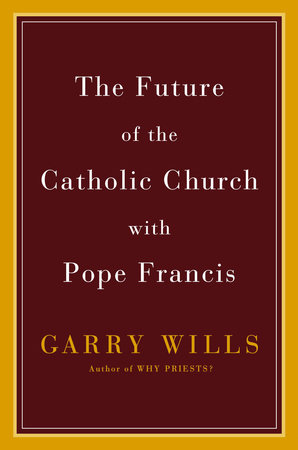
Wills, “The Future of the Catholic Church with Pope Francis”

In March, Penguin Books released “The Future of the Catholic Church with Pope Francis” by Garry Wills. The publisher’s description follows:

Pope Francis, the first Jesuit pope and the first from the Americas, offers a challenge to his church. Can he bring about significant change? Should he?

Garry Wills, the Pulitzer Prize-winning historian, argues provocatively that, in fact, the history of the church throughout is a history of change. In this brilliant and incisive study, Wills describes the deep and serious changes that have taken place in the church or are in the process of occurring. These include the change from Latin, the growth and withering of the ecclesiastical monarchy, the abandonment of biblical literalism, the assertion and nonassertion of infallibility, and the erosion of church patriarchy. In such developments we see the living church adapting itself to the new historical circumstances.

As Wills contends, it is only by examining the history of the church that we can understand Pope Francis’s and the church’s challenges.

McLarney, “Soft Force: Women in Egypt’s Islamic Awakening”

This month, Princeton University Press releases “Soft Force: Women in Egypt’s Islamic Awakening” by Ellen Anne McLarney (Duke University). This publisher’s description follows:

In the decades leading up to the Arab Spring in 2011, when Hosni Mubarak’s authoritarian regime was swept from power in Egypt, Muslim women took a leading role in developing a robust Islamist presence in the country’s public sphere. Soft Force examines the writings and activism of these women—including scholars, preachers, journalists, critics, actors, and public intellectuals—who envisioned an Islamic awakening in which women’s rights and the family, equality, and emancipation were at the center.

Challenging Western conceptions of Muslim women as being oppressed by Islam, Ellen McLarney shows how women used “soft force”—a women’s jihad characterized by nonviolent protest—to oppose secular dictatorship and articulate a public sphere that was both Islamic and democratic. McLarney draws on memoirs, political essays, sermons, newspaper articles, and other writings to explore how these women imagined the home and the family as sites of the free practice of religion in a climate where Islamists were under siege by the secular state. While they seem to reinforce women’s traditional roles in a male-dominated society, these Islamist writers also reoriented Islamist politics in domains coded as feminine, putting women at the very forefront in imagining an Islamic polity.