The Spectator on the Possible Extinction of Mideast Christianity

From The Spectator, a post about a recent panel at the National Liberal Club in London on the under-reporting of violence against Christians in the Middle East:

Some of this has been reported, but the focus has been on the violence committed against the Brotherhood. Judging by the accounts given by one of the other speakers, Nina Shea of the Center for Religious Freedom, the American press is even more blind, and their government not much better; when Mubarak was overthrown one US agency assessed the Muslim Brotherhood as being ‘essentially secular’. . . .

Without a state (and army) of their own, minorities are merely leaseholders. The question is whether we can do anything to prevent extinction, and whether British foreign policy can be directed towards helping Christian interests rather than, as currently seems to be the case, the Saudis.

Read the whole thing.

Lugato on Religious Associations in European Law

Monica Lugato (LUMSA-Rome) has posted a new article, National Policy Towards Religious Associations within the Framework of European Law, on SSRN. The abstract follows:

The article discusses the current status of policy towards religion as a national competence within the framework of European law. It submits on the one hand that, in the present stage of European integration, core decisions concerning the public dealing with religion and religious communities are inherently a national policy domain. However, because religion is at the same time an element of the Member States’ national identities, one of the sources of the founding values of the European Union and a fundamental freedom both nationally, internationally and within EU law, the scope of such inalienable policy domain is shaped, through an on-going process, not only by national law implementing national policy choices on religion, but also by EU law aimed at preserving national identities and the identity and specific contribution of religious (and philosophical and non-confessional organizations) associations, as they have historically and culturally developed within the national States, while at the same time safeguarding the EU framework on fundamental freedoms and fundamental rights; and, finally, by international rules on freedom of religion limiting Member States’ and the EU’s freedom in the same area.

Adhar on Secularism

Rex Adhar (University of Otago, New Zealand) has published an article, “Is Secularism Neutral?”, in this month’s edition of Ratio Juris (subscription required). The abstract follows:

This article argues that secularism is not neutral. Secularization is a process, the secular state is a structure, whereas secularism is a political philosophy. Secularism takes two main forms: first, a “benevolent” secularism that endeavours to treat all religious and nonreligious belief systems even-handedly, and, second, a “hostile” kind that privileges unbelief and excludes religion from the public sphere. I analyze the European Court of Human Rights decision in Lautsi v Italy, which illustrates these types. The article concludes that secularism as a political philosophy cannot be neutral, and the secular state is not neutral in its effects, standpoint, governing assumptions or treatment of religious truth claims.

A Non-Political Pope?

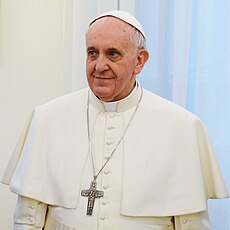
You can’t tell too much from one interview, of course, but the interview Pope Francis gave an Italian Jesuit journal last month, and which was released last week, seems like a blockbuster. Everyone understands this. Progressive Catholics are elated. After long years in the wilderness, they believe, they have one of their own as pope. Traditionalists have been more circumspect, but it’s hard to miss the sense of alienation. Traditionalists are used to thinking that, however much they have to battle with progressives at the local level, the pope has their back. Now, that’s very unclear.

As an outsider, I don’t feel right getting involved in intra-Catholic debates. There’s too much I don’t know, and anyway it’s not polite. But this interview does suggest three observations. First, Pope Francis has a definite vision for the Catholic Church. When he gave his airborne interview on the way back from Brazil last month–the interview in which he famously said, “who am I to judge?”–some traditionalists consoled themselves that he had spoken off the cuff or allowed himself to be misunderstood. After this interview, it’s impossible to think so. He knows what he means and means what he says.

Second, I’m not sure the pope is correct to suggest that the Church has been obsessing over sexuality–abortion, gay marriage, contraception. Catholic friends tell me they almost never hear sermons on these subjects. One might say, with justification, that the wider society is obsessing about these issues and the Church is only responding. If the government adopts a new rule that says you must pay for your employees’ contraceptives and abortifacients, and you think such drugs are gravely wrong as a matter of conscience, what should you do? I suppose you could readjust your priorities and say nothing. But if you were to object to such a rule, you would hardly be “obsessing.”

Third, it’s striking that in a long interview the pope said virtually nothing about politics. Only twice did he refer to the Church’s position on public policy questions, once to state that the Church should stop talking so much about sexuality and once to refer to the proper approach to “social issues”:

When it comes to social issues, it is one thing to have a meeting to study the problem of drugs in a slum neighborhood and quite another thing to go there, live there and understand the problem from the inside and study it. There is a brilliant letter by Father Arrupe to the Centers for Social Research and Action on poverty, in which he says clearly that one cannot speak of poverty if one does not experience poverty, with a direct connection to the places in which there is poverty. The word insertion is dangerous because some religious have taken it as a fad, and disasters have occurred because of a lack of discernment. But it is truly important.

Note a couple of things here. For Pope Francis, the phrase “social issues” connotes what Americans would call “economic issues”–an interesting distinction. More important, to address these issues, Pope Francis did not call for political action. He did not say, “When it comes to social issues, the important thing is to redistribute wealth and nationalize health care.” He may favor such programs, I don’t know. But he apparently does not think political programs are terribly important. The essential thing is for the Church to live among poor people, to share their lives, to minister to them–in order to witness to the Gospel. 

In other words, Pope Francis’s interview does not suggest he would like the Catholic Church to adopt a “progressive” politics any more than a “conservative” politics. It suggests he thinks the Church is beyond politics. To me, this is the key take-away from the pope’s interview. There is an old, old debate in Christianity. Is the faith about healing souls or social justice? It’s about both, of course, but which is more important? If I read him correctly, Pope Francis leans strongly in the first direction: Christianity is an interior matter, a question of salvation, of walking humbly in the company of the Lord and his followers. Christians can never be completely beyond politics, of course, and it will be interesting to see how this all develops. But Pope Francis seems, in his way, a mystic. And mystics don’t do politics. 

Law and Politics Review of The Tragedy of Religious Freedom

One more TRF item this morning–a review in the Law and Politics Book Review by political scientist Jesse Merriam. Here’s the conclusion, which both gives a sense of Professor Merriam’s (important) criticisms of the book and contains a little nice stuff too:

If DeGirolami truly is going to provide a middle-ground theory, one in which both theory and conflict can co-exist, we need to know more precisely how history and precedent can guide us. The reader will likely find that DeGirolami does not satisfy this standard. Nevertheless, DeGirolami does provide an important service in probing and pushing us closer to this understanding. And something that must be emphasized here is that he performs this service with a clarity, elegance, and intellectual depth surpassing almost every work in this field. TRAGEDY OF RELIGIOUS FREEDOM is an excellent starting point for a discussion of how to arbitrate the principled conflict underlying church-state adjudication, and in starting this discussion DeGirolami does an exquisite job of defending his approach. For these reasons, it is not only an important but also an immensely enjoyable book to read.

Liberty Fund Podcast on The Tragedy of Religious Freedom

I’m grateful to Richard Reinsch of the excellent Law and Liberty blog (a project of The Liberty Fund) for discussing The Tragedy of Religious Freedom with me. If you are not familiar with the resources available at the Liberty Fund, you should check them out. I use their extensive on-line library all the time and they have many interesting essays, book reviews, and posts.

The Top Five New Law & Religion Papers on SSRN

From SSRN’s list of most frequently downloaded law and religion papers posted in the last 60 days, here are the current top five. Since last week, Douglas Laycock remains at #1, Perry Dane remains at #2, Zoe Robinson joins the list at #3, replacing Elizabeth Sepper, Richard Garnett remains at #4, and Christopher C. Lund joins the list at #5, replacing Patrick McKinley Brennan.

1. Religious Liberty and the Culture Wars by Douglas Laycock (U. of Virginia, School of Law) [271 downloads]

2. Doctrine and Deep Structure in the Contraception Mandate Debate by Perry Dane (Rutgers, School of Law) [236 downloads]

3. What is a ‘Religious Institution’? by Zoe Robinson (Depaul University College of Law) [236 downloads]

4. ‘The Freedom of the Church’: (Towards) an Exposition, Translation, and Defense by Richard W. Garnett (Notre Dame Law School) [138 downloads]

5. Church Autonomy Reconceived: The Logic and Limits of Hosanna-Tabor by Christopher C. Lund (Wayne State University-School of Law) [82 downloads]

Penslar, “Jews and the Military: A History”

This month, Princeton University Press published Jews and the Military: A History by Derek J. Penslar (University of Toronto and University of Oxford).  Jews MilitaryThe publisher’s description follows.

Jews and the Military is the first comprehensive and comparative look at Jews’ involvement in the military and their attitudes toward war from the 1600s until the creation of the state of Israel in 1948. Derek Penslar shows that although Jews have often been described as people who shun the army, in fact they have frequently been willing, even eager, to do military service, and only a minuscule minority have been pacifists. Penslar demonstrates that Israel’s military ethos did not emerge from a vacuum and that long before the state’s establishment, Jews had a vested interest in military affairs.

Spanning Europe, North America, and the Middle East, Penslar discusses the myths and realities of Jewish draft dodging, how Jews reacted to facing their coreligionists in battle, the careers of Jewish officers and their reception in the Jewish community, the effects of World War I on Jewish veterans, and Jewish participation in the Spanish Civil War and World War II. Penslar culminates with a study of Israel’s War of Independence as a Jewish world war, which drew on the military expertise and financial support of a mobilized, global Jewish community. He considers how military service was a central issue in debates about Jewish emancipation and a primary indicator of the position of Jews in any given society.

Deconstructing old stereotypes, Jews and the Military radically transforms our understanding of Jews’ historic relationship to war and military power.

Mufti, “The Faithful Scribe: A Story of Islam, Pakistan, Family and War”

This month, Random House will publish The Faithful Scribe: A Story of Islam, Pakistan, Family, and War by Shahan Mufti.  The publisher’s description The Faithful Scribefollows.

Shahan Mufti’s family history, which he can trace back fourteen hundred years to the inner circle of the prophet Muhammad, offers an enlightened perspective on the mystifying history of Pakistan. Mufti uses the stories of his ancestors, many of whom served as judges and jurists in Muslim sharia courts of South Asia for many centuries, to reveal the deepest roots—real and imagined—of Islamic civilization in Pakistan.

More than a personal history, The Faithful Scribe captures the larger story of the world’s first Islamic democracy, and explains how the state that once promised to bridge Islam and the West is now threatening to crumble under historical and political pressure, and why Pakistan’s destiny matters to us all.

On Loving the City

Marc’s post yesterday about Augustine’s two cities–the earthly and heavenly–reminded me of something I read in Peter Brown’s recent book on wealth in ancient Rome. Brown argues that a decisive shift in the conception of generosity accompanied the transition from pagan to Christian society. Both pagans and Christians could be generous. But the objects of their generosity differed.

In pagan Rome, generosity meant adorning one’s city–nowadays, we would say, “country”–contributing to its stature, power, and beauty. Benefactors gave money for magnificent buildings, games, and banquets. Such generosity was understood as a form of love, the “amor civicus,” or “love for the city and its citizens.” A rich person who gave money to glorify his city, Brown writes, “was acclaimed as an amator patriae–a lover of his or her hometown. It was the most honorable love that a wealthy person could show.” A pagan benefactor would not think of looking beyond his city when making a gift. That would have been a snub to his hometown and fellow citizens. 

Christian giving was a different thing. The ideal recipients of Christian generosity were not one’s fellow citizens, who might be quite well-off, but the poor and marginalized, whether they were citizens of one’s patria or not. The point was still to give money in a way that would glorify the city. But the heavenly city, not the earthly city, was the proper object of glorification. Christian charity, Brown writes, was “a transfer of wealth from this world to the next, summed up in the notion of placing treasure in heaven.”

Obviously these are generalities; there were pagans who gave to the poor and Christians who tried to beautify Rome. But the change in focus was essential, and dramatic. From a Christian perspective, the things of this world, although important and necessary, can never be the main concern. Friends, family, home, country–of course one loves these things. Only a monster would not. But it is foolish to glorify or invest too much in them, particularly country. “For here we have no lasting city,” the author of Hebrews says, “but we are looking for the city that is to come.”

Marc began his post with a poem, so I will end with one. In Browning’s “Love Among the Ruins,” a shepherd muses over the ruins of an ancient capital, now a pasture. I’ve always imagined that Browning was talking about the ruins of the Roman Forum, which for centuries, before the archaeologists started to dig, were known as the Campo Vaccino, or cow pasture. The love that Browning describes isn’t Christian love, exactly, but it strikes me as a lot closer to that ideal than the amor civicus:

In one year they sent a million fighters forth
South and North,
And they built their gods a brazen pillar high
As the sky
Yet reserved a thousand chariots in full force—
Gold, of course.
O heart! oh blood that freezes, blood that burns!
Earth’s returns
For whole centuries of folly, noise and sin!
Shut them in,
With their triumphs and their glories and the rest!
Love is best.