McCahill, “Reviving the Eternal City: Rome and the Papal Court, 1420-1447”

This October, Harvard University Press will publish Reviving the Eternal Reviving the Eternal CityCity: Rome and the Papal Court, 1420-1447, by Elizabeth McCahill (University of             Massachusetts, Boston).  The publisher’s description follows:

In 1420, after more than one hundred years of the Avignon Exile and the Western Schism, the papal court returned to Rome, which had become depopulated, dangerous, and impoverished in the papacy’s absence.  Reviving the Eternal City examines the culture of Rome and the papal court during the    first half of the fifteenth century, a crucial transitional period before the city’s rebirth. As Elizabeth McCahill explains, during these decades Rome and the Curia were caught between conflicting realities—between the Middle Ages and the Renaissance, between conciliarism and papalism, between an image of Rome as a restored republic and a dream of the city as a papal capital.

Through the testimony of humanists’ rhetorical texts and surviving archival materials, McCahill reconstructs the niche that scholars carved for themselves as they penned vivid descriptions of Rome and offered remedies for contemporary social, economic, religious, and political problems. In addition to analyzing the humanists’ intellectual and professional program, McCahill investigates the different agendas that popes Martin V (1417–1431) and Eugenius IV (1431–1447) and their cardinals had for the post-Schism pontificate. Reviving the Eternal City illuminates an urban environment in transition and explores the ways in which curialists collaborated and competed to develop Rome’s ancient legacy into a potent cultural myth.

Clergy and Elections

For the Fourth of July, First Things has a fun post about a traditional American pastime: electioneering by clergy. “For better or worse,” Mark Tooley writes, “clergy have always been involved in U.S. politics.” It’s often for worse. Tooley writes about the presidential election of 1884, in which Democrat Grover Cleveland, the mayor of Buffalo, defeated Republican Senator James G. Blaine of Maine.

The campaign was a close and ugly one. Cleveland, seen as a crusading reformer, was revealed to have fathered an illegitimate child. Protestant pastors drummed up protests. “It is painful to think of his offenses,” wrote one, “and shameful, infinitely shameful, to have such a man commended to the suffrages of a Christian nation.” The election seemed in Blaine’s grasp.

Then, just days before the election, Blaine appeared at a rally of 500 clergy in New York City. The Rev. Samuel D. Burchard of the Thirteenth Street Presbyterian Church in Greenwich Village (top) introduced Blaine with the following words:

We are Republicans and don’t propose to leave our party and identify ourselves with the party whose antecedents have been rum, Romanism, and rebellion. We are loyal to our flag. We are loyal to you.

A little explanation may help. “Rebellion” was a reference to the Civil War, still fresh in people’s memories. “Rum,” everybody understands. And “Romanism” was a reference to Roman Catholicism, which Protestants saw, like Southern secession, as anti-American. Democratic-leaning newspapers gleefully broadcast the remark throughout the state. Offended Catholics went for Cleveland. Estimates are that Burchard cost Blaine 50,000 Catholic votes in New York. In a razor-tight race, that probably gave Cleveland the election; he won New York by 1200 votes, which put him over the top in the electoral college.

Blaine complained, understandably, that Burchard was a fool. For his own part, Burchard defended his remark as a clever alliteration. It is memorable, after all.

Happy Independence Day!

Guminski, et al., “Religious Freedom: Did Vatican II Contradict Traditional Catholic Doctrine? A Debate”

41YF0TZwanL._SY346_This past April, St. Augustine’s Press published Religious Freedom: Did Vatican II Contradict Traditional Catholic Doctrine? A Debate by Arnold T. Guminski and Father Brian W. Harrison (Pontifical Catholic U. of Puerto Rico). The publisher’s description follows.

One of the gravest and most divisive issues confronting the Catholic Church in recent decades – a major factor in an ongoing institutionalized rupture between Rome and at least half a million traditionalist Catholics – is the question of whether Vatican II’s Declaration Dignitatis Humanae can be reconciled with traditional Church doctrine on religious liberty.

In this spirited exchange of essays on a topic central to our understanding of justice and human rights, Arnold Guminski and Fr. Brian Harrison debate this difficult question. Guminski argues that DH teaches that there is (and always has been) a natural right not to be prevented from publicly propagating or manifesting non-Catholic religions, subject to the exigencies of a just public order, which is to be understood as not presupposing the truth of natural or any positive religion (including Catholicism), or any supernatural considerations. Harrison disagrees. In his view, DH nowhere teaches that it is always and everywhere unjust for civil authorities to presuppose the truth of Roman Catholicism in determining what restrictions a just public order allows.

According to Harrison, the central innovative feature of DH is its clearly implied prudential policy judgment, or norm of ecclesiastical public law, to the effect that in the modern world – so very different from the old Christendom – repression of the public propagation or manifestation of non-Catholic religions as such can no longer be justified by the requirements of the common good. Harrison argues that precisely because this undeniable reversal of the Church’s previous position belongs in the category of changeable prudential judgments, it does not constitute a doctrinal rupture with Catholic tradition. Guminski, on the other hand, contends that the doctrine of DH, properly understood, is inconsistent with relevant preconciliar doctrine. The latter, in his view, was never proposed definitively – i.e., infallibly.

Both authors agree to a comprehensive theory of the nature and scope of the Church’s inherent coercive power as it pertains to liberty in religious matters. They agree that this power is limited to the imposition of spiritual penalties and temporal penalties, and that the Church’s inherent coercive power nevertheless must be exercised within the limits of a just public order.

Leon, “An Image of God: The Catholic Struggle With Eugenics”

One of the most disquieting cases (in a rather rich field) for my students inAn Image of God constitutional law is Buck v. Bell (1927), in which Justice Oliver Wendell Holmes, Jr., writing for the Court, upheld Virginia’s forced sterilization law for mentally retarded persons against a 14th Amendment challenge. The influence of eugenics was powerful in the early twentieth century and that influence is reflected in perhaps the best-known line of the case: “Three generations of imbeciles are enough.” Here is a new book that discusses eugenics and Catholic resistance to it, An Image of God: The Catholic Struggle with Eugenics (University of Chicago Press 2013) by Sharon M. Leon. The publisher’s description follows.

During the first half of the twentieth century, supporters of the eugenics movement offered an image of a racially transformed America by curtailing the reproduction of “unfit” members of society. Through institutionalization, compulsory sterilization, the restriction of immigration and marriages, and other methods, eugenicists promised to improve the population—a policy agenda that was embraced by many leading intellectuals and public figures. But Catholic activists and thinkers across the United States opposed many of these measures, asserting that “every man, even a lunatic, is an image of God, not a mere animal.”

In An Image of God, Sharon Leon examines the efforts of American Catholics to thwart eugenic policies, illuminating the ways in which Catholic thought transformed the public conversation about individual rights, the role of the state, and the intersections of race, community, and family. Through an examination of the broader questions raised in this debate, Leon casts new light on major issues that remain central in American political life today: the institution of marriage, the role of government, and the separation of church and state. This is essential reading in the history of religion, science, politics, and human rights.

McCall, “The Church and the Usurers”

Next month, Catholic University Press will publish The Church and the Usurers: Unprofitable Lending for the Modern Economy, by University of Oklahoma Law Professor Brian McCall. The publisher’s description follows:
Professor McCall explains in a scholarly yet accessible manner the core principles of the usury doctrine. Tracing its history from Biblical texts, through Aristotelian philosophy and Roman law, to the great scholastic synthesis Professor McCall separates the unchanging principles from the changes in there applications to the new economic realities.

NYU to Host Conference on People v. Phillips (April 12-14)

Next weekend, the Center for Irish and Irish-American Studies at NYU will host a conference marking the bicentennial of People v. Phillips, an early freedom-of-religion case involving the priest-penitent privilege:

Religious Freedom in America, 1813 to 2013: Bicentennial Reflections on People v. Philips” is a weekend of events that marks the landmark 1813 case that is the earliest known constitutional test of freedom of religion and the priest-penitent evidentiary privilege in American law. A dynamic line-up of events will demonstrate how a trial for a petty jewelry theft escalated into an argument for religious freedom when the local priest was subpoenaed to testify what he had heard in confession.

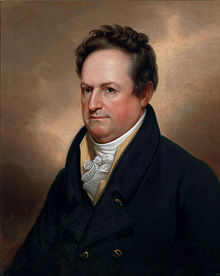
In People v. Philips, William Sampson — a banished political exile from Ireland and a Protestant — argued on behalf of the Trustees of St. Peter’s Roman Catholic Church on Barclay Street before the presiding judge, Mayor DeWitt Clinton [left]. William Sampson’s experience of religious-based intolerance in Ireland propelled him to persuade the court that America should not look to British common law for legal precedent when dealing with Catholics, then a small but growing minority in New York City.

William Sampson’s own published account of the case, The Catholic Question in America, will be presented in a staged reading adapted by Steve DiUbaldo of New York University’s Tisch School of the Arts on Friday evening, 12 April. A full-day symposium follows on Saturday, 13 April, where scholars from a wide variety of disciplines — especially law, religion, history, and politics — will comment on Sampson’s 1813 record of the trial and consider it in relation to their own understanding of contemporary issues. On Sunday morning 14 April, Green-Wood Cemetery in Brooklyn, the final resting place of lawyer William Sampson and DeWitt Clinton, will mark the 200th anniversary of the case with an encore reading of The Catholic Question and a wreath-laying ceremony.

Details are here.

Mayer, “The Roman Inquisition”

In January, the University of Pennsylvania Press published The Roman Inquisition: A Papal Bureaucracy and Its Laws in the Age of Galileo, by Augustana College history professor Thomas F. Mayer. The publisher’s description follows:

While the Spanish Inquisition has laid the greatest claim to both scholarly attention and the popular imagination, the Roman Inquisition, established in 1542 and a key instrument of papal authority, was more powerful, important, and long-lived. Founded by Paul III and originally aimed to eradicate Protestant heresy, it followed medieval antecedents but went beyond them by becoming a highly articulated centralized organ directly dependent on the pope. By the late sixteenth century the Roman Inquisition had developed its own distinctive procedures, legal process, and personnel, the congregation of cardinals and a professional staff. Its legal process grew out of the technique of inquisitio formulated by Innocent III in the early thirteenth century, it became the most precocious papal bureaucracy on the road to the first “absolutist” state.

As Thomas F. Mayer demonstrates, the Inquisition underwent constant modification as it expanded. The new institution modeled its case management and other procedures on those of another medieval ancestor, the Roman supreme court, the Rota. With unparalleled attention to archival sources and detail, Mayer portrays a highly articulated corporate bureaucracy with the pope at its head. He profiles the Cardinal Inquisitors, including those who would play a major role in Galileo’s trials, and details their social and geographical origins, their education, economic status, earlier careers in the Church, and networks of patronage. At the point this study ends, circa 1640, Pope Urban VIII had made the Roman Inquisition his personal instrument and dominated it to a degree none of his predecessors had approached.

Conference on Pacem in terris

The Lumen Christi Institute in Chicago will host a symposium on April 4, “Pacem in terris After 50 Years,” on the important Vatican II document:

On April 11, 1963, amid the global tensions of the Cold War, and shortly after the erection of the Berlin Wall, Pope John XXIII addressed his famous encyclical Pacem in terris to all people of good will. He invites them to consider the conditions for establishing universal peace on earth in truth, justice, charity, and liberty. On the 50th Anniversary of this event, this symposium will examine the affirmations of Pacem in terris as they bear on human rights, religious freedom, and the international political and economic order today.

Speakers include Mary Ann Glendon, Russ Hittinger, and Joseph Weiler. Details are here.

Bernardini on Religious Liberty in the Catholic-Muslim Dialogue

Paola Bernardini (Pontifical U. St. Thomas Aquinas, Rome) has posted Religious Liberty: A Common Challenge for Catholic-Muslim Dialogue. The abstract follows.

Comparing the struggles of the Church on the subject of religious liberty with those in course of progress within Islam may be conducive to greater interreligious understanding. It is not by chance that Muslim and Christian scholars have adopted this approach on more than one occasion. Even Pope Benedict XVI, speaking to the Roman Curia at the end of 2006, seemed to implicitly acknowledge this fact when he stated that “the Muslim world today finds itself facing an extremely urgent task . . . very similar to the one . . . imposed upon Christians beginning in the age of the Enlightenment”: namely the task of recognizing the freedom of faith and finding appropriate solutions in this regard. Starting from this presumption, the present paper will be divided mainly into two parts. Part I will briefly illustrate the positions of the Church before and after the Second Vatican Council. Part II will delve into the positions of some modern Islamic Organizations, countries, and scholars on the civil right to religious freedom.