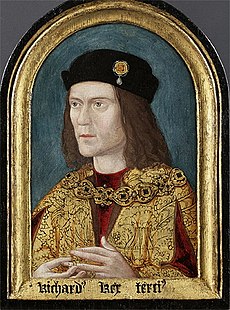
Religious Division and Identity – Richard III and the Rest of Us – Part II

Thanks again to Mark and Marc for inviting me to guest blog this month.  I hope to use this opportunity to think about a range of questions, and also introduce a bit of my own work.

Back in August, I posted Part I of some mediations on religious division prompted by the minor kerfuffle over whether the newly-discovered remains of Richard III should be reinterred in a Catholic or an Anglican ceremony.  That post looked at the question from a bit of a theological lens. I want now to say a bit about the same problem from the perspectives of history.  (I’ll have one or two more parts to this discussion, so stay tuned.)

So let’s go back to our test case: Was Richard III a “Catholic” in the modern sense of the word that would exclude his membership in the “Church of England”?  For that matter, is the contemporary Church of England in some meaningful sense Catholic and not merely catholic?

Historians, I think, would resist these questions from the get-go. For one thing, they would want to be more contextual and specific.  There is no one answer to the religious identity of either Richard III or the contemporary Church of England.  Are we talking about formal belief structures, lived spiritual premises, personal devotion, liturgical practices, institutional relations, personal networks, political allegiances, or something else?  How does the civil war that Richard fought and lost figure into the equation, if at all?  What about the radically different technology of the time, with its implications for travel and communication?  What about the long, complex, and often violent history of relations between King and clergy that long predated Henry VIII’s split from Rome?  How would Richard III himself have understood the question?  Would he have understood it?

For that matter, historians might find the question too essentialist to begin with.  Yes, categories such as “Catholic” are real and important.  But time is change.  Richard III could not be “Catholic” in the sense we understand the term because nobody in his time – before the Reformation, the Enlightenment, England’s split from Rome, the rise of secularism, and for that matter the advent of modern forms of communication and transportation – was “Catholic” in the sense we understand the term.

All this interests me, not because I’m a historian, but because the question of historical consciousness (and its limits) strikes me as deeply important to all sorts of other puzzles and challenges I’ll be taking up this month.

For now, though, I will leave to the next post or two some thoughts about the possible further theological implications of what I’ve just said about history to the fate of poor Richard III and about how law (this is a law blog, after all) fits into all this, both specifically and more generally.

Conference: The Lateran Pacts and the Jews (Oct. 24-25)

On October 24-25 in New York, the Centro Primo Levi, the NYU Casa Italiana Zerilli Marim, and the Museum of Tolerance will co-sponsor a conference, “The Lateran Pacts, the Rights of Jews and Other Religious Minorities”:

In view of the upcoming 85th anniversary of the Lateran Pacts and the current debates on the position of the Church toward the Jews during Fascism and World War II, Centro Primo Levi has invited an interdisciplinary group of scholars to closely examine and discuss the legal, social, political and economic aspects of this redefinition of the relations between Church and State in Italy and in totalitarian Europe.
The conference will offer an overview of the Lateran Pacts, the background of negotiations between Mussolini and Pius XI as well as an analysis of the ways the Pacts affected Italian society, the rights of minorities vis-à-vis family law, education, public moral, protection of minority rights, with a particular focus on the subsequent re-organization of the Jewish communities. Scholars will present new research on the changes to the civil and penal codes brought about by the Pacts, as well as the reforms of key public institution that became necessary in order to make them compatible with a state religion.

Looks interesting. Details are here.

A Non-Political Pope?

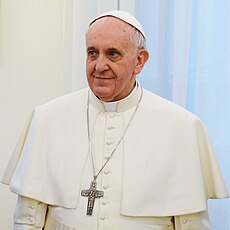
You can’t tell too much from one interview, of course, but the interview Pope Francis gave an Italian Jesuit journal last month, and which was released last week, seems like a blockbuster. Everyone understands this. Progressive Catholics are elated. After long years in the wilderness, they believe, they have one of their own as pope. Traditionalists have been more circumspect, but it’s hard to miss the sense of alienation. Traditionalists are used to thinking that, however much they have to battle with progressives at the local level, the pope has their back. Now, that’s very unclear.

As an outsider, I don’t feel right getting involved in intra-Catholic debates. There’s too much I don’t know, and anyway it’s not polite. But this interview does suggest three observations. First, Pope Francis has a definite vision for the Catholic Church. When he gave his airborne interview on the way back from Brazil last month–the interview in which he famously said, “who am I to judge?”–some traditionalists consoled themselves that he had spoken off the cuff or allowed himself to be misunderstood. After this interview, it’s impossible to think so. He knows what he means and means what he says.

Second, I’m not sure the pope is correct to suggest that the Church has been obsessing over sexuality–abortion, gay marriage, contraception. Catholic friends tell me they almost never hear sermons on these subjects. One might say, with justification, that the wider society is obsessing about these issues and the Church is only responding. If the government adopts a new rule that says you must pay for your employees’ contraceptives and abortifacients, and you think such drugs are gravely wrong as a matter of conscience, what should you do? I suppose you could readjust your priorities and say nothing. But if you were to object to such a rule, you would hardly be “obsessing.”

Third, it’s striking that in a long interview the pope said virtually nothing about politics. Only twice did he refer to the Church’s position on public policy questions, once to state that the Church should stop talking so much about sexuality and once to refer to the proper approach to “social issues”:

When it comes to social issues, it is one thing to have a meeting to study the problem of drugs in a slum neighborhood and quite another thing to go there, live there and understand the problem from the inside and study it. There is a brilliant letter by Father Arrupe to the Centers for Social Research and Action on poverty, in which he says clearly that one cannot speak of poverty if one does not experience poverty, with a direct connection to the places in which there is poverty. The word insertion is dangerous because some religious have taken it as a fad, and disasters have occurred because of a lack of discernment. But it is truly important.

Note a couple of things here. For Pope Francis, the phrase “social issues” connotes what Americans would call “economic issues”–an interesting distinction. More important, to address these issues, Pope Francis did not call for political action. He did not say, “When it comes to social issues, the important thing is to redistribute wealth and nationalize health care.” He may favor such programs, I don’t know. But he apparently does not think political programs are terribly important. The essential thing is for the Church to live among poor people, to share their lives, to minister to them–in order to witness to the Gospel. 

In other words, Pope Francis’s interview does not suggest he would like the Catholic Church to adopt a “progressive” politics any more than a “conservative” politics. It suggests he thinks the Church is beyond politics. To me, this is the key take-away from the pope’s interview. There is an old, old debate in Christianity. Is the faith about healing souls or social justice? It’s about both, of course, but which is more important? If I read him correctly, Pope Francis leans strongly in the first direction: Christianity is an interior matter, a question of salvation, of walking humbly in the company of the Lord and his followers. Christians can never be completely beyond politics, of course, and it will be interesting to see how this all develops. But Pope Francis seems, in his way, a mystic. And mystics don’t do politics. 

Tocqueville on Pantheism: Part I

We have seen that Tocqueville believes that the dominant American faith, Ralph Waldo EmersonProtestantism, will tend to decompose. The process of dissolution will occur in two phases. In the first, Protestantism (or more accurately, Calvinism) will tend to become a form of natural religion, such as he believed he had encountered in Unitarianism. This movement will take place chiefly among American élites; working class American Protestants, he believes, will be increasingly drawn to Catholicism. In the second phase, Unitarianism or natural religion will itself tend to become what he calls “pantheism.” These movements are traced out, albeit in very summary and schematic form, in Vol. II, Pt. I, chh. 6-7 of Democracy in America, dealing, respectively, with Catholicism and pantheism. In a powerful and illuminating study, Peter Lawlor has described these as two of the “least studied and strangest chapters” of Democracy in America. See Peter Augustine Lawlor, Tocqueville on Pantheism, Materialism, and Catholicism, 30 Perspectives on Political Science 218 (2001).
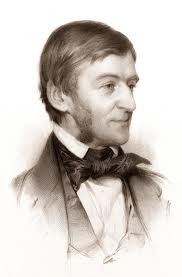
Tocqueville’s notions may seem very wayward and idiosyncratic to us. After Walt Whitmanall, contemporary America is neither predominantly Catholic nor predominantly pantheistic. Nonetheless, when examined more closely, Tocqueville’s analysis is full of interest and even, remarkably, of current applicability.

The “decline” of Protestantism

Since the 1960s, there has been vigorous and ongoing debate over whether American Protestantism – or at any rate “mainstream” Protestantism – is dead or dying. See, e.g., Stanley Hauerwas, The end of American Protestantism (July 2, 2013), available at http://www.abc.net.au/religion/articles/2013/07/02/3794561.htm. Equally, the question whether American Catholicism has become, or is becoming, a form of Protestantism also provokes current controversy. (Tocqueville himself had noted the tendency of American Catholicism to be less dogmatic and less ritualized than French Catholicism.) Neither of these interesting issues can detain us here. What is more relevant to our purpose is why Tocqueville should have thought that Protestantism would decline, and whether the evidence from the period in which he wrote might have supported the prediction that it would turn into something radically different from traditional Christianity.

Bossuet

Tocqueville could certainly have derived his thesis from reading the work of the great eighteenth century French Catholic theologian, historian and apologist, Jacques-Bénigne Bossuet, the Bishop of Meaux and the tutor of Louis XIV’s eldest child, the Dauphin of France. Probably the greatest work by the prolific Bossuet was his History of the Variations of the Protestant Churches (1688; English trans. 1836). Bossuet’s History is a massively learned account of what the author sees as the steady fragmentation of the main branches of Protestantism into different and discordant sects. We know that Tocqueville had studied this work. In his letter of November 15, 1835 to Gustave Beaumont, he says that after finishing reading Machiavelli’s History of Florence, I turned to Bossuet’s Variations. Finding the “distance” between Machiavelli and Bossuet “great,” he writes that “I had never looked at [the Variations] so closely, and I cannot tell you how much I admired its content, and even more perhaps, its form. It is truly a magnificent and powerful arrangement.” Selected Letters 112. In thinking that Protestantism was bound to disintegrate, Tocqueville was very possibly adopting, if quietly, the polemical case that Bossuet had made for that proposition.

Tocqueville seems to have drawn on Bossuet in the places in Democracy in America in which he connects the growth of democracy with Divine Providence. For instance, in Vol. I, Pt. ii, ch. 17 of Democracy, entitled “A Few Sources of Poetry in Democratic Nations,” he writes that in egalitarian ages, as “each man . . . begins to perceive humanity itself, God reveals himself more and more to the human mind in his full and complete majesty . . . Observing the human race as a single entity, men find it easy to imagine that the same plan rules its destiny and they are inclined to perceive, in the actions of any individual, the trace of that universal and consistent design by which God guides our race.” Bevan trans. 563-64. Likewise, in his Introduction to Part I, Tocqueville speaks of the “gradual unfurling of equality in social conditions” as “a providential fact which reflects its principal characteristics: it is universal, it is lasting and it constantly eludes human interference; its development is served equally by every event and every human being.” Id. at 15. In such passages, Tocqueville is echoing another of Bossuet’s works, the Discourse on Universal History (1681), which he had also read. (For a fuller treatment of providentialism in Democracy, which downplays the influence of Bossuet, see David A. Selby, Tocqueville’s politics of providence: Pascal, Jansenism and the author’s introduction to Democracy in America, 33 The Tocqueville Review 167 (2012)).

Rousseau

It is also possible that Tocqueville formulated his thesis about Protestantism on the basis of reading Rousseau. After the publication of The Vicar of Savoy (on which see posting Tocqueville on Protestantism and Natural Religion: Part II), Rousseau was compelled to defend his views against the Protestant authorities of his native city of Geneva, who accused him of undermining the Reformed religion. Rousseau defended himself in a series of lengthy pieces called Letters Written from the Mountain (1764). In the second of these Letters, Rousseau identifies what he considers to be the “two fundamental points of the Reform,” and contends that his writings fully comply with both. Collected Writings of Rousseau, vol. 9 at 154. These two core principles are “to acknowledge the Bible as the rule of one’s belief, and not to admit any other interpreter of the Bible than oneself.” Id. To this he adds: “Combined, these two points form the principle on which the Reformed Christians separated from the Roman Church, and they could not do any less without falling into contradiction; for what interpretive authority could they have reserved to themselves, after having rejected that of the body of the Church?” Id.

To make the Bible the sole rule for deciding questions of faith and practice appears to be adopting a common standard of truth that transcends any individual opinion; but to take the principle of private judgment to mean that each believer is the final judge for himself or herself of the Bible’s meaning is to abandon the idea of a common authority.

Read more
Lynn, “Between Court and Confessional: The Politics of Spanish Inquisitors”

Last month, Cambridge published Between Court and Confessional: The Politics of9781107031166 Spanish Inquisitors by Kimberly Lynn (Western Washington University). The publisher’s description follows.

Between Court and Confessional explores the lives of Spanish inquisitors, closely examining the careers and writings of five sixteenth- and seventeenth-century inquisitors. Kimberly Lynn considers what shaped particular inquisitors, what kinds of official experience each accumulated, and to what ends each directed his acquired knowledge and experience. The case studies examine the complex interplay of careerism and ideological commitments evident in inquisitorial activities. Whereas many studies of the Spanish Inquisition tend to depict inquisitors as faceless and interchangeable, Lynn probes the lives of individual inquisitors to show how inquisitors’ operations in their social, political, religious, and intellectual worlds set the Inquisition in motion. By focusing on specific individuals, this study explains how the theory and regulations of the Inquisition were rooted in local conditions, particular disputes, and individual experiences.

Religious Division and Identity – Richard III and the Rest of Us – Part I

Thanks to Mark Movsesian for inviting me to guest blog here.  I’ll mainly be posting in October, but here’s a down payment inspired by Mark’s entry about the decision to re-inter the recently-discovered remains of King Richard III in Leicester’s Anglican Cathedral rather than give him a Catholic burial.  The Catholic bishop of Nottingham  has approved the plan, and Mark’s post was appropriately relaxed, even tongue-in-cheek, about the whole thing.  But some Catholic commentators are genuinely upset.  They argue that Richard was Catholic, not Anglican, and deserves a Catholic ceremony.  They insist that, for that matter, the Anglican Church didn’t even exist when Richard died.

Fights over long-dead bodies, famous or not, are often both religiously fraught and emotional.  Consider the efforts of American Indian tribes, bolstered by the Native American Graves Protection and Repatriation Act (NAGPRA) of 1990, to reclaim remains that have ended up in museum collections.  But they can also implicate deeper issues about religious identity and continuity — questions that end up involving theology, history, and law.  For example, are prehistoric remains, such as those of Kenwick Man, genuinely the patrimony of modern native tribes?  The Court of Appeals for the Ninth Circuit famously said no.

Back to Richard III, though.  Many Anglicans would deny that Richard III was “Catholic” in the limited contemporary sense of the word that would exclude his membership in the “Church of England.”  The simple reason is that Anglicans claim a direct line back from their Church to the Church to which Richard belonged.  As the COE’s website puts it, “The roots of the Church of England go back to the time of the Roman Empire when Christianity entered the Roman province of Britain. Through the influences of St Alban, St Illtud, St Ninian, St Patrick and, later, St Augustine, St Aidan and St Cuthbert, the Church of England developed, acknowledging the authority of the Pope until the Reformation in the 16th century.”  Thus, Henry VIII might have split the English Church from Rome, but he did not create it anew.  To be sure, Catholics have a different view. But neither position is self-evident by sheer definition.

Read more

No Catholic Burial for Richard III

I imagine some of our readers already know this, but here’s a follow up on a story we covered earlier this year. In February, archaeologists confirmed that they had discovered the remains of King Richard III beneath a parking lot in Leicester. Richard died in battle at Bosworth Field in August 1485; the Tudor victors gave him a rather unceremonious burial in what was then a local abbey. Richard will now be re-interred in Leicester’s Anglican cathedral, most likely next May. Back in February, some Catholics objected that Richard, who was Catholic, should by rights be buried in a Catholic ceremony in a Catholic sanctuary. According to the Law and Religion UK blog, however, the Catholic Church in the UK will not insist. The Catholic Bishop of Nottingham states:

The Bishop is pleased that the body of King Richard III has been found under the site of Greyfriars Church in Leicester, in which it was buried following the Battle of Bosworth in 1485, and that it will be reinterred with dignity in the city where he has lain for over five hundred years. Richard III was one of the last Catholic monarchs of England and his death was a decisive moment in British history, but the ultimate decision as to what form the interment takes lies with the Government and the Church of England, since he will be buried in Leicester Cathedral. In accordance with long-established ecumenical practice, Bishop Malcolm will be happy to take part in any form of ceremony which takes place to mark his final burial.

A little hard to follow, but the meaning seems to be, as the government has already decided to bury Richard in the Church of England, the government can also decide on the ceremony. So that’s that. The event will surely be less tense than Richard’s coronation. But will they serve strawberries at the reception?

Karraker, “Diversity and the Common Good: Civil Society, Religion, and Catholic Sisters in a Small City”

This July, Lexington Books published Diversity and the Common Good: Civil Society, Religion, and Catholic Sisters in a Small City, by Meg Wilkes Karraker (University of St. Thomas). The publisher’s description follows.

Diversity and the Common Good: Civil Society, Religion, and Catholic Sisters in a Small city examines how Catholic Sisters and their congregations have been critical nodes in religious and civil networks, translating their social capital to address one of the most pressing issues facing communities today: diversity. The book begins with a regional overview, placing “Bluffton” in historical, cultural, and social context in America’s heartland before describing past racist incidents in the city and region, including cross-burnings and a raid by Immigration Control and Enforcement (ICE). Into this history are woven interviews with Catholic sisters and Catholic, Protestant, and Jewish religious leaders, as well as civic leaders in education, government, journalism, and social welfare. “Bluffton” is revealed as a community that has confronted and resolved a past stained by overt racism of the ugliest kind, and has created a good society for her citizens through the concerted efforts of her Catholic Sisters and a highly committed civil society.

Blending original quantitative and qualitative research collected over three years, as well as scholarship on civil society, Diversity and the Common Good tells the story of one small city in the Midwestern United States in the second decade of the twenty-first century. The work is well grounded in the academic literature and includes an extensive bibliography, but is written in a narrative style that engages not only scholars from sociology, community studies, political science, public administration, and religious studies who study community, civil society, and faith, but also practitioners and professionals, among them community leaders, journalists, those working with civic and religious organizations, and others seeking to understand the challenges facing American communities today. Unusual in social science, Diversity and the Common Good tells the story about a community that “works!” Finally, given the severe criticisms of American Sisters by the Vatican, the story of the great good done by Sisters must be told now.