Tocqueville on Religion and the Limits of the Political Imagination

In my last post, I argued that despite the existence of important areas of agreement, Tocqueville rejected (what he took to be) Machiavellianism because he found that it left the ruler “capable of doing anything.” For Tocqueville, it appeared, there were certain inviolable moral limits to political action. Without such limits, Tocqueville feared, a society’s liberty would be lost. The question thus arises: how did Tocqueville think that such limits were to be defined and enforced?

The most obvious answer would seem to be: through religion. Indeed, by restraining political leaders and democratic peoples from pursuing certain courses of action, Tocqueville argues, religion performs one of its greatest services for human society. This is especially so in a democracy, for whose vitality religious beliefs are “more necessary” than they are in other systems. Democracy in America at 632 (Bevan trans.).

Tocqueville’s thinking on this point seems to have deepened in the five years that separated the publication of Part I of Democracy (1835) and Part II (1840). In a passage in Part I, he suggested that religion and morality usually regulated political action effectively in America, even when a democratic majority supported such action. He wrote (id. at 465; emphasis added):

Republicans in the United States value customs, respect beliefs, recognize rights. They hold the view that a nation must be moral, religious, and moderate in proportion as it is free. What is called a republic in the United States is the quiet rule of the majority, which is the communal source of power once it has had the time to acknowledge and confirm its existence. But the majority is not all-powerful. Above it, in the world of moral issues, lie humanity, justice, and reason; in the world of politics lie rights acquired. The majority acknowledges both these limits. . . .

If the majority should ever fail to observe such moral and political limits, Tocqueville says, “it is because, like any individual, it has its passions and . . . it can act badly even though it knows what is good.” Id. The American people, in other words, may, in episodic fits of “passion,” suffer from weakness of will; but “know[ing] what is good,” it will eventually correct itself.

In Part II of Democracy (published in 1840), Tocqueville offered a more penetrating analysis. Here he argues that the strength and pervasiveness of Christianity in America ensure that the American people and their leaders will observe certain defined moral limits. Christianity operates to set bounds to the moral imagination, so that certain courses of action become literally Read more
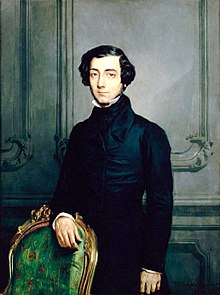
Tocqueville and Machiavellianism

Alexis de Tocqueville

In my last post, I discussed Tocqueville’s personal religious opinions. Here I extend that discussion by considering his relationship to Machiavellianism.

Few theorists have emphasized the usefulness of religious belief for government and society as strongly as Tocqueville. Yet, if the interpretation of his private views that I sketched out in my previous post is correct, it would seem unlikely that Tocqueville was an advocate of a purely “civil religion.” To be more precise: Tocqueville did not advocate the “Machiavellian” position that the “magistrate” ought to inculcate religion in the “populace” because of its social utility, even while disbelieving it himself.

There are at least three ways by which Tocqueville reached this conclusion: through logic, through personal observation and through the study of history.

The Illogic of the Utilitarian Case for Religion

First, it would have been especially difficult to have advocated this “Machiavellian” policy for America. In the United States, the sovereign “People,” which Tocqueville described as acting “in the American political world like God over the universe,” see Democracy in America at 71 (Bevan trans.), was itself at once magistrate and populace. Hence, to have any chance of being effective, the policy would have required collective self-deception on a mass scale. (Note, however, that one of Tocqueville’s subtlest and most profound interpreters seems to think that this was indeed Tocqueville’s view. See Pierre Manent, Tocqueville and the Nature of Democracy 92 (John Waggoner trans. 1996)).

Furthermore, if the American public generally accepted religion solely for its utilitarian consequences, then its faith would be unable to produce the desired effects: religion can only serve social utility if the public generally believes it to be true. Just as a placebo will do good only if the patient believes that it is a medicine and not a placebo, so religious belief will promote public welfare only Read more

Tocqueville’s Faith

To begin with, I would like to express my gratitude to Marc DeGirolami and Mark Movsesian for inviting me to write this month for the Center for Law and Religion Forum.

What I propose to do over the course of the month is to post a series of short essays dealing with the great French nineteenth century thinker Alexis de Tocqueville.  Specifically, I shall aim to discuss a set of questions arising from his work that concern the relationships between Church and State in the United States and France.  These are well-studied subjects, to be sure. But I hope to have some new things to say.   Moreover, although my primary interest here will be historical and exegetical, I will also consider the application of Tocqueville’s ideas to contemporary matters.

I need hardly stress that Tocqueville remains a thinker of lasting influence and importance.  He plays a prominent role, e.g., in the Harvard historian Niall Ferguson’s recent book, The Great Degeneration:  How Institutions Decay and Economies Die (2013).  Other significant works on contemporary society and culture bear the impress of Tocqueville’s thought, including Robert Putnam’s Bowling Alone:  The Collapse and Revival of American Community (2001) and Habits of the Heart:  Individualism and Commitment in American Life (original edition 1985) by Robert N. Bellah (whose death Mark Movsesian noted in this forum this week) and Bellah’s associates.   (Indeed, the title of the last of these books encapsulates a phrase of Tocqueville’s.)   But however valuable Tocqueville remains as a student of culture and society, his thinking pivots on religion and its varied relationships to political regimes.  He was, he wrote, “convinced . . . that man’s true grandeur lies only in the harmony of the liberal sentiment and religious sentiment, both working simultaneously to animate and restrain souls,” and he noted that he had worked “for thirty years . . . to bring about this harmony.”  (Letter to Claude-François de Corcelle, September 17, 1853, in Alexis de Tocqueville, Selected Letters on Politics and Society 295 (Roger Boesche (ed.) 1985)).   The power, depth and complexity of Tocqueville’s analyses of the relationships between the “liberal” and the “religious” sentiments repay close and repeated study.

Tocqueville was the intellectual heir to both the Enlightenment and Christianity.  In a sense, his entire work can be understood as a dialogue between these two traditions in his mind.  In a letter of October 10, 1836 to his life-long friend Count Louis de Kergolay, he writes that he is passing part of each day reading “three men, Pascal, Montesquieu and Rousseau.”   The choice of these three writers is revealing:  Tocqueville’s interest in Pascal reflects the Christian (and Jansenist) side of his mind; Rousseau and Montesquieu speak for the Enlightenment side.  No less revealing is the fact that Tocqueville does not name any figures from the radical French Enlightenment, such as Diderot or D’Holbach.  He appears to have had little acquaintance with or interest in their ideas.  Rather, he turns to Montesquieu, the leading figure in the moderate Enlightenment, and Rousseau who, though a revolutionary figure, can be considered to represent the counter-Enlightenment.  (For the distinction between “radical” and moderate” Enlightenments, see Jonathan Israel, A Revolution of the Mind:  Radical Enlightenment and the Origins of Modern Democracy (2011)).

Tocqueville’s Deconversion

Before turning to the particular questions that will concern us in later posts, it will be useful to consider Tocqueville’s personal religious beliefs.  These rarely appear in his published works.  But we can infer them from his manner of living and from his extensive Read more

Thanks, Claudia!

An active and verbal  thanks to Claudia Haupt for blogging with us here at CLR Forum these past few weeks. We’ve very much enjoyed having you with us, Claudia. Come back soon!

Worth A Thousand Words

In my last post, I discussed the question of attribution of messages. Today, I want to turn to the perception of messages, in particular, the visual perception of religious symbols. We all know the saying that a picture is worth a thousand words. Does it make sense, then, for courts to distinguish between the textual and the visual, and to consider the latter less troublesome than the former?

Let me start with the European Court of Human Rights (ECtHR) Grand Chamber decision in the Italian classroom crucifix case, Lautsi v. Italy. The Italian government argued “[w]hatever the evocative power of an ‘image’ might be . . . it was a ‘passive symbol’, whose impact on individuals was not comparable with the impact of ‘active conduct’.” Referencing an earlier decision of the German Federal Constitutional Court, the applicants conversely argued “[a]s to the assertion that it was merely a ‘passive symbol’, this ignored the fact that like all symbols—and more than all others—it gave material form to a cognitive, intuitive and emotional reality which went beyond the immediately perceptible.”

The Grand Chamber explicitly addressed the active/passive distinction, stating that “a crucifix on a wall is an essentially passive symbol and this point is of importance in the Court’s view, particularly having regard to the principle of neutrality. It cannot be deemed to have an influence on pupils comparable to that of didactic speech or participation in religious activities.” Several concurring opinions also addressed the designation of the crucifix as a “passive” symbol. The concurring opinion of Judge Power agrees with the majority’s assessment of the crucifix as a passive symbol “insofar as the symbol’s passivity is not in any way coercive,” but her assessment is more nuanced. She “concede[s] that, in principle, symbols (whether religious, cultural or otherwise) are carriers of meaning. They may be silent but they may, nevertheless, speak volumes without, however, doing so in a coercive or in an indoctrinating manner.” In her framing, the question is not whether symbols can communicate like textual language—she asserts they can—but whether the message communicated is one that violates the negative religious freedom of the observer under the Convention.

The ECtHR is not alone in asserting that visual religious symbols are “passive”: In Lynch v. Donnelly, Chief Justice Burger said the crèche was “passive”; in Allegheny County, Justice Kennedy used the “passive” label to describe the holiday displays; Chief Justice Rehnquist said the Ten Commandments monuments (featuring text) in Van Orden v. Perry were “passive”; in his dissent in McCreary County, Justice Scalia said the Ten Commandments display was “passive”; and the lower courts use the “passive” symbols language as well.

The “passive” label is used in two ways (alternatively or cumulatively). It can be an empirical claim about the way in which visual images communicate. Passivity used in this way suggests less ability to communicate effectively than textual speech. Or “passive” is a label for a bundle of factors—including brief exposure to the symbol, a vague notion of minimal offensiveness, or other characteristics of the symbol that result in its presumed noncoerciveness. But these notions, unlike the empirical claim, go to the context and cultural meaning of the symbol. The empirical claim is false; the neuroscience of visual perception just does not work that way. The context-and-cultural-meaning claim is complex and the “passive” designation is at best an ambiguous and misleading label. Either way, courts here and abroad should stop using the “passive” label to describe religious symbols.

Thanks, Mark and Marc, for having me over!

Says Who?

Just in time for my post on symbols, the New York Times picks up the topic as well. So this is page A1 news! Of course, the underlying issue—the treatment of religious symbols in the public sphere—is hardly new. But it continues to be contested and rich and fascinating to study in comparative perspective.

Let me focus in this post on the question of attribution and the role of individual religious expression as opposed to expression of a religious viewpoint or identity by the state. The Times story opens with a Roman Catholic archbishop reminiscing about visiting Brussels and encountering there “the insistently secular bureaucracy of the European Union.” The story continues with the statement “’They let me in wearing my cross,’ the archbishop recalls.” Should he have been surprised? The story then continues with “the rude surprise” that ensued after the Commission objected to crosses on commemorative Euro coins. But should that be surprising?

None of this should be surprising to anyone accustomed to the U.S. concept of a free exercise and establishment distinction. Attribution is a central threshold question in the United States. We are very familiar with the attribution issue, because deciding whether the message is one attributable to the state or the individual determines whether the message is fully protected as a matter of free speech and free exercise or whether it is subject to Establishment Clause limits (which, by the way, does not automatically indicate a violation on the merits). When I talk about religious messages in the U.S. context, I must therefore distinguish between messages of the government and messages of individuals. (I’ve written about the intricacies of that question in the U.S. context in more detail here.)

This (from the U.S. perspective) familiar question of attribution is also gaining importance in the European context, and what makes it particularly interesting there is that we do not have this split into free exercise and nonestablishment in most systems. Take, for instance, the European Convention on Human Rights. The Convention itself contains no Establishment Clause-type provision. But in the case law of the European Court of Human Rights (ECtHR) an interesting development is occurring. Article 9 contains the Convention’s religious freedom provision. In Article 9(2) we find the limitations clause (also a typical feature of continental constitutions). It states: “Freedom to manifest one’s religion or beliefs shall be subject only to such limitations as are prescribed by law and are necessary in a democratic society in the interests of public safety, for the protection of public order, health or morals, or for the protection of the rights and freedoms of others.”

As I’ve discussed here, recent case law seems to be slowly developing the meaning of the limitations clause beyond the limit on individual free exercise that it originally was by focusing on the type of democratic society envisioned by the Convention. An indicator of that development is the ECtHR’s emphasis on pluralism in the sense of allowing citizens of all faiths as well as nonreligious citizens to flourish in a democratic society. And that leads to a limit to religious identification imposed on the state itself, as opposed to limit on the individual’s free exercise. In short, the clause might become a limit on the state’s identification with religion. This is where we ask the attribution question. And in a system without a distinction between free exercise and nonestablishment, the interesting point to me is that we’re now starting to ask this question in the first place.

So if we ask about attribution—a question that has not traditionally been asked in the European context precisely because those systems tend not to have an establishment clause-like provision—we ask about the state’s actions, or religious expressions, as distinct from the individual’s actions or messages. And if we set the problem up this way, we are creating a dichotomy that many European national systems do not recognize. And so I find myself wondering whether national concepts of the public sphere may be on a collision course with what the European Court of Human Rights appears to be tending toward.

Annicchino on Religious Autonomy

For our followers who read Italian, CLR Forum guest poster Pasquale Annicchino (European University Institute) has posted a comparative essay on religious autonomy in the US and Europe, The Conflict between the Autonomy of Religious Groups and Other Fundamental Rights: Recent Decisions of the U.S. Supreme Court and the European Court of Human Rights. Here’s the abstract:

The principle of autonomy of religious groups has acquired new importance in the recent decisions of the United States Supreme Court and the European Court of Human Rights. This article will analyze and compare the decisions by these two courts, with a particular focus on the circulation of legal arguments between the two different legal orders.

“A Coat of Many Colors”

In this post, I want to pick up some of the themes I alluded to in my first post and respond to Marc’s observations here and Mark’s observations here. The title of this post is from Justice Harlan’s discussion of neutrality in Bd. of Educ. v. Allen, 392 U.S. 236, 249 (1968)(Harlan, J., concurring).

Marc points out the inherent uncertainty as to the meaning of “neutrality” within each system. Indeed, I agree that there is great indeterminacy in both systems; and there are different judicial and academic interpretations. In fact, one of the premises in my book was that – even though the term is used frequently in constitutional decisions in both countries – we don’t really know enough about what neutrality means in each system. Given this uncertainty, I advocated for a contextual inquiry into the meaning in each system before turning to a comparative perspective.

The German Federal Constitutional Court offered two noteworthy interpretations of neutrality in its landmark Crucifix and Headscarf decisions. In my last post, I quoted the Crucifix decision as saying that “[t]he state, in which adherents of different or even opposing religious and ideological convictions live together, can guarantee peaceful coexistence only if it itself maintains neutrality in matters of faith.” In the Headscarf case, the court offered its most elaborate discussion of state neutrality to date, stating that

the religious and ideological neutrality required of the state is not to be understood as a  distancing attitude in the sense of a strict separation of state and church, but as an open and comprehensive one, encouraging freedom of faith equally for all beliefs. Article 4.1 and 4.2 of the Basic Law also contain a positive requirement to safeguard the space for active exercise of religious conviction and the realisation of autonomous personality in the area of ideology and religion. The state is prohibited only from exercising deliberate influence in the service of a particular political or ideological tendency or expressly or impliedly identifying itself by way of measures originated by it or attributable to it with a particular belief or a particular ideology and in this way itself endangering religious peace in a society. The principle of religious and ideological neutrality also bars the state from evaluating the faith and doctrine of a religious group as such.

So here we have an example of the court itself setting up different interpretations of neutrality. (Professor Markus Thiel – among other insightful observations – recently raised some interesting questions regarding the interpretive role of the Federal Constitutional Court in relation to academic scholarship in our exchange here.)

A quick final point about taxation, an issue raised in the comments to Mark’s post. One of the more striking features of the German system is the concept of “limping separation” that allows for certain benefits of state-recognized religious bodies – perhaps most notably from the U.S. perspective, the collection of church taxes by the state. Mark pointed out correctly that the German church tax may be avoided by resigning church membership. And, as some may remember, the German Federal Administrative Court last year addressed the question of resigning church membership (reported for example here). Moreover, under the jurisprudence of the European Court of Human Rights, while nonadherents may be taxed by an established state church for delegated state functions (such as keeping birth and death records, maintaining cemeteries or performing marriages) they may not be taxed for religious activities. I’ve written about some of those funding aspects in comparative perspective in my recent article “Transnational Nonestablishment” published in the George Washington Law Review and available online here.

And with that, I’ll leave Lautsi and symbols for next time.

If It Looks Like A Duck…?

Thanks so much, Mark, for the warm welcome! I want to use my time here to write about some comparative issues in law & religion.

A growing body of literature in comparative constitutional law discusses themes of constitutional convergence. Do constitutional provisions converge across legal regimes? Do international human rights norms cause them to do so? These and related questions are enormously rich and thought-provoking, and the literature is expanding and getting increasingly sophisticated. But another question is perhaps as interesting as the question of textual convergence: interpretive convergence. Imagine two courts charged with interpreting a functionally similar, yet textually different constitutional provision using the same term as their analytical basis. Does that indicate convergence?

Here is the context in which I have addressed this question. The German Federal Constitutional Court and the U.S. Supreme Court both use the language of “neutrality” in their respective interpretations of constitutional provisions concerning religion-state relations. It’s interesting that we have two constitutional regimes, with constitutional provisions that say “Congress shall make no law respecting an establishment of religion” and “there shall be no state church” respectively—neither of which, incidentally, mentions the word “neutrality”—and two courts interpreting these provisions and finding an underlying requirement of state neutrality.

Two examples: the U.S. Supreme Court in McCreary County (quoting Epperson) has this to say about neutrality: “The touchstone of Establishment Clause jurisprudence is the requirement of governmental neutrality between religion and religion, and between religion and nonreligion.” In the Classroom Crucifix Case, the German Federal Constitutional Court found that “[t]he state, in which adherents of different or even opposing religious and ideological convictions live together, can guarantee peaceful coexistence only if it itself maintains neutrality in matters of faith.”

From a comparative perspective, it might be tempting to assume that the courts say the same thing about the relationship between church and state, because they are both using the term neutrality.  But we have to look beneath the surface. The meaning of neutrality Read more

Thanks, Dan, and Welcome, Claudia

Thanks so much to Dan Crane, who has blogged with us for the past few weeks. Dan’s posts were thoughtful and provocative, in the best sense of that word: they provoked reflection. We’ve greatly enjoyed having you with us, Dan, and hope you’ll come back soon.

In June, our guest will be Claudia Haupt, an Associate in Law at Columbia. She has a law degree and a PhD from the University of Cologne and an American LLM from George Washington, where she also served as Professional Lecturer in Law and International and Comparative Law Fellow. Her book, Religion-State Relations in the United States and Germany: The Quest for Neutrality, was published by Cambridge in 2012. Welcome, Claudia!