Religious Division and Identity – Richard III and the Rest of Us – Part III

In Part I of this case study of sorts, I wrote a bit about the theological complexity of debates over religious identity, as illustrated by the (very) minor fracas over whether it be somehow wrong to reinter the bones of Richard III in an Anglican rather than a Catholic ceremony.  In Part II, I asked how historians might look at the question of whether Richard was a “Catholic” in our sense of the word, or even whether they would reject the question as too vague or even meaningless.

I’ve suggested that theologians and historians will look at these sorts of problems through different lenses.  But do they also have something to say to each other?  This is a much larger question than I can try to tackle in a blog.  But I’ve been thinking a good deal about the problem of religion and history in my study of the jurisprudence of Jewish law (which I hope to discuss later this month), so let me at least throw out one tiny observation here, focusing again on Richard III.

First a distinction — between history and historical consciousness.  Historical consciousness is the distinctly modern conviction that history is not just a chronicle of events.  The past is actually a very different place than the present, and those differences are deeply bound up in specific context and assumptions and world views.  History is important to intelligent thinking about current religious belief and practice, but historical consciousness necessarily frustrates any effort to easy easy, straightforward, conclusions from that history.

So back to Richard III.  Assume for a moment that the authorities did decide to hand the King over for a Catholic funeral service.  Some Catholics of a “traditionalist” bent — the supporters of the traditional Latin Mass (one version of which Pope Benedict XVI dubbed the Extraordinary Form of the Roman Rite) — have argued that it’s not good enough for Richard III to be given a Catholic service.  As a pre-Vatican II Catholic (by many centuries), he should merit a traditional Latin requiem mass.  And, as an anointed King, he really deserves the special traditional service for the burial of a King.  That is, after all, what he would expect and want if he had a say in the matter.

The problem here is obvious, though.   Read more

Religious Division and Identity – Richard III and the Rest of Us – Part II

Thanks again to Mark and Marc for inviting me to guest blog this month.  I hope to use this opportunity to think about a range of questions, and also introduce a bit of my own work.

Back in August, I posted Part I of some mediations on religious division prompted by the minor kerfuffle over whether the newly-discovered remains of Richard III should be reinterred in a Catholic or an Anglican ceremony.  That post looked at the question from a bit of a theological lens. I want now to say a bit about the same problem from the perspectives of history.  (I’ll have one or two more parts to this discussion, so stay tuned.)

So let’s go back to our test case: Was Richard III a “Catholic” in the modern sense of the word that would exclude his membership in the “Church of England”?  For that matter, is the contemporary Church of England in some meaningful sense Catholic and not merely catholic?

Historians, I think, would resist these questions from the get-go. For one thing, they would want to be more contextual and specific.  There is no one answer to the religious identity of either Richard III or the contemporary Church of England.  Are we talking about formal belief structures, lived spiritual premises, personal devotion, liturgical practices, institutional relations, personal networks, political allegiances, or something else?  How does the civil war that Richard fought and lost figure into the equation, if at all?  What about the radically different technology of the time, with its implications for travel and communication?  What about the long, complex, and often violent history of relations between King and clergy that long predated Henry VIII’s split from Rome?  How would Richard III himself have understood the question?  Would he have understood it?

For that matter, historians might find the question too essentialist to begin with.  Yes, categories such as “Catholic” are real and important.  But time is change.  Richard III could not be “Catholic” in the sense we understand the term because nobody in his time – before the Reformation, the Enlightenment, England’s split from Rome, the rise of secularism, and for that matter the advent of modern forms of communication and transportation – was “Catholic” in the sense we understand the term.

All this interests me, not because I’m a historian, but because the question of historical consciousness (and its limits) strikes me as deeply important to all sorts of other puzzles and challenges I’ll be taking up this month.

For now, though, I will leave to the next post or two some thoughts about the possible further theological implications of what I’ve just said about history to the fate of poor Richard III and about how law (this is a law blog, after all) fits into all this, both specifically and more generally.

Welcome Back to Perry Dane

Just a reminder to our readers: Perry Dane of Rutgers-Camden (left), who blogged with us a little this summer, will join us again as a guest this fall. For the month of October, he’ll be posting some of his thoughts on law and religion right here at the Forum. We’re delighted to have him back with us and look forward to his contribution. Welcome!

Tocqueville’s America and Ours

The County Election (1852)

The “democracy” that Tocqueville observed in the United States was a pervasive social condition, not simply a matter of political or legal equality. Indeed, he opened Democracy in America by saying that “[o]f all the novel things which attracted my attention during my stay in the United States, none struck me more forcibly than the equality of social conditions.” The “extraordinary influence” of “this fundamental fact” shaped both “civil society” and “political customs and laws.” Democracy at 11.

Tocqueville is sometimes misrepresented as opposing liberty to equality. The fact is that he was a partisan of both. In the chapter immediately succeeding his analysis of soft despotism (which he called a “Continuation” of the latter), he says unequivocally that “all those who now wish to found or guarantee the independence and dignity of their fellows should show themselves friends of equality.” Preventing democracy from slipping into despotism is a question, he says, of “drawing freedom from within the democracy in which God has placed us.” Id. at 809. True, he acknowledges that “[e]quality introduces into men’s minds several tendencies which are a danger to liberty.” Id. at 813. But he holds the “firm belief” that “the dangers imposed by the principle of equality upon human independence” are “not insurmountable.” Id. at 817. Inequality, no less than equality, may pose a danger to liberty in a democracy.

Democracy and social equality

Tocqueville observed social equality everywhere in America. In a short section of Volume I of Democracy entitled “Remains of the Aristocratic Party in the United States” (Vol. I, Pt. ii, ch. 2), Tocqueville invites his readers to consider the situation of “the wealthy man,” “this opulent citizen.” “Within the four walls of his house he adores luxury; he invites only a few chosen guests.” But in public, “[h]is clothes are simple and his demeanor is modest.” When “he emerges from home to make his way to work . . . everyone is free to accost him. On the way, his shoemaker might pass by and they stop; both then begin to chat. What can they say? These two citizens are concerned with affairs of state and will not part without shaking hands.” True, the rich feel “a deep distaste” for their country’s democratic institutions, and “both fear and despise” the people. But they bow before the force of democratic social conventions. Democracy at 208-09.

Elsewhere Tocqueville describes the manner of Americans towards one another as “natural, open, and unreserved.” “In America, where privileges of birth have never existed and where wealth grants no particular right to its owner, strangers readily congregate in the same places and find neither danger nor advantage in telling each other freely what they think . . . . [T]here is practically nothing that they expect or fear from each other and they make no more effort to reveal than to conceal their social position.” Id. at 656.

Fishtown and Belmont

It would be unrealistic to think of America in such terms nowadays. Consider Charles Murray’s recent work, Coming Apart: The State of White America, 1960-2010 (2012). Murray argues that America is “coming apart at the seams – not seams of race or ethnicity, but of class” (id. at 12). The white working class, he contends, has become estranged from the nation’s “founding virtues” of “industriousness, honesty, marriage, and religiosity” (id. at 131). Basing his Read more

Tocqueville on Pantheism: Part II

Tocqueville thinks that democracy tends toward a metaphysics of pantheism, and urges noble natures living in a democracy to resist that tendency fiercely. Pantheism is suited to democracy because it captures democracy’s ambivalences. Pantheism both deifies and trivializes the human person. It equates the individual ego with the universe, but also shrinks the ego to an infinitesimal point. It exalts individuality, but also merges it into the totality of things. Pantheism liberates by announcing that the realm of possibility is unlimited, but oppresses by subjecting all things to necessity. It denies original sin, thus opening endless vistas for human action, but it also denies human agency, thus making action impossible.

Perhaps that is why Tocqueville followed his chapter on pantheism with another short chapter entitled “How Equality Suggests to Americans the Idea of the Perfectibility of Man” (Democracy in America, Vol. II, Pt. I, ch. 8) (Bevan trans.). If man is at least latently divine, why should he not strive fully to realize that divinity — that is, to perfect himself? If original sin does not foredoom our pursuit of perfection to failure, then why not pursue perfection in earnest? Only aristocratic societies believe that the human situation is inherently tragic and that human history cannot finally be transcended. Democratic societies believe on the contrary that “man can improve throughout all time” and that human history reaches “the end of the long path human beings have to tread.” Democracy at 523.

Tocqueville recounts that he asked an American sailor “why his country’s vessels are constructed to last for so short a time.” The sailor answered unhesitatingly that “the art of navigation is making such rapid progress that the finest ship would soon outlive its usefulness if it extended its life for more than a few years.” From this casual remark, Tocqueville “glimpse[d] the general and systematic idea by which a great nation directs its every action.” Id.

As often in Tocqueville, the same cause is held to produce contrary effects. As we saw in the last posting, pantheism produces the beliefs that human individuals are mere ripples on the surface of an infinite ocean, that human action is without lasting consequences, and that the proper attitude to nature is to disturb its eternal order as little as possible. But pantheism also produces the belief that nature is endlessly malleable in our hands, that we should ceaselessly remake and exploit it to serve human ends, and that humanity itself can and should be refashioned to overcome the limits that nature appears to have set for it. In our world, technological rationality in the form of genetic engineering, the continuous effort to modify and improve crops, animals and human embryos, and the search for a cure, not merely for disease, but also for death, are as much a consequence of pantheism as the deep ecology movement is.

In his chapter on pantheism, Tocqueville tells us that he “later” describe how that metaphysical system has “a parallel in politics.” Democracy at 520. We shall soon consider that political parallel, which is democratic “despotism.” But first, let us consider a possible source of, or influence on, Tocqueville’s view of pantheism.

Henri Louis Charles Maret

Henri Louis Charles Maret was a Catholic priest (later bishop) and theologian, born in 1805 (also the year of Tocqueville’s birth). He became a Professor on the Theology faculty at the Sorbonne in 1841, and Dean of that faculty in 1853. He was associated with French liberal Catholics, most importantly the Abbé Hugues Félicité de Lammenais and the circle of like-minded Catholics involved Read more

Tocqueville on Pantheism: Part I

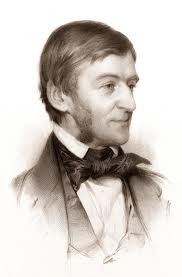
We have seen that Tocqueville believes that the dominant American faith, Ralph Waldo EmersonProtestantism, will tend to decompose. The process of dissolution will occur in two phases. In the first, Protestantism (or more accurately, Calvinism) will tend to become a form of natural religion, such as he believed he had encountered in Unitarianism. This movement will take place chiefly among American élites; working class American Protestants, he believes, will be increasingly drawn to Catholicism. In the second phase, Unitarianism or natural religion will itself tend to become what he calls “pantheism.” These movements are traced out, albeit in very summary and schematic form, in Vol. II, Pt. I, chh. 6-7 of Democracy in America, dealing, respectively, with Catholicism and pantheism. In a powerful and illuminating study, Peter Lawlor has described these as two of the “least studied and strangest chapters” of Democracy in America. See Peter Augustine Lawlor, Tocqueville on Pantheism, Materialism, and Catholicism, 30 Perspectives on Political Science 218 (2001).
Tocqueville’s notions may seem very wayward and idiosyncratic to us. After Walt Whitmanall, contemporary America is neither predominantly Catholic nor predominantly pantheistic. Nonetheless, when examined more closely, Tocqueville’s analysis is full of interest and even, remarkably, of current applicability.

The “decline” of Protestantism

Since the 1960s, there has been vigorous and ongoing debate over whether American Protestantism – or at any rate “mainstream” Protestantism – is dead or dying. See, e.g., Stanley Hauerwas, The end of American Protestantism (July 2, 2013), available at http://www.abc.net.au/religion/articles/2013/07/02/3794561.htm. Equally, the question whether American Catholicism has become, or is becoming, a form of Protestantism also provokes current controversy. (Tocqueville himself had noted the tendency of American Catholicism to be less dogmatic and less ritualized than French Catholicism.) Neither of these interesting issues can detain us here. What is more relevant to our purpose is why Tocqueville should have thought that Protestantism would decline, and whether the evidence from the period in which he wrote might have supported the prediction that it would turn into something radically different from traditional Christianity.

Bossuet

Tocqueville could certainly have derived his thesis from reading the work of the great eighteenth century French Catholic theologian, historian and apologist, Jacques-Bénigne Bossuet, the Bishop of Meaux and the tutor of Louis XIV’s eldest child, the Dauphin of France. Probably the greatest work by the prolific Bossuet was his History of the Variations of the Protestant Churches (1688; English trans. 1836). Bossuet’s History is a massively learned account of what the author sees as the steady fragmentation of the main branches of Protestantism into different and discordant sects. We know that Tocqueville had studied this work. In his letter of November 15, 1835 to Gustave Beaumont, he says that after finishing reading Machiavelli’s History of Florence, I turned to Bossuet’s Variations. Finding the “distance” between Machiavelli and Bossuet “great,” he writes that “I had never looked at [the Variations] so closely, and I cannot tell you how much I admired its content, and even more perhaps, its form. It is truly a magnificent and powerful arrangement.” Selected Letters 112. In thinking that Protestantism was bound to disintegrate, Tocqueville was very possibly adopting, if quietly, the polemical case that Bossuet had made for that proposition.

Tocqueville seems to have drawn on Bossuet in the places in Democracy in America in which he connects the growth of democracy with Divine Providence. For instance, in Vol. I, Pt. ii, ch. 17 of Democracy, entitled “A Few Sources of Poetry in Democratic Nations,” he writes that in egalitarian ages, as “each man . . . begins to perceive humanity itself, God reveals himself more and more to the human mind in his full and complete majesty . . . Observing the human race as a single entity, men find it easy to imagine that the same plan rules its destiny and they are inclined to perceive, in the actions of any individual, the trace of that universal and consistent design by which God guides our race.” Bevan trans. 563-64. Likewise, in his Introduction to Part I, Tocqueville speaks of the “gradual unfurling of equality in social conditions” as “a providential fact which reflects its principal characteristics: it is universal, it is lasting and it constantly eludes human interference; its development is served equally by every event and every human being.” Id. at 15. In such passages, Tocqueville is echoing another of Bossuet’s works, the Discourse on Universal History (1681), which he had also read. (For a fuller treatment of providentialism in Democracy, which downplays the influence of Bossuet, see David A. Selby, Tocqueville’s politics of providence: Pascal, Jansenism and the author’s introduction to Democracy in America, 33 The Tocqueville Review 167 (2012)).

Rousseau

It is also possible that Tocqueville formulated his thesis about Protestantism on the basis of reading Rousseau. After the publication of The Vicar of Savoy (on which see posting Tocqueville on Protestantism and Natural Religion: Part II), Rousseau was compelled to defend his views against the Protestant authorities of his native city of Geneva, who accused him of undermining the Reformed religion. Rousseau defended himself in a series of lengthy pieces called Letters Written from the Mountain (1764). In the second of these Letters, Rousseau identifies what he considers to be the “two fundamental points of the Reform,” and contends that his writings fully comply with both. Collected Writings of Rousseau, vol. 9 at 154. These two core principles are “to acknowledge the Bible as the rule of one’s belief, and not to admit any other interpreter of the Bible than oneself.” Id. To this he adds: “Combined, these two points form the principle on which the Reformed Christians separated from the Roman Church, and they could not do any less without falling into contradiction; for what interpretive authority could they have reserved to themselves, after having rejected that of the body of the Church?” Id.

To make the Bible the sole rule for deciding questions of faith and practice appears to be adopting a common standard of truth that transcends any individual opinion; but to take the principle of private judgment to mean that each believer is the final judge for himself or herself of the Bible’s meaning is to abandon the idea of a common authority.

Read more

Tocqueville on Protestantism and Natural Religion: Part II

Rousseau: “The Savoyard Vicar”

In my last post, I introduced the subject of Tocqueville’s views on natural religion. As we shall see, Tocqueville believed that Protestantism had an inherent tendency to collapse into natural religion, and indeed that its transmutation into something very distinct from traditional Christianity might not cease there. Because of Tocqueville’s insistence on the importance of religion to American democracy, the transformation or decline of American Protestantism would be, from his perspective, a momentous development.

One of the main sources of Tocqueville’s understanding of natural religion, I argued last time, was likely to have been Montesquieu. We reviewed Montesquieu’s thought on that subject in his epistolary novel, The Persian Letters. A second likely influence on Tocqueville’s understanding of natural religion is Rousseau’s Profession of Faith of a Savoyard Vicar (1783), which forms a section of Rousseau’s novel, Emile.

Although Tocqueville is silent on the matter, I believe that the Savoyard Vicar exercised a lasting and extensive influence on Tocqueville’s thinking, and I would even conjecture that reading this very work precipitated the shattering crisis of belief that Tocqueville underwent in his father’s library in Metz when he was sixteen.

The Savoyard Vicar is a complex and many-layered work, and I cannot pretend to do anything like full justice to it here. Its complexity stems, in part, from the ambiguity of Rousseau’s intentions in writing it. Although Rousseau’s critics, then and later, found nothing, or almost nothing, of Christian doctrine or sentiment in it, Rousseau himself contended vehemently that the work to provide a more secure foundation for revealed religion, above all Protestantism, that would make it more attractive to his contemporaries. See Robert Derathe, “Jean-Jacques Rousseau et le Christianisme,” in 53 Revue de Métaphysique et de Morale, 375, 381-85, 410-14 (1948). (As noted in my last post, Rousseau’s hostility towards Roman Catholicism was unremitting.) Furthermore, the work can be read both to extend the Enlightenment’s scathing critique of Christianity and at the same time to point towards a post-Enlightenment return to Christianity. See Arthur M. Melzer, “The Origin of the Counter-Enlightenment: Rousseau and the New Religion of Sincerity,” 90 American Political Science Review 344 (1996).

The Savoyard Vicar consists chiefly in a lengthy discourse delivered by a Catholic priest (the Vicar) to a young man identified in the story as Rousseau himself in his twenties. The discourse is divided into two parts of unequal length, marked by a short intervention by the young Rousseau. In the first and longer discourse, the Vicar discusses natural religion; the second and shorter speech concerns revealed religion. Rousseau later explained that the “more important” first part was “intended to combat modern materialism, to establish the existence of God and natural religion” and “contains what is truly essential to Religion,” while the second part “raises doubts and difficulties about revelation in general” and is designed to make believers “more circumspect.” J.-J. Rousseau, Letter to Christophe Beaumont, Archbishop of Paris (1763), in The Collected Writings of Rousseau, vol. 9 at 75 (Christopher Kelly and Eve Grace eds. 2001). In the break between the two parts, the young Rousseau exclaims that during the Vicar’s speech, “I imagined myself attending to the divine Orpheus singing his hymns and teaching mankind the worship of the g Read more

Tocqueville on Protestantism and Natural Religion: Part I

To this point, we have seen that Tocqueville believes that religion is necessary to the well-being of society, and especially to market democracies. Since the religious sentiment is natural to human beings, religion should flourish when it does not lend itself to exploitation by the State. But the natural tendency toward religious belief is weakened or even overcome by a competing passion for wealth. Because American democracy celebrates and encourages the pursuit of wealth, our democracy exerts a ceaseless, grinding pressure that gradually wears down our religion. Thus, American democracy has a built-in disposition to destroy a necessary condition of its own existence. To guard against that, Tocqueville urges American leaders and opinion-makers to surround religion with their protection – without, however, enmeshing it in the State. If they are wise, they will understand that our religion is “the most valuable bequest from aristocratic times.” Democracy in America at 633 (Bevan trans.). “It is vital that all those who are involved in the future of democratic societies unite together and . . . diffuse throughout these societies the taste for the infinite, the appreciation of greatness, and the love of spiritual pleasures.” Id. at 632.

But what, exactly, are the doctrines of the “religion” that Tocqueville considers necessary for the proper functioning of American democracy? Granted, America in the period of his visit was overwhelmingly a Protestant Christian nation, and would surely remain so for the foreseeable future. But Tocqueville does not contend that American democracy depended on the vitality of Protestantism. Instead, in an important chapter entitled “How Religious Belief Sometimes Diverts the Thoughts of Americans Toward Spiritual Pleasures,” he argues that “[t]he belief in a spiritual and immortal principle united for a time with matter is . . . indispensable to man’s greatness.” Id. at 633. That is, he appears at first to argue that a prevalent belief in one religious doctrine — the immortality of the human soul — is the irreducible minimum required for a healthy democracy. He does not, however, mention here any other doctrine that is characteristic of Christianity, Protestant or other, even the existence of God.

Furthermore, when read closely, Tocqueville does not even insist on the belief in immortality, as Christianity has traditionally taught it. Rather, he indicates that the belief which he considers necessary need not extend to “the idea of rewards and punishments” after bodily death, nor even that the “divine principle” that survives death be understood as personal: it would suffice if most citizens believe that that the soul was “absorbed in God or transformed to bring life to some other creature.” Id. Thus, he says that it is better for citizens to believe in transmigration, “believing that their souls will pass into the body of a pig,” than for them to think that “their soul is nothing at all.” Id. Finally, he concludes with an observation that seems intended for his more perceptive readers: “It is doubtful whether Socrates and his school had very definite opinions upon what was to happen in the afterlife.” Id. Instead, “Platonic philosophy” simply teaches the “one belief” that “the soul has nothing in common with the body and would survive it.” Id. The prevalence of that “one belief,” which does not even amount to the idea of personal immortality, is the indispensable prerequisite for a vital democracy.

Tocqueville thus does not teach that Christianity, or any other form of revealed religion, is absolutely indispensable for democracy. Indeed, he does not even say that democracy cannot function well unless belief in natural religion in its entirety is widespread. Rather, at least in this place, he reduces the indispensable minimum to something even less demanding than natural religion as that was generally understood – i.e., to the “one belief” that he associates with Platonic philosophy. All he contends for, in other words, is an extremely thin belief that amounts to little more than the rejection of philosophical materialism, i.e., of the metaphysical position that he associates with the dominance of the drive for physical pleasure and wealth. Nonetheless, some religious, or at least metaphysical, belief must be widely held in order to ensure against political calamity.

In order to understand his thinking fully, we need to start with the idea of “natural religion.” What did Tocqueville think constituted natural religion, and from what sources did he acquire that idea? We will see that a large and important body of French thought underlies the brief and enigmatic remarks cited above from Democracy.

The doctrines of natural religion

In his marvelous account of the origins of Unitarianism in America, Conrad Wright distilled the essence of “natural religion” down to three essentials: “the existence of God, the obligations of piety and benevolence, and a future state of rewards and punishments.” Conrad Wright, The Beginnings of Unitarianism in America 140 (1955). The chief points of natural religion were understood to be discoverable by Read more

Religious Division and Identity – Richard III and the Rest of Us – Part I

Thanks to Mark Movsesian for inviting me to guest blog here.  I’ll mainly be posting in October, but here’s a down payment inspired by Mark’s entry about the decision to re-inter the recently-discovered remains of King Richard III in Leicester’s Anglican Cathedral rather than give him a Catholic burial.  The Catholic bishop of Nottingham  has approved the plan, and Mark’s post was appropriately relaxed, even tongue-in-cheek, about the whole thing.  But some Catholic commentators are genuinely upset.  They argue that Richard was Catholic, not Anglican, and deserves a Catholic ceremony.  They insist that, for that matter, the Anglican Church didn’t even exist when Richard died.

Fights over long-dead bodies, famous or not, are often both religiously fraught and emotional.  Consider the efforts of American Indian tribes, bolstered by the Native American Graves Protection and Repatriation Act (NAGPRA) of 1990, to reclaim remains that have ended up in museum collections.  But they can also implicate deeper issues about religious identity and continuity — questions that end up involving theology, history, and law.  For example, are prehistoric remains, such as those of Kenwick Man, genuinely the patrimony of modern native tribes?  The Court of Appeals for the Ninth Circuit famously said no.

Back to Richard III, though.  Many Anglicans would deny that Richard III was “Catholic” in the limited contemporary sense of the word that would exclude his membership in the “Church of England.”  The simple reason is that Anglicans claim a direct line back from their Church to the Church to which Richard belonged.  As the COE’s website puts it, “The roots of the Church of England go back to the time of the Roman Empire when Christianity entered the Roman province of Britain. Through the influences of St Alban, St Illtud, St Ninian, St Patrick and, later, St Augustine, St Aidan and St Cuthbert, the Church of England developed, acknowledging the authority of the Pope until the Reformation in the 16th century.”  Thus, Henry VIII might have split the English Church from Rome, but he did not create it anew.  To be sure, Catholics have a different view. But neither position is self-evident by sheer definition.

Read more

Welcome to Perry Dane

We’d like to welcome Professor Perry Dane (Rutgers-Camden), who will be posting with us as a guest here at CLR Forum. Perry has written landmark articles on choice of law, religion and law, the jurisprudence of Jewish law, legal pluralism, and jurisdiction. In fact, his recent piece on the contraception mandate appears at #1 on this week’s Top Five List. He’s also a member of religiousleftlaw blog. Perry will be joining us later in the fall, but will get a head start with one or two posts this month. Welcome, Perry!