Some thoughts of mine on Justice Scalia at Commonweal. A bit from the end that is connected with our Tradition Project:
His optimism is perhaps nowhere more evident than in his Establishment Clause opinions, which express his appreciation for the traditions of the American accommodation of law and religion, and his hopeful expectation that American people would maintain, cherish, and be sustained by that inheritance. That optimism underlies much of his jurisprudence. In constitutional law, he believed that tradition is itself an independently powerfully reason in the law’s interpretation. That emphasis on American tradition led him to the view (often expressed in dissent) that “acknowledgement of the contribution that religion has made to our Nation’s legal and governmental heritage” is permissible under the Establishment Clause.
In my judgment, he was largely correct about this. Even more, however, Scalia was convinced that the American tradition of public religion—public prayer, for example—was a uniting force of civic fellowship. Hearing a public prayer in a tradition different from one’s own, he argued in his Lee v. Weisman dissent, would not lead to public discord, but to greater harmony, mutual understanding, and even civic “affection.” How old-fashioned this view seems amid today’s cacophony of demands for validation based on identity or interest group.
Yet it is in his free-exercise jurisprudence that Scalia’s optimism in the commonplace American character was tested and stretched to the breaking point. His seminal contribution was Employment Division v. Smith, where the Court held that a neutral law of general application did not implicate the Free Exercise Clause even if the law had the effect of burdening religion. Many critics of Smith (I am one) miss that what may first appear as a hard and parsimonious rule for religious freedom is closely coupled in Scalia’s opinion with a deep faith and optimism that people, acting through their legislatures, would do right by their religious brethren, would be magnanimous and charitable toward them whenever they could be:
Values that are protected against government interference through enshrinement in the Bill of Rights are not thereby banished from the political process. Just as a society that believes in the negative protection accorded to the press by the First Amendment is likely to enact laws that affirmatively foster the dissemination of the printed word, so also a society that believes in the negative protection accorded to religious belief can be expected to be solicitous of that value in its legislation as well.
Scalia was determinedly sanguine in his opinions about American solicitude for religion. Religious liberty and tolerant good will could never be eradicated from the core spirit and innate generosity of the American people. The people might go astray; they might make mistakes. But in the long run and in the main, the best and most secure outcomes for religious freedom will reflect popular negotiations rather than Court-imposed “solutions.”
So sanguine was he that even as late as 2012, Scalia—a deeply faithful and committed Catholic—could obdurately persist in telling John Allen in an interview that “if the bishops want an exception from the law [in this case the contraception mandate in Obamacare], they should try to get it through the democratic process…. Americans are very generous about accommodating religious beliefs.” The Congress that passed the Religious Freedom Restoration Act in 1993 was more pessimistic in its long-term assessment of the character of the American people. Alas, it was probably more accurate as well.
In fact, one may wonder whether Justice Scalia’s faith in the American people in the long run will be rewarded. Certainly he must have had his doubts. Especially toward the end, he must have known and regretted that his “wins” were so “damn few.” So they were, and so, perhaps, they will be. But to Scalia’s great credit, those doubts and regrets never appeared in his written opinions. And over the truly long run, optimism is not so bad a bet.
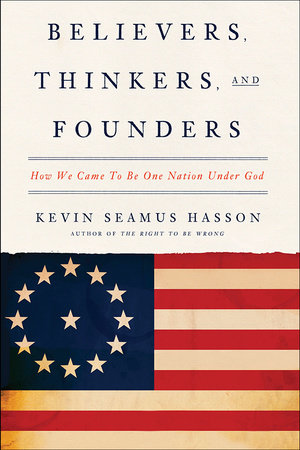 Under God, Kevin Seamus Hasson—founder and president emeritus of the Becket Fund for Religious liberty—offers a refreshing resolution to the age-old dispute surrounding the relationship of religion and state: a return to first principles.
 magazine, Charlie Hebdo, in Paris, opened fire and killed twelve people, including a Muslim policeman, in the deadliest terrorist attack on France for 50 years. We live in a time of suspicion and fear, not least because religion has returned to the centre stage of collective memories in Europe and in the United States. Amidst claims of threats to national identities in an era of increasing diversity, should we be worried about the upsurge in religious animosity in the United States, as well as Europe? Paola Mattei and Andrew Aguilar show that French society is divided along conflicts about religious identity, increasingly visible in public schools. Republicanism, based on the solidarity and secularism, is viewed by many as the cause of discrimination and unfairness against minority groups. Policies invoking laïcité are frequently criticised as a disguised form of Islamophobia. Secular Institutions, Islam, and Education Policy suggests, on the contrary, that secularism in France is a flexible concept, translated into contradictory policy programmes, and subject to varying political interpretations. This book presents original data showing how schools have become, once again, a central theatre of political action and public engagement regarding laicité, an ideal grounded in the republican origins of the public education system in France.
 their own form of Christianity, Pentecostalism, shaped by their various cultures and religious worlds. At the heart of Annalisa Butticci’s beautifully sculpted ethnography of African Pentecostalism in Italy is a paradox. Pentecostalism, traditionally one of the most Protestant of Christian faiths, is driven by the same concern as Catholicism: real presence.
 movements and doctrinal trends. While political and geographical factors certainly influenced the Islamic religious sciences, internal and intellectual factors exerted a much more substantial influence. This study gives priority to jurists’ intellectual operations throughout the Muslim world, covering the historical development of Islamic jurisprudence from the middle of 4th century. Bsoul’s examination of jurisprudential advances takes into account the shifting dominance of particular centers of legal scholarship in light of competing doctrines and their adherents. This work sheds light on jurists of North Africa and the Andalus, who are rarely mentioned in general modern works, and also aims to demonstrate Muslim women’s important role in the history of jurisprudence, highlighting their participation in the Islamic sciences. Bsoul relies mainly on Arabic primary sources to give an impartial presentation of these jurists and produce an accurate memory of the past based on objective knowledge.
![DSC_5084[1].JPG](https://i0.wp.com/lawandreligionforum.org/wp-content/uploads/2016/02/dsc_50841.jpg?resize=720%2C479&ssl=1)
 themes such as charismatic leadership, conversion and brainwashing, prophecy and millennialism, violence and suicide, gender and sexuality, legal issues, and the portrayal of New Religious Movements by the media and anti-cult organisations. Several categories of new religions receive special attention, including African new religions, Japanese new religions, Mormons, and UFO religions.