Juxtaposing Muslim scholars’ debates over women’s attendance in mosques with historical descriptions of women’s activities within Middle Eastern and North African mosques, Marion Holmes Katz shows how over the centuries legal scholars’ arguments have often reacted to rather than dictated Muslim women’s behavior.
Tracing Sunni legal positions on women in mosques from the second century of the Islamic calendar to the modern period, Katz connects shifts in scholarly terminology and argumentation to changing constructions of gender. Over time, assumptions about women’s changing behavior through the lifecycle gave way to a global preoccupation with sexual temptation, which then became the central rationale for limits on women’s mosque access. At the same time, travel narratives, biographical dictionaries, and religious polemics suggest that women’s usage of mosque space often diverged in both timing and content from the ritual models constructed by scholars. Katz demonstrates both the concrete social and political implications of Islamic legal discourse and the autonomy of women’s mosque-based activities. She also examines women’s mosque access as a trope in Western travelers’ narratives and the evolving significance of women’s mosque attendance among different Islamic currents in the twentieth century.
In August, Stanford University Press will release Faith as an Optionby Hans Joas (Humboldt University, Berlin and University of Chicago). The publisher’s description follows:
Many people these days regard religion as outdated and are unable to understand how believers can intellectually justify their faith. Nonbelievers have long assumed that progress in technology and the sciences renders religion irrelevant. Believers, in contrast, see religion as vital to society’s spiritual and moral well-being. But does modernization lead to secularization? Does secularization lead to moral decay? Sociologist Hans Joas argues that these two supposed certainties have kept scholars from serious contemporary debate and that people must put these old arguments aside in order for debate to move forward. The emergence of a “secular option” does not mean that religion must decline, but that even believers must now define their faith as one option among many.
In this book, Joas spells out some of the consequences of the abandonment of conventional assumptions for contemporary religion and develops an alternative to the cliché of an inevitable conflict between Christianity and modernity. Arguing that secularization comes in waves and stressing the increasing contingency of our worlds, he calls upon faith to articulate contemporary experiences. Churches and religious communities must take into account religious diversity, but the modern world is not a threat to Christianity or to faith in general. On the contrary, Joas says, modernity and faith can be mutually enriching.
Last spring, Boko Haram, a jihadist group fighting to establish an Islamist state in Nigeria, kidnapped hundreds of girls from a public school in the city of Chibok. The kidnapping led to a worldwide hashtag campaign, #BringBackOurGirls. Media celebrities signed up; political leaders, too, such as British Prime Minister David Cameron. American First Lady Michelle Obama famously tweeted a photo from the White House.
Three months have passed. Boko Haram has not released the girls, but the hashtag is no longer trending. The media has moved on to other stories. In fact, Boko Haram appears to miss the attention. This week, the group released a video to remind the world it’s still around.
The video features the group’s leader, Abubakar Shekau (left), ridiculing the West’s campaign to free the girls and demanding, instead, that Nigeria’s President, Goodluck Jonathan, release members of Boko Haram currently in prison. “You go around saying ‘Bring Back Our Girls,'” he mocks. “Bring Back Our Army.” For good measure, he repeats gleefully into the camera, “Kill, Kill, Kill, Kill Christians!”
The video is worth watching for a couple of reasons. First, it’s a nice lesson in the limits of social media. Feel-good hashtag campaigns, on their own, accomplish precisely nothing. To refer without irony to “the promise of the hashtag,” as a State Department spokesperson recently did in the context of the Ukraine crisis, is an embarrassment. Groups like Boko Haram will laugh off such trivialities or, indeed, co-opt them for their own purposes. So will other, more sovereign, opponents.
I don’t suggest the West should send commandos to Nigeria to free the girls, even assuming we could find them. Invading countries has a way of backfiring. In fact, we may not be capable of very much in this situation, unfortunately. But one thing’s for sure. Juvenile, self-regarding tweets–the foreign-policy version of selfies–will only make the West seem effete and, well, laughable.
Second, Shekau’s call to “Kill Christians” clarifies something important. As as a result of the Chibok kidnapping, the West sees Boko Haram as anti-women. But that’s a relatively minor part of the story. Boko Haram is not principally anti-women, but anti-Christian. The group has been carrying out atrocities against Christians for years. It’s just that the West has not found the story important. Indeed, Chibok itself is a largely Christian city, and most of the kidnapped schoolgirls are Christians. That’s a major reason why Boko Haram abducted them in the first place.
The media and Western human rights advocates have a hard time seeing Christians as sympathetic victims. Even when they acknowledge that Christians are suffering, they feel they somehow have to apologize for raising the subject. (Nicholas Kristof’s recent column for the New York Times is a good example). This bias prevents clear understanding, though. “Bring Back Our Girls?” How about, “Bring Back Our Christians?”
This month, Cambridge University Press releases Religion, Charity and Human Rights by Kerry O’Halloran (Queensland University of Technology). The publisher’s description follows:
For the first time in 400 years a number of leading common law nations have, fairly simultaneously, embarked on charity law reform leading to an encoding of key definitional matters in charity legislation. This book provides an analysis of international case law developments on the ever growing range of issues now being generated by clashes between human rights, religion and charity law. Kerry O’Halloran identifies and assesses the agenda of ‘moral imperatives’, such as abortion and gay marriage that delineate the legal interface and considers their significance for those with and those without religious belief. By assessing jurisdictional differences in the law relating to religion/human rights/charity the author provides a picture of the evolving ‘culture wars’ that now typify and differentiates societies in western nations including the USA, England and Wales, Ireland, Australia, Canada and New Zealand.
In contrast with the progressive dilution of religions predicted by traditional liberal and Marxist approaches, religions remain important for many people, even in Europe, the most secularised continent. In the context of increasingly culturally diverse societies, this calls for a reinterpretation of the secular legacy of the Enlightenment and also for an updating of democratic institutions.
This book focuses on a central question: are the classical secularist arrangements well equipped to tackle the challenge of fast-growing religious pluralism? Or should we move to new post-secular arrangements when dealing with pluralism in Europe? Offering an interdisciplinary approach that combines political theory and legal analysis, the authors tackle two interrelated facets of this controversial question. They begin by exploring the theoretical perspective, asking what post-secularism is and looking at its relation to secularism. The practical consequences of this debate are then examined, focusing on case-law through four empirical case studies.
This book will be of interest to students and scholars of political theory, philosophy, religion and politics, European law, human rights, legal theory and socio-legal studies.
On July 22, Routledge Publishing will release State and Religion in the Arab World, by Khair El-Din Haseeb (Centre for Arab Unity Studies). The publisher’s description follows:
This collection focuses on the controversial relationship between religion and the state within the Arab Spring context and the evolving debates on democratic transition. In this book, democracy is not questionable; it is hailed by all those vocal on the political scene. The array of opinions presented here varies from a call for a secular state based on Islamic philosophy to a call for setting democratic institutions before working on solving this religion-state dichotomy. Meanwhile some prefer to have an ambiguous stand on which side to back up, the liberals or the Islamists, despite a detailed criticism of the ossified ways of those calling for a religious state (Al-Majd). The book starts with an analysis and a detailed account of how the sensitive issue of the relationship between state and religion developed in Arab though and society and it goes on to employ less the religious discourse in presenting their positions thus focusing on actual cases of this struggle for power in different Arab countries such as Tunisia and Egypt. The collection also provides insights and analysis of the ongoing debates and views on the role of religion in Libya and provides an analysis of the case of Morocco. In addition to this there is a special chapter that deals with how Muslim communities living in the West adapt to secular state politics. The collection ends with a thorough discussion by a number of Arab intellectuals and activists, Muslims and Christians alike, whereby core issues related to the debate on state and religion are presented. This discussion, in addition to reflecting the Islamist-secular dichotomy, demonstrates the richness of the ongoing debates that extend well beyond the discourse on this dichotomy.
This book is a compilation of articles published in Contemporary Arab Affairs.
First Amendment scholar Steven Shiffrin has a typically thoughtful post on the Hobby Lobby decision. Part of what makes the post so good is that it follows from Steve’s own longstanding and (to me) persuasive criticisms of the extraordinary lengths to which we are prepared to recognize rights of free speech. Parenthetically, the last time I checked, Steve is not particularly well-known for his dyed-in-the-wool conservatism. But setting aside that rather tedious ideological point, it is quite striking to see the expansive interpretation of the rights of speech (whatever the source–constitutional or statutory) in conjunction with what critics of decisions like Hobby Lobby argue should be a narrowing of the rights of religious freedom. Steven goes through a few of the issues, but among the best parts of Steve’s post is the following:
I am puzzled by the selective tolerance of secular liberals. These liberals are prepared to protect speech involving depictions of animal cruelty, gruesomely violent video games sold to children, and the intentional infliction of emotional distress at military funerals. They would also agree that the state should not compel people to violate their conscience without substantial justification.
Although the Court’s decision in Hobby Lobby makes clear that none of the involved employees would be denied access to insurance coverage for contraceptives, most secular liberals would deny the freedom of religion claim….
Why protect those who traffic in depictions of the abuse of animals and the like, but not protect the conscience of conservative Christians?
A reader points out that today is Bastille Day, the anniversary of the French Revolution, which brought laïcité to Europe. In commemoration whereof, here is a fun quiz from NPR about the Marseillaise, an anthem that will raise the ire of all Throne-and-Altar types. I’m not naming names.
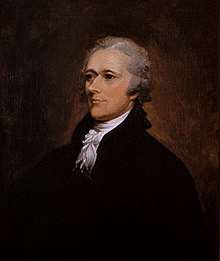
This past weekend was the 210th anniversary of the death of Alexander Hamilton in a duel with Aaron Burr. Commemorations took place around New York City–at the Weehawken, New Jersey dueling site; at Hamilton’s home in upper Manhattan, recently restored and relocated in St. Nicholas Park; and at the Morris-Jumel Mansion, where Burr, who somehow survived the scandal, later married his wealthy second wife. Commemorations conclude this afternoon with a ceremony at Hamilton’s grave in Trinity Churchyard.
Hamilton was a complicated man–brilliant, handsome, charming, visionary; but also reckless, prideful, and a schemer. He had remarkable achievements. He attended the Constitutional Convention and wrote most of the Federalist Papers, including Number 78, on the judiciary; he established the finances of the United States as first Secretary of the Treasury; he founded a nationalist, commercial conservatism that survives to this day. Although this is somewhat less known, he also wrote one of the most important texts on the place of religion in American public life.
Most people know the story of his duel with Burr, the sitting Vice President, which took place on the morning of July 11, 1804. Burr challenged Hamilton after reading some disparaging remarks Hamilton allegedly had made about him during a gubernatorial election. Hamilton could have avoided the duel, had he wanted. But he chose not to, inflaming the situation with his lawerly, evasive answers to Burr’s questions. He told friends before the duel that he did not intend to shoot Burr, and indeed his bullet that morning drifted harmlessly into the trees. Perhaps he expected Burr to act the same way. Duels often ended with both parties wasting their shots.
Some historians believe, though, that Hamilton no longer cared much about living. He was approaching 50 and his political career was over, largely as a result of his own unsuccessful machinations. “Every day proves to me more and more,” he wrote Gouverneur Morris in 1802, “that this American world was not made for me.” He was heavily in debt. And he was shattered by the death of his son, Philip, in a duel two years before–defending his father’s honor, at that same Weehawken dueling ground, with the very pistols Hamilton selected for his own duel with Burr. Did Hamilton court death that July morning? Who knows? In any event, Burr shot to kill and hit his target. Hamilton lingered for a while in agony and died, back in New York, the next day.
But about Hamilton and American religion. Even after he left the Cabinet in 1795, Hamilton continued to advise President George Washington, who was a father figure to him. As Washington’s retirement neared in 1796, he asked Hamilton for help with his Farewell Address, and Hamilton prepared a draft. The ideas were Washington’s own. But the words were Hamilton’s.
One famous section of the Farewell Address relates to the proper place of religion in public life:
Of all the dispositions and habits which lead to political prosperity, religion and morality are indispensable supports. In vain would that man claim the tribute of patriotism, who should labor to subvert these great pillars of human happiness, these firmest props of the duties of men and citizens. The mere politician, equally with the pious man, ought to respect and to cherish them. A volume could not trace all their connections with private and public felicity. Let it simply be asked: Where is the security for property, for reputation, for life, if the sense of religious obligation desert the oaths which are the instruments of investigation in courts of justice ? And let us with caution indulge the supposition that morality can be maintained without religion. Whatever may be conceded to the influence of refined education on minds of peculiar structure, reason and experience both forbid us to expect that national morality can prevail in exclusion of religious principle.
How very American this is. Note the generic reference to “religion,” as opposed to Christianity. From the beginning, American public religion has had a non-sectarian cast. Most Americans in 1796 were Christians, as most are today. Most would have understood the reference to religion to mean the Christian religion. But our public expression of religion typically avoids expressly Christian imagery. In part this reflects the Deism of many of the Founders. But it also reflects an Evangelical faith that is comfortable with biblical non-sectarianism. In America, religious conservatives demand public display of the Ten Commandments. In Europe, they demand public display of the crucifix.
Note, too, the practicality of Hamilton’s appeal. Why is religion important? Because it’s true? Because people need salvation? No–it’s because of the pragmatic benefits religion provides, benefits even the “mere politician” can understand. To work properly, republicanism requires citizens to be moral; and to be moral, citizens require religion. To be sure, every now and then, one might find an exceptional person who is moral without religion. But that can never be true for most people. And it doesn’t matter what the religion is. This, too, is very American. As a twentieth-century American president famously remarked, “Our form of government has no sense unless it is founded in a deeply felt religious faith, and I don’t care what it is.”
Hamilton’s Grave, Trinity Churchyard
Hamilton’s own faith ebbed and flowed. As a young man, he was a pious Christian. His college roommate remembers him praying every morning and evening. But he leaned toward Deism as he matured. Indeed, he appears to have been a bit of a scoffer. When someone asked him why the Constitution failed to mention God, he famously joked, “We forgot.” Later in life, though, he appears to have returned to his boyhood Christianity, dismayed, as many American conservatives were, by the anti-Christianity of the French Revolution. Two years before he died, he proposed a Christian Constitutional Society to counter Jacobinism in the United States. Perhaps he was thinking as a “mere politician.” But on his deathbed, he requested, and received, Communion.
In recent years the European Union has begun to explicitly affirm a foreign policy role for freedom of religion or belief (FoRB). The initial reaction to this trend among many scholars and policy analysts has largely been that of caution—if not outright skepticism—regarding the practical import of the changes. However there are signs of continuing momentum. While the EU’s record thus far does not yet reflect a fully comprehensive strategy for integrating FoRB into its broader agenda for promoting deep democracy, it has been able to enlarge the role of FoRB in its external action on a step-by-step basis.


 Rights