Seales, “The Secular Spectacle: Performing Religion in a Southern Town”

Next month, Oxford will publish The Secular Spectacle: Performing Religion in a 9780199860289Southern Town, by Chad E. Seales (University of Texas at Austin). The publisher’s description follows.

Tracing the religious history of Siler City, North Carolina, Chad E. Seales argues that southern whites cultivated their own regional brand of American secularism and employed it, alongside public religious performances, to claim and regulate public spaces. Over the course of the twentieth century, they wielded secularism to segregate racialized bodies, to challenge local changes resulting from civil rights legislation, and to respond to the arrival of Latino migrants.

Combining ethnographic and archival sources, Seales studies the themes of industrialization, nationalism, civility, privatization, and migration through the local history of Siler City; its neighborhood patterns, Fourth of July parades, Confederate soldiers, minstrel shows, mock weddings, banking practices, police shootings, Good Friday processions, public protests, and downtown mural displays. Offering a spatial approach to the study of performative religion, The Secular Spectacle presents a generative narrative of secularism from the perspective of evangelical Protestants in the American South.
CLR Podcast on Town of Greece v. Galloway

Mark and I have recorded a podcast discussing Town of Greece v. Galloway, the legislative prayer case just argued at the Supreme Court, in the Center’s first in a planned series of podcasts on law and religion cases and issues.

We tried to be fairly complete in our discussion of the case, and I think this podcast is particularly useful for students and others interested in an introduction to the issue of legislative prayer and in some fairly detailed analysis of and commentary about the oral argument.

Vatican Removes Controversial Papal “Interview” From Its Website

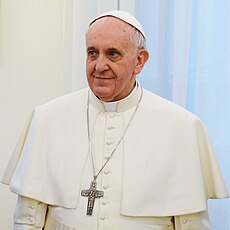
Here’s what looks to be the final update on that interview Pope Francis gave to Eugenio Scalfari of the Italian newspaper La Repubblica this fall. Readers of this website will recall that the interview quotes Pope Francis as saying, among other things, that “proselytism” is “nonsense” and that, with respect to conscience, everyone must follow his own idea of good and evil. Progressives swooned; traditionalists grumbled; everyone wondered what it all meant.

Shortly after the interview ran, it emerged that Scalfari had reconstructed the pope’s words from memory. Scalfari had not tape recorded the pope nor taken notes during the meeting . In other words, the La Repubblica “interview” was not an interview at all. Why a respected newspaper would publish an imaginative reconstruction as though it were a real interview is beyond me–but the Vatican stated at the time that the interview was basically “trustworthy,” if not verbatim. And the Vatican posted the interview on its website.

Last week, however, the Vatican decided to take the interview down. According to this report from the Catholic News Agency, Pope Francis became concerned that people might misunderstand the interview–particularly the discussion of conscience. According to a Vatican spokesman, “The information in the interview is reliable on a general level but not on the level of each individual point analyzed: this is why it was decided the text should not be available for consultation on the Holy See website.” The music was right, I guess, but the lyrics were bit off. Probably the interview is still available at La Repubblica, though.

Newman, “Twelver Shi’ism: Unity and Diversity in the Life of Islam, 632 to 1722”

This month, Edinburgh University Press will publish Twelver Shi’ism: Unity and Diversity in the Life of Islam, 632 to 1722 by Andrew Newman (University of Edinburgh). The publisher’s description follows.

As many as 40 different Shi`i groups existed in the ninth and tenth centuries yet only 3 forms have survived. Why is Twelver Shi`ism one of them?

 As the established faith in modern Iran, the majority faith in Iraq and areas in the Gulf and with its adherents forming sizeable minorities elsewhere in the region, it is arguably the most successful branch of Shi’ism. This book charts its history and the development of the key distinctive doctrines and practices which ensured its survival in the face of repeated challenges. It argues that the key to the faith’s endurance has been its ability to institutionalise responses to the changing, often localised circumstances in which the community has found itself, thereby remaining remarkably resilient in the face of both internal disagreements and external opposition.

Galinier & Molinie, “The Neo-Indians: A Religion for the Third Millenium”

Next month, the University Press of Colorado will publish The Neo-Indians: A Religion for the Third Millenium by Jacques Galinier (Université Paris Ouest Nanterre La Défense) and Antoinette Molinie (Université Paris Ouest Nanterre La Défense). The publisher’s description follows.The Neo-Indians

The Neo-Indians is a rich ethnographic study of the emergence of the neo-Indian movement—a new form of Indian identity based on largely reinvented pre-colonial cultures and comprising a diverse group of people attempting to re-create purified pre-colonial indigenous beliefs and ritual practices without the contaminating influences of modern society.

There is no full-time neo-Indian. Both indigenous and non-indigenous practitioners assume Indian identities only when deemed spiritually significant. In their daily lives, they are average members of modern society, dressing in Western clothing, working at middle-class jobs, and retaining their traditional religious identities. As a result of this part-time status the neo-Indians are often overlooked as a subject of study, making this book the first anthropological analysis of the movement.

Galinier and Molinié present and analyze four decades of ethnographic research focusing on Mexico and Peru, the two major areas of the movement’s genesis. They examine the use of public space, describe the neo-Indian ceremonies, provide analysis of the ceremonies’ symbolism, and explore the close relationship between the neo-Indian religion and tourism. The Neo-Indians will be of great interest to ethnographers, anthropologists, and scholars of Latin American history, religion, and cultural studies.

Lecture on Anti-Semitism in Europe (Nov. 25)

The UN NGO Committee on Freedom of Religion or Belief will sponsor a lecture in New York on November 25, “The Resurgence of Anti-Semitism in Europe.” The speaker will be US Special Envoy Ira Forman. Details are here.

Jenkins, “The Future of Ethics: Sustainability, Social Justice, and Religious Creativity”

Next month, Georgetown University Press will publish The Future of Ethics: Sustainability, Social Justice, and Religious Creativity by Willis Jenkins (University of Virginia). The publisher’s description follows.cover art

The Future of Ethics interprets the big questions of sustainability and social justice through the practical problems arising from humanity’s increasing power over basic systems of life. What does climate change mean for our obligations to future generations? How can the sciences work with pluralist cultures in ways that will help societies learn from ecological change?

Traditional religious ethics examines texts and traditions and highlights principles and virtuous behaviors that can apply to particular issues. Willis Jenkins develops lines of practical inquiry through “prophetic pragmatism,” an approach to ethics that begins with concrete problems and adapts to changing circumstances. This brand of pragmatism takes its cues from liberationist theology, with its emphasis on how individuals and communities actually cope with overwhelming problems.

Can religious communities make a difference when dealing with these issues? By integrating environmental sciences and theological ethics into problem-based engagements with philosophy, economics, and other disciplines, Jenkins illustrates the wide understanding and moral creativity needed to live well in the new conditions of human power. He shows the significance of religious thought to the development of interdisciplinary responses to sustainability issues and how this calls for a new style of religious ethics.

Rashkover & Kavka (eds.), “Judaism, Liberalism, and Political Theology”

This month, Indiana University Press published Judaism, Liberalism, and Political Theology, edited by Randi Rashkover (George Mason University) and Martin Kavka (Lehigh University). The publisher’s description follows.Judaism, Liberalism, and Political Theology

Judaism, Liberalism, and Political Theology provides the first broad encounter between modern Jewish thought and recent developments in political theology. In opposition to impetuous associations of Judaism and liberalism and charges that Judaism cannot engender a universal political order, the essays in this volume propose a new and richly detailed engagement between Judaism and the political. The vexed status of liberalism in Jewish thought and Judaism in political theology is interrogated with recourse to thinking from across the Continental tradition.

The Top Five New Law & Religion Papers on SSRN

From SSRN’s list of most frequently downloaded law and religion papers posted in the last 60 days, here are the current top five. Since last week,  Zoe Robinson remains at #1; Michal Gilad moves up to #2, while Andrew Koppelman drops to #3; Patrick McKinley Brennan remains at #4; and Ian Bartrum remains at #5.

1.What is a ‘Religious Institution’? by Zoe Robinson (Depaul University College of Law) [301 downloads]

2.In God’s Shadow: Unveiling the Hidden World of Domestic Violence Victims in Religious Communities by Michal Gilad (University of Pennsylvania Law School) [288 downloads]

3.‘Freedom of the Church’ and the Authority of the State by Andrew Koppelman (Northwestern University School of Law) [189 downloads]

4. Resisting the Grand Coalition in Favor of the Status Quo by Giving Full Scope to the Libertas Ecclesiae by Patrick McKinley Brennan (Villanova University School of Law) [153 downloads]

5.Book Review: ‘The Tragedy of Religious Freedom’  by Ian C. Bartrum (University of Nevada, Las Vegas) [125 downloads]

Cooper, “Secular Powers: Humility in Modern Political Thought”

Last month, University of Chicago Press published Secular Powers: Humility in Secular PowersModern Political Thought by Julie E. Cooper (University of Chicago).  The publisher’s description follows.

Secularism is usually thought to contain the project of self-deification, in which humans attack God’s authority in order to take his place, freed from all constraints. Julie E. Cooper overturns this conception through an incisive analysis of the early modern justifications for secular politics. While she agrees that secularism is a means of empowerment, she argues that we have misunderstood the sources of secular empowerment and the kinds of strength to which it aspires.

Contemporary understandings of secularism, Cooper contends, have been shaped by a limited understanding of it as a shift from vulnerability to power. But the works of the foundational thinkers of secularism tell a different story. Analyzing the writings of Hobbes, Spinoza, and Rousseau at the moment of secularity’s inception, she shows that all three understood that acknowledging one’s limitations was a condition of successful self-rule. And while all three invited humans to collectively build and sustain a political world, their invitations did not amount to self-deification. Cooper establishes that secular politics as originally conceived does not require a choice between power and vulnerability. Rather, it challenges us—today as then—to reconcile them both as essential components of our humanity.