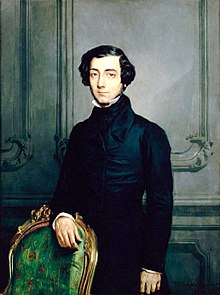
Kahan, “Tocqueville, Democracy, and Religion: Checks and Balances for Democratic Souls”

In August, Oxford University Press will release “Tocqueville, Democracy, and Religion: Checks and Balances for Democratic Souls” by Alan S. Kahan (University of Versailles/St. Quentin-en-Yvelines). The publisher’s description follows:

The relationship between democracy and religion is as important today as it was in Alexis de Tocqueville’s time. Tocqueville, Democracy, and Religion is a ground-breaking study of the views of the greatest theorist of democracy writing about one of today’s most crucial problems. Alan S. Kahan, one of today’s foremost Tocqueville scholars, shows how Tocqueville’s analysis of religion is simultaneously deeply rooted in his thoughts on nineteenth-century France and America and pertinent to us today.

Tocqueville thought that the role of religion was to provide checks and balances for democracy in the spiritual realm, just as secular forces should provide them in the political realm. He believed that in the long run secular checks and balances were dependent on the success of spiritual ones. Kahan examines how Tocqueville thought religion had succeeded in checking and balancing democracy in America, and failed in France, as well as observing Tocqueville’s less well-known analyses of religion in Ireland and England, and his perspective on Islam and Hinduism. He shows how Tocqueville’s ‘post-secular’ account of religion can help us come to terms with religion today.

More than a study of Tocqueville on religion in democratic society, this volume offers us a re-interpretation of Tocqueville as a moralist and a student of human nature in democratic society; a thinker whose new political science was in the service of a new moral science aimed at encouraging democratic people to attain greatness as human beings. Tocqueville, Democracy, and Religion gives us a new Tocqueville for the twenty-first century.

Why Protect Religion?

Tocqueville understood

A growing number of legal scholars question whether a justification exists for protecting religion as its own category. Yes, the text of the First Amendment refers specifically to religion, they concede, but that’s an anachronism. As a matter of principle, religion as such doesn’t merit legal protection. Instead, the law should protect individual conscience, or private associations generally. In fact, it’s not just scholars. In the ministerial exception case a couple of years ago, the Obama Administration argued that the Religion Clauses did not even apply and that the Court should decide the case under more general associational freedom principles.

The Justices unanimously dismissed the Obama Administration’s argument in Hosanna-Tabor, and there seems little chance the Roberts Court will read the Religion Clauses out of the Constitution. But history shows that constitutional text is not an insurmountable barrier, and those of us who think religion as such does merit special protection will need to find arguments beyond the bare language of the First Amendment. In fact, in an increasingly non-religious society, we’ll have to find arguments that appeal to people without traditional religious commitments.

Here’s one such argument. Religion, especially communal religion, provides important benefits for everyone in the liberal state–even the non-religious. Religion encourages people to associate with and feel responsible for others, to engage with them in common endeavors. Religion promotes altruism and neighborliness and mitigates social isolation. Religion counteracts the tendencies to apathy and self-centeredness that liberalism seems inevitably to create.

Tocqueville saw this in the 19th century. Egalitarian democracy, he wrote, encourages a kind of “individualism.” It trains each citizen to look out for himself according to his own best judgment and discount the needs of the wider society. Self-reliance is a good thing; at least Americans have long though so. But the attitude poses two great dangers for liberal society. First, it makes it difficult to motivate people to contribute to the common projects on which society depends: public safety, schools, hospitals, and the like. Second, it makes it easier for despotism to arise. The despotic state desires nothing more than for individual citizens to feel isolated from and indifferent to the concerns of others, so that the state can easily divide and dominate them all.

Tocqueville saw that voluntary associations could lessen these dangers. Religious associations are particularly useful in this regard. They are uniquely good at promoting social engagement–secular as well as religious. According to sociologist Robert Putnam, for example, regular churchgoers are more likely to vote, serve on juries, participate in community activities, talk to neighbors, and give to charities, including non-religious charities. And when it comes to defying state oppression, no groups are more effective than religious associations, which can inspire members to truly heroic acts of resistance, as dictators down the centuries have learned.

To be sure, religions don’t always encourage civic fellowship; to the extent a religion promotes sedition or violence against other citizens, society does not benefit. And perhaps, as Gerald Russello suggests, the non-religious have come so to distrust religion that they will view its contributions as tainted and objectionable from the start. But in encouraging greater social involvement, religion offers benefits to everyone, believers and non-believers, too. It’s worth reminding skeptics of this when they argue that religion, as such, doesn’t merit legal protection.

Movsesian on the Rise of the Nones

Mark has a very interesting new paper on the growing importance of the “Nones”–those who claim no religious affiliation at all but by and large are neither atheists nor agnostics. Rather, the Nones reject institutional religious belief. As Mark puts it, “A better term for them might be religious ‘Independents,’ or the familiar ‘spiritual but not religious.'” The paper considers some of the legal ramifications of “none-ism,” including the relationship between group status and legal protection. Here’s the abstract.

The most important recent development in American religion is the dramatic increase in the number of people who claim no religious affiliation — the rise of the Nones. In this Working Paper, I discuss the social factors that explain the rise of the Nones–demography, politics, family, technology, a distrust of institutions generally–and explain what this development might mean for the definition of religion in American law. I focus on a recent federal appeals court case involving a self-styled spiritual adviser, “Psychic Sophie,” who claimed that following her “inner flow” constituted a religion meriting constitutional and statutory protection. I argue that the case is a close one. Protecting Nones as a religion would promote the important goals of state religious neutrality and personal autonomy. On the other hand, religion has always been understood in terms of community. Indeed, as Tocqueville saw, it is precisely religion’s communal aspect that makes it so important to liberal democracy. Granting Nones the status of a religion would fail to capture this important social benefit.

Religion Without God (bien avant Dworkin)

I am in Evanston for a conference and thought to pay a visit to a favorite old usedBookman's Alley bookstore that I had enjoyed several years ago, “Bookman’s Alley.” The store is truly a treasure, full of surprises, and complete with a wonderfully surly owner. I took a shot of the old storefront (which is tucked away down the alley) and here’s a shot of part of a lovely collection of the complete works of Thackeray–some thirty odd volumes of his writing, all in disorder.

To my great regret, I discovered upon entering that Bookman’s is closing down Thackerayafter more than three decades. I see from this story last year that plans for Bookman’s closing have been in the works for some time. But it seemed from the melancholy mood of the store (and from the 70% discount) that the end is nigh.

I wanted to honor the store by buying a few things, even though I never relish the thought of carrying back books on a plane (with difficulty I resisted the Thackeray feast). Instead, I found a few smaller things, including an old edition of Carl Becker’s skeptical classic, The Heavenly City of the Eighteenth Century Philosophers, delivered as the Storrs Lecture in 1931 and still remarkable in several respects (one of which, I think, is the informality and easiness of the writing).

Becker’s short tract is a masterpiece of critical commentary on what we would Beckertoday call the relationship of “secularism” and “civil religion.” Here’s something from the fourth and final lecture, “The Uses of Posterity,” which will perhaps be of interest to those who are now reading Ronald Dworkin’s recently published, posthumous volume, “Religion Without God”:

Nearly a century ago De Tocqueville noted the fact that the French Revolution was a “political revolution which functioned in the manner and which took on in some sense the aspect of a religious revolution.” Like Islamism or the Protestant revolt, it overflowed the frontiers of countries and nations and was extended by “preaching and propaganda.” It functioned,

in relation to this world, in precisely the same manner that religious revolutions function in respect to the other: it considered the citizen in an abstract fashion, apart from particular societies, in the same way that religions consider man in general, independently of time and place. It sought not merely the particular rights of French citizens, but the general political rights and duties of all men. [Accordingly] since it appeared to be more concerned with the regeneration of the human race than with the reformation of France, it generated a passion which, until then, the most violent political revolutions had never exhibited. It inspired proselytism and gave birth to propaganda. It could therefore assume that appearance of a religious revolution which so astonished contemporaries; or rather it became itself a kind of new religion, an imperfect religion it is true, a religion without God, without a form of worship, and without a future life, but one which nevertheless, like Islamism, inundated the earth with soldiers, apostles, and martyrs.

L’ancien régime et la Révolution, Bk I, ch.3 [emphasis mine]. De Tocqueville’s contemporaries were too much preoccupied with political issues and the validity of traditional religious doctrines to grasp the significance of his pregnant observations. Not until our own time have historians been sufficiently detached from religions to understand that the Revolution, in its later stages especially, took on the character of a crusade. But it is now well understood…not only that the Revolution attempted to substitute the eighteenth-century religion of humanity for the traditional faiths, but also that, contrary to the belief of De Tocqueville, the new religion was not without God, forms of worship, or a future life. On the contrary, the new religion had its dogmas, the sacred principles of the Revolution–Liberté et sainte égalité. It had its form of worship, an adaptation of Catholic ceremonial, which was elaborated in connection with its civic fêtes. It had its saints, the heroes and martyrs of liberty. It was sustained by an emotional impulse, a mystical faith in humanity, in the ultimate regeneration of the human race.

Tocqueville and Gobineau

It is fitting to end this series with a study of the exchanges between GobineauTocqueville and his younger friend and assistant, Arthur de Gobineau. For if Tocqueville was the explorer of the new age of democracy, Gobineau was the herald of a return to an age of aristocracy, if in an untraditional and modernized form.

Though little remembered now, Gobineau was a prolific and assiduous writer, known chiefly for his defense of racism, the Essai sur l’inégalité des races humaines (1853-55) (“Essay on the Inequality of the Human Races”). Eleven years younger than Tocqueville and, like him, the Essaiscion of a noble family (if a lesser one), Gobineau was probably introduced to Tocqueville by royalist friends of both. Whether or not they had met previously, the two men began a correspondence in 1843. The exchange resulted from an invitation the Académie des sciences morales et politiques had extended to Tocqueville in that year, to prepare a study on modern moral doctrines in order to establish what, if anything, was novel in them. Tocqueville sought to enlist the young Gobineau’s assistance in the project. The ensuing correspondence took, for Tocqueville, a surprising turn, as he found his deepest beliefs about the relationship of Christianity to modern society sharply challenged. Tocqueville abandoned the study in 1848, probably owing to the revolution of that year.

A second major round of correspondence took place beginning about a decade later, around the time of the appearance of Gobineau’s book on racial inequality. This new, illiberal orientation in Gobineau’s thought deeply disturbed Tocqueville, who told Gobineau frankly that he objected to its “fatalism” and its “materialism.” To other correspondents, Tocqueville complained that Gobineau’s “stud farm philosophy” expounded “dangerous thoughts . . . in a journalistic style.” See Françoise Mélonio, Tocqueville and the French 129 (Beth Raps trans. 1998). For his part, Gobineau exulted that the book had “struck the nerve of liberal ideas at its core.” Id.

Despite their basic differences, Tocqueville befriended Gobineau, launching him on a diplomatic career when Tocqueville became France’s Foreign Minister in 1849. Gobineau did not repay Tocqueville’s kindness: in his 1874 novel Les Pléiades, his used the character of Genevilliers to mock and satirize his benefactor. Mélonio at 128-30.

The interest and importance of the Tocqueville-Gobineau correspondence has been rightly emphasized by several scholars. See especially Aristide Tessitore, “Tocqueville and Gobineau on the Nature of Modern Politics,” 67 Review of Politics 631 (2005); see also Christian Bégin, “Tocqueville et la fracture religieuse,” 32 The Tocqueville Review/La Revue Tocqueville 167 (2011); Larry Siedentop, Tocqueville 96-106; 126-30 (1994); William A. Galston, “Tocqueville on Liberalism and Religion,” 54 Social Research 499 (1987). The historian John Lukacs has edited and translated most – though unfortunately not all – of the correspondence, and I shall use this translation. Alexis de Tocqueville, “The European Revolution” & Correspondence with Gobineau (John Lukacs ed. & trans. 1968).

The ultimate issues

The confrontation between Tocqueville and Gobineau was played out on at least two levels.

First, as of 1843, Gobineau “might best be described as a radical partisan of the Enlightenment project.” Tessitore at 632. Throughout his career, however, Tocqueville had argued that modern Western society was indebted to both the Enlightenment and Christianity, that the central doctrines of both movements were compatible, and that the tension between them was fruitful and beneficent, each correcting the flaws and excesses of the other. See id. at 639; 652; Galston at 502-04. The core principles of the Enlightenment, such as “the natural equality of men,” were also part of the patrimony of Christianity. See Alexis de Tocqueville, The Ancien Régime and the Revolution 21 (Bevan trans. 2008).

For Gobineau, the Enlightenment marks a revolutionary transformation in the West, ushering in a post-Christian era in which morality has come to rest on a wholly naturalistic foundation. See Tessitore at 641. For Tocqueville, by contrast, the coming of Christianity is the only true revolution that the West has yet seen, or may ever see. (The same thesis has been defended at length, but without reference to Tocqueville, in David Bentley Hart’s brilliant Atheist Delusions, cited earlier in this series.). There is, indeed, a radical discontinuity in the dominant ethos of the West; but this is the rupture between classical antiquity and the rise of Christianity, not between the Christian ages and the aftermath of the Enlightenment. True, the morality of the nineteenth century differs significantly from that of the pre-Enlightenment period, notably with regard to the importance of political action and the recognition of life’s material needs. But these changes, Tocqueville insists, merely reflect the development of Christian morality over long stretches of time and its adaptation to new circumstances. They do not constitute evidence of the dominance of a radically de-christianized ethos. See Tessitore at 636; 644-45; 648; Galston at 505-08.

Second, Gobineau’s view of modern morality in the early 1840s laid the foundation for his later teaching about human inequality.

Read more

Tocqueville and Habermas

After their decisive victory over a larger Austrian force in the Battle of Leuthen (1757), the soldiers of the Prussian Army broke out spontaneously in the great Lutheran hymn, Nun danket alle Gott – “Now thank we all our God.” The Prussian King, Frederick the Great, listened in astonishment. A free thinker, friend of Voltaire, and a “benevolent” Enlightenment despot, the Great King exclaimed: Mein Gott! Welche Kraft hat die Religion – “My God! How much power religion has!”

Jűrgen Habermas

Another German free thinker and heir to the Enlightenment seems recentlyHabermas to have made a similarly startling discovery. I refer to the widely renowned German philosopher and public intellectual Jűrgen Habermas. For much of his career, Habermas identified himself as a staunch defender of Enlightenment rationality, the anointed successor of Immanuel Kant. His account of liberal, democratic constitutionalism assumed only secular foundations, and deliberately excluded any reference to the authority of religion. But in recent years, Habermas has veered away from that course; his stance toward religion has changed. First, he has come to accept that religion, even in the West, is not going away – at least not soon. Second, he is prepared, albeit tentatively, to recognize a role for religion to play in public, political discourse. Indeed, he even entertains the thought that “philosophy,” or secular reason, will engage in a colloquy with “theology” and revealed religion.

Reflecting this change of heart, Habermas, as guest of the Catholic Academy of Bavaria, engaged then-Cardinal Josef Ratzinger in debate in Munich in 2004. Habermas’ address has been published as “Prepolitical Foundations of the Constitutional State?” in Jűrgen Habermas, Between Naturalism and Religion: Philosophical Essays (Ciaran Cronin trans. 2012). Subsequently, in 2007, Habermas debated four Jesuit theologians, again in Munich, in 2007. His remarks on this occasion have been published as Jűrgen Habermas, An Awareness of What is Missing: Faith and Reason in a Post-Secular Age (Ciaran Cronin trans. 2010). In a short, penetrating essay entitled “Does Reason Know What It Is Missing” (New York Times, April 12, 2010), the distinguished literary theorist, public intellectual and deconstructionist Stanley Fish reviewed and criticized Habermas’ position in these debates.

Habermas’ later thoughts on religion and politics are relevant to this series for several reasons. First, it is interesting and instructive to compare the ideas of this early twenty-first century thinker with those of de Tocqueville. Tendencies in modern, democratic society whose first stirrings Tocqueville discerned have had almost two intervening centuries in which to work themselves out. In particular, secularization has become far more pervasive. But second and no less important, Habermas’ thinking sheds light on the question raised in my last posting: whether democracy can survive and flourish, despite the perceptible deepening and entrenchment of social and economic inequalities, if Western society is radically de-christianized? The bare fact that a thinker of Habermas’ repute considered it timely and important to raise the question of “prepolitical,” religious foundations for the liberal-democratic, “constitutional” State suggests that there may, indeed, be a possible need here that only religion can serve. Moreover, Tocqueville himself gave attention to the question that Habermas poses, albeit in a less systematic and focused way.

There is, I believe, a particular point of contact between Habermas and Tocqueville in the latter’s correspondence with his friend and assistant Arthur de Gobineau (whom we have briefly encountered earlier in this series). In that correspondence, Tocqueville comes closest to giving us his answer to the question whether modern Western democracy presupposes Christianity. That correspondence will be the centerpiece of my next and final posting.

Habermas on the prepolitical foundations of the constitutional State

A longstanding project of Habermas has been to provide a nonreligious, “post-metaphysical” justification of the normative foundations of constitutional democracy. He finds this type of justification in “political liberalism,” more especially in the form of “Kantian republicanism.” Prepolitical Foundations at 102. While acknowledging antecedents in Christian theology, Habermas insists that “the form of state power that remains neutral toward different worldviews ultimately derives from the profane sources of seventeenth- and eighteenth-century philosophy.” Id. Unlike Tocqueville, then, who sees the normative foundations of political liberalism as rooted in both Christian and Enlightenment thought, Habermas locates those foundations solely, or at least primarily, in the Enlightenment. (Habermas’ resistance to giving full recognition to Christianity’s historic role in shaping the modern liberal-democratic State recalls the long debate over whether the Preamble of the Draft Treaty establishing a Constitution for Europe should include a reference to God or Christianity. In the end, it did not. See Srdjan Cvijic and Lorenzo Zucca, Does the European Constitution need Christian Values?, 24 Oxford Journal of Legal Studies 739 (2004) (discussing J.H.H. Weiler, Un’ Europa Cristiana: un saggio explorativo (2002))).

The core of Habermas’ justificatory strategy is to base the legitimacy of the decision-making of the liberal, democratic state on an open, inclusive process of public communication, argument and reflection in which citizens engage on equal terms.

Read more

Tocqueville’s America and Ours

The County Election (1852)

The “democracy” that Tocqueville observed in the United States was a pervasive social condition, not simply a matter of political or legal equality. Indeed, he opened Democracy in America by saying that “[o]f all the novel things which attracted my attention during my stay in the United States, none struck me more forcibly than the equality of social conditions.” The “extraordinary influence” of “this fundamental fact” shaped both “civil society” and “political customs and laws.” Democracy at 11.

Tocqueville is sometimes misrepresented as opposing liberty to equality. The fact is that he was a partisan of both. In the chapter immediately succeeding his analysis of soft despotism (which he called a “Continuation” of the latter), he says unequivocally that “all those who now wish to found or guarantee the independence and dignity of their fellows should show themselves friends of equality.” Preventing democracy from slipping into despotism is a question, he says, of “drawing freedom from within the democracy in which God has placed us.” Id. at 809. True, he acknowledges that “[e]quality introduces into men’s minds several tendencies which are a danger to liberty.” Id. at 813. But he holds the “firm belief” that “the dangers imposed by the principle of equality upon human independence” are “not insurmountable.” Id. at 817. Inequality, no less than equality, may pose a danger to liberty in a democracy.

Democracy and social equality

Tocqueville observed social equality everywhere in America. In a short section of Volume I of Democracy entitled “Remains of the Aristocratic Party in the United States” (Vol. I, Pt. ii, ch. 2), Tocqueville invites his readers to consider the situation of “the wealthy man,” “this opulent citizen.” “Within the four walls of his house he adores luxury; he invites only a few chosen guests.” But in public, “[h]is clothes are simple and his demeanor is modest.” When “he emerges from home to make his way to work . . . everyone is free to accost him. On the way, his shoemaker might pass by and they stop; both then begin to chat. What can they say? These two citizens are concerned with affairs of state and will not part without shaking hands.” True, the rich feel “a deep distaste” for their country’s democratic institutions, and “both fear and despise” the people. But they bow before the force of democratic social conventions. Democracy at 208-09.

Elsewhere Tocqueville describes the manner of Americans towards one another as “natural, open, and unreserved.” “In America, where privileges of birth have never existed and where wealth grants no particular right to its owner, strangers readily congregate in the same places and find neither danger nor advantage in telling each other freely what they think . . . . [T]here is practically nothing that they expect or fear from each other and they make no more effort to reveal than to conceal their social position.” Id. at 656.

Fishtown and Belmont

It would be unrealistic to think of America in such terms nowadays. Consider Charles Murray’s recent work, Coming Apart: The State of White America, 1960-2010 (2012). Murray argues that America is “coming apart at the seams – not seams of race or ethnicity, but of class” (id. at 12). The white working class, he contends, has become estranged from the nation’s “founding virtues” of “industriousness, honesty, marriage, and religiosity” (id. at 131). Basing his Read more

Tocqueville on Pantheism: Part II

Tocqueville thinks that democracy tends toward a metaphysics of pantheism, and urges noble natures living in a democracy to resist that tendency fiercely. Pantheism is suited to democracy because it captures democracy’s ambivalences. Pantheism both deifies and trivializes the human person. It equates the individual ego with the universe, but also shrinks the ego to an infinitesimal point. It exalts individuality, but also merges it into the totality of things. Pantheism liberates by announcing that the realm of possibility is unlimited, but oppresses by subjecting all things to necessity. It denies original sin, thus opening endless vistas for human action, but it also denies human agency, thus making action impossible.

Perhaps that is why Tocqueville followed his chapter on pantheism with another short chapter entitled “How Equality Suggests to Americans the Idea of the Perfectibility of Man” (Democracy in America, Vol. II, Pt. I, ch. 8) (Bevan trans.). If man is at least latently divine, why should he not strive fully to realize that divinity — that is, to perfect himself? If original sin does not foredoom our pursuit of perfection to failure, then why not pursue perfection in earnest? Only aristocratic societies believe that the human situation is inherently tragic and that human history cannot finally be transcended. Democratic societies believe on the contrary that “man can improve throughout all time” and that human history reaches “the end of the long path human beings have to tread.” Democracy at 523.

Tocqueville recounts that he asked an American sailor “why his country’s vessels are constructed to last for so short a time.” The sailor answered unhesitatingly that “the art of navigation is making such rapid progress that the finest ship would soon outlive its usefulness if it extended its life for more than a few years.” From this casual remark, Tocqueville “glimpse[d] the general and systematic idea by which a great nation directs its every action.” Id.

As often in Tocqueville, the same cause is held to produce contrary effects. As we saw in the last posting, pantheism produces the beliefs that human individuals are mere ripples on the surface of an infinite ocean, that human action is without lasting consequences, and that the proper attitude to nature is to disturb its eternal order as little as possible. But pantheism also produces the belief that nature is endlessly malleable in our hands, that we should ceaselessly remake and exploit it to serve human ends, and that humanity itself can and should be refashioned to overcome the limits that nature appears to have set for it. In our world, technological rationality in the form of genetic engineering, the continuous effort to modify and improve crops, animals and human embryos, and the search for a cure, not merely for disease, but also for death, are as much a consequence of pantheism as the deep ecology movement is.

In his chapter on pantheism, Tocqueville tells us that he “later” describe how that metaphysical system has “a parallel in politics.” Democracy at 520. We shall soon consider that political parallel, which is democratic “despotism.” But first, let us consider a possible source of, or influence on, Tocqueville’s view of pantheism.

Henri Louis Charles Maret

Henri Louis Charles Maret was a Catholic priest (later bishop) and theologian, born in 1805 (also the year of Tocqueville’s birth). He became a Professor on the Theology faculty at the Sorbonne in 1841, and Dean of that faculty in 1853. He was associated with French liberal Catholics, most importantly the Abbé Hugues Félicité de Lammenais and the circle of like-minded Catholics involved Read more

Tocqueville on Pantheism: Part I

We have seen that Tocqueville believes that the dominant American faith, Ralph Waldo EmersonProtestantism, will tend to decompose. The process of dissolution will occur in two phases. In the first, Protestantism (or more accurately, Calvinism) will tend to become a form of natural religion, such as he believed he had encountered in Unitarianism. This movement will take place chiefly among American élites; working class American Protestants, he believes, will be increasingly drawn to Catholicism. In the second phase, Unitarianism or natural religion will itself tend to become what he calls “pantheism.” These movements are traced out, albeit in very summary and schematic form, in Vol. II, Pt. I, chh. 6-7 of Democracy in America, dealing, respectively, with Catholicism and pantheism. In a powerful and illuminating study, Peter Lawlor has described these as two of the “least studied and strangest chapters” of Democracy in America. See Peter Augustine Lawlor, Tocqueville on Pantheism, Materialism, and Catholicism, 30 Perspectives on Political Science 218 (2001).
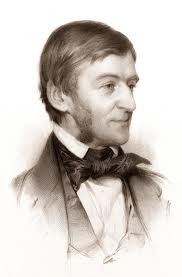
Tocqueville’s notions may seem very wayward and idiosyncratic to us. After Walt Whitmanall, contemporary America is neither predominantly Catholic nor predominantly pantheistic. Nonetheless, when examined more closely, Tocqueville’s analysis is full of interest and even, remarkably, of current applicability.

The “decline” of Protestantism

Since the 1960s, there has been vigorous and ongoing debate over whether American Protestantism – or at any rate “mainstream” Protestantism – is dead or dying. See, e.g., Stanley Hauerwas, The end of American Protestantism (July 2, 2013), available at http://www.abc.net.au/religion/articles/2013/07/02/3794561.htm. Equally, the question whether American Catholicism has become, or is becoming, a form of Protestantism also provokes current controversy. (Tocqueville himself had noted the tendency of American Catholicism to be less dogmatic and less ritualized than French Catholicism.) Neither of these interesting issues can detain us here. What is more relevant to our purpose is why Tocqueville should have thought that Protestantism would decline, and whether the evidence from the period in which he wrote might have supported the prediction that it would turn into something radically different from traditional Christianity.

Bossuet

Tocqueville could certainly have derived his thesis from reading the work of the great eighteenth century French Catholic theologian, historian and apologist, Jacques-Bénigne Bossuet, the Bishop of Meaux and the tutor of Louis XIV’s eldest child, the Dauphin of France. Probably the greatest work by the prolific Bossuet was his History of the Variations of the Protestant Churches (1688; English trans. 1836). Bossuet’s History is a massively learned account of what the author sees as the steady fragmentation of the main branches of Protestantism into different and discordant sects. We know that Tocqueville had studied this work. In his letter of November 15, 1835 to Gustave Beaumont, he says that after finishing reading Machiavelli’s History of Florence, I turned to Bossuet’s Variations. Finding the “distance” between Machiavelli and Bossuet “great,” he writes that “I had never looked at [the Variations] so closely, and I cannot tell you how much I admired its content, and even more perhaps, its form. It is truly a magnificent and powerful arrangement.” Selected Letters 112. In thinking that Protestantism was bound to disintegrate, Tocqueville was very possibly adopting, if quietly, the polemical case that Bossuet had made for that proposition.

Tocqueville seems to have drawn on Bossuet in the places in Democracy in America in which he connects the growth of democracy with Divine Providence. For instance, in Vol. I, Pt. ii, ch. 17 of Democracy, entitled “A Few Sources of Poetry in Democratic Nations,” he writes that in egalitarian ages, as “each man . . . begins to perceive humanity itself, God reveals himself more and more to the human mind in his full and complete majesty . . . Observing the human race as a single entity, men find it easy to imagine that the same plan rules its destiny and they are inclined to perceive, in the actions of any individual, the trace of that universal and consistent design by which God guides our race.” Bevan trans. 563-64. Likewise, in his Introduction to Part I, Tocqueville speaks of the “gradual unfurling of equality in social conditions” as “a providential fact which reflects its principal characteristics: it is universal, it is lasting and it constantly eludes human interference; its development is served equally by every event and every human being.” Id. at 15. In such passages, Tocqueville is echoing another of Bossuet’s works, the Discourse on Universal History (1681), which he had also read. (For a fuller treatment of providentialism in Democracy, which downplays the influence of Bossuet, see David A. Selby, Tocqueville’s politics of providence: Pascal, Jansenism and the author’s introduction to Democracy in America, 33 The Tocqueville Review 167 (2012)).

Rousseau

It is also possible that Tocqueville formulated his thesis about Protestantism on the basis of reading Rousseau. After the publication of The Vicar of Savoy (on which see posting Tocqueville on Protestantism and Natural Religion: Part II), Rousseau was compelled to defend his views against the Protestant authorities of his native city of Geneva, who accused him of undermining the Reformed religion. Rousseau defended himself in a series of lengthy pieces called Letters Written from the Mountain (1764). In the second of these Letters, Rousseau identifies what he considers to be the “two fundamental points of the Reform,” and contends that his writings fully comply with both. Collected Writings of Rousseau, vol. 9 at 154. These two core principles are “to acknowledge the Bible as the rule of one’s belief, and not to admit any other interpreter of the Bible than oneself.” Id. To this he adds: “Combined, these two points form the principle on which the Reformed Christians separated from the Roman Church, and they could not do any less without falling into contradiction; for what interpretive authority could they have reserved to themselves, after having rejected that of the body of the Church?” Id.

To make the Bible the sole rule for deciding questions of faith and practice appears to be adopting a common standard of truth that transcends any individual opinion; but to take the principle of private judgment to mean that each believer is the final judge for himself or herself of the Bible’s meaning is to abandon the idea of a common authority.

Read more

Tocqueville on Unitarianism

In the last two postings in this series, we considered Tocqueville’s thinking onWilliam Ellery Channing natural religion, especially in light of the views on that subject of two of his masters, Montesquieu and Rousseau. Like those two earlier thinkers, Tocqueville is interested in natural religion, not only for theological reasons, but also, and perhaps more importantly, for political ones. All three thinkers shared the view that religion is necessary or useful to government. And since Christianity was (and is) historically the dominant religion in the West, all three recognized that if any religion were to serve that purpose in Western societies, it would necessarily be Christianity. But Rousseau, at least, thought that Christianity, especially in the form of Roman Catholicism, was also potentially highly disruptive to society.Alexis de Tocqueville Rousseau, therefore, seems to have advocated “natural religion” – which he regarded as a purified form of Christianity – as an alternative to the traditional forms of that religion. Natural religion, as Rousseau conceived it, would offer the State the essential benefits of traditional Christianity: it would, e.g., function to integrate and bind the citizens together in a cohesive social union, and it would fashion their characters and inculcate virtuous habits in civically desirable ways. At the same time, Rousseau thought that natural religion would not have the destructive tendencies of traditional, revealed Christianity, among them that of teaching us to love our fellow humans as much as our fellow citizens. Rousseau may have thought that his natural religion was a particularly apt form of belief for democratic states, because its starting points were simple, common ideas that were accessible to people of ordinary intelligence and because its dogmatic teachings were few, undemanding, and generally accepted.

Tocqueville was far more uncertain that mere natural religion will suffice to serve the needs of a democracy. Thus, his position is different from that of Rousseau. True, as we saw in Tocqueville on Protestantism and Natural Religion: Part I, Tocqueville may be saying, in the chapter of Democracy in America entitled “How Religious Belief Sometimes Diverts the Thoughts of Americans Toward Spiritual Pleasures,” that democratic statesmen will do well enough for democracy if they succeed in maintaining in the general population a bare belief in the soul’s survival of the body’s death. But surely Tocqueville realized that that is an unstable position – a kind of half-way house between traditional, dogmatic Christianity and outright unbelief. Belief in the immortality of the soul at least has the sanction of long tradition and seems to answer to a deep human need; belief that the soul dies with the body is encouraged by the testimony of the senses and has the warrant of materialist philosophers going back to Lucretius. But what credible reason is there to think that the soul has a shadowy existence for a period after the body’s death, only to flicker out indefinitely later? And even if one could find a reason to credit such a belief, how effective would it be in motivating the kind of attitudes and conduct necessary for a vital democracy?

Thus, I am reluctant to think that Tocqueville’s considered view is that natural religion alone provides truly satisfactory and durable support for democracy. The better interpretation, as I shall try below to show, is that he thinks that democracy requires – or, at least, is better served by – a more traditional, revealed religion.

But if that interpretation is right, then Tocqueville would have had cause to question the long-term health and stability of American democracy. For, as we saw at the conclusion of the last post, he believes that Protestantism in America will tend to collapse into mere natural religion. See his Letter to de Chabrol (October 26, 1831). If natural religion is at best a weak and undependable safeguard for democracy, then the future of democracy, in a Protestant society like America, must be clouded.

The June 29, 1831 Letter to Kergolay

Tocqueville gives expression to these thoughts in a long and fascinating letter of June 29, 1831 to his intimate friend Louis de Kergolay. See Selected Letters 45 et seq. Plainly Tocqueville is extemporizing in this letter: it was written in two stages, and Tocqueville tells Kergolay at the start of the second stage that he writes “without knowing just what I am going to say to you.” Nonetheless the tumultuous flood of ideas in this letter reveals much about Tocqueville’s deeper thinking.

Read more