Around the Web

Here are some important law-and-religion news stories from around the web:

  • A petition for certiorari has been filed with the U.S. Supreme Court in Groff v. DeJoy. In the case, the Third Circuit held that accommodating a Sunday sabbath observer by allowing him not to report for work on Sunday would cause an “undue hardship” to the U.S. Postal Service. Therefore, the court held that failure to grant the requested accommodation did not violate Title VII. 
  • In In the Interest of C.C., the Georgia Supreme Court gave guidance to a juvenile court on how to determine whether parents’ objections to vaccinating their children are based on a sincerely held religious belief. The court said in part: “Ultimately, the juvenile court must determine whether the Chandlers’ religious objection to the vaccination of their children is ‘truly held.’ The court should ‘sh[y] away from attempting to gauge how central a sincerely held belief is to the believer’s religion.’ And it must bear in mind that ‘a belief can be both secular and religious. The categories are not mutually exclusive.’ “
  • In Toor v. Berger, the D.C. federal district court refused to grant a preliminary injunction to three Sikh Marine recruits who wanted to prevent enforcement of the Marine’s uniform and grooming policies during recruit training while their case continues to be litigated. Plaintiffs argue that denying accommodation of their religious practices violates RFRA, the Free Exercise Clause, and the Equal Protection Clause. The court held that even if plaintiffs have shown a likelihood of success on the merits and irreparable injury, the balance of equities and the overall public interest favors the military at this preliminary stage of proceedings. 
  • In Bey v. Sirius-El, a New York federal district court dismissed a suit seeking damages, injunctive relief, and criminal prosecution of defendants for barring plaintiff from attending the Brooklyn Moorish Science Temple in person. Plaintiff was barred because of the potential for a conflict between her and a “competing love interest” who has also been attending services. The court dismissed plaintiff’s free exercise claims because she did not allege that any state action was involved. 
  • In Chabad of Prospect, Inc. v. Louisville Metro Board of Zoning Adjustment, a Kentucky federal district court dismissed a suit brought against zoning officials by a synagogue that was denied a conditional use permit to use a home it purchased for religious services. When the property was put up for sale, zoning rules allowed its use for religious purposes. However, before plaintiff purchased the property, the city removed that provision and required a conditional use permit. The court held that plaintiff’s § 1983 claim alleging First Amendment violations was barred by the statute of limitations. Additionally, the court held that plaintiff failed to state a claim under RLUIPA. 
  • In Miller v. Austin, a Wyoming federal district court dismissed on standing and ripeness grounds a suit by two Air Force sergeants who face discharge because of their refusal on religious grounds to receive the COVID vaccine. 

Around the Web

Here are some important law-and-religion news stories from around the web:

  • In Kennedy v. Bremerton School District, the U.S. Supreme Court held that a school district violated the First Amendment’s Free Speech and Free Exercise Clauses when the district disciplined a football coach for visibly praying at midfield following football games. Writing for the majority, Justice Gorsuch found that the coach sought to engage in private, sincerely motivated religious exercise and decided that the district could not bar this activity because of its own Establishment Clause concerns. In reaching this decision, the Court repudiated the Lemon test – which had been relied upon by the lower courts in deciding the case. 
  • In LaCroix v. Town of Fort Myers Beach, Florida, the Eleventh Circuit preliminarily enjoined a town’s ban on all portable signs. The ordinance was challenged by an individual who was cited for carrying a sign on a public sidewalk that conveyed his “religious, political and social message” that Christianity offers hope and salvation. 
  • In Apache Stronghold v. United States, the Ninth Circuit held that a proposed federal government land exchange in Arizona will not substantially burden Apache religious exercise in violation of RFRA. The court also held it will not violate the First Amendment because the Land Exchange Provision is a neutral and generally applicable law. 
  • In Halczenko v. Ascension Health, Inc., the Seventh Circuit affirmed the denial of a preliminary injunction that had been sought by a pediatric critical care specialist. The specialist was fired from his hospital position after he refused, on religious grounds, to comply with the hospital’s COVID vaccine mandate. The court concluded that Plaintiff had shown neither irreparable injury nor inadequate remedies through a Title VII action. 
  • In Mishler v. Mishler, a Texas state appellate court held that there is neither a state nor a federal free exercise issue with a divorce decree, based on the parties’ prior agreement that the husband would deliver certain property to the wife only upon the wife’s acceptance of a “Gett” (a Jewish divorce document that the wife must accept for the divorce to be valid under Jewish religious law). 

Legal Spirits Episode 042: Two Blockbuster Decisions at SCOTUS

The October 2021 term has ended with a bang. In this episode, we discuss the Court’s rulings in two significant church-and-state cases: Carson v. Makin, the Maine school funding case, and Kennedy v. Bremerton School District, the case of the football coach who prayed at the 50-yard line. We explain how the Court ruled in these cases, why the cases are so significant (goodbye to Lemon!), and what they leave open for future decisions. Listen in!

Movsesian on Religious Exemptions

For those who are interested, the International Center for Law and Religion Studies at BYU has posted a video of my presentation at the 2022 Religious Freedom Annual Review on the Smith case and the future of religious exemptions. I argue that the Court’s decision last term in Fulton greatly limits Smith and that claimants should have an easier time winning religious exemptions as a result. Thanks again to the kind folks at BYU Law for hosting me!

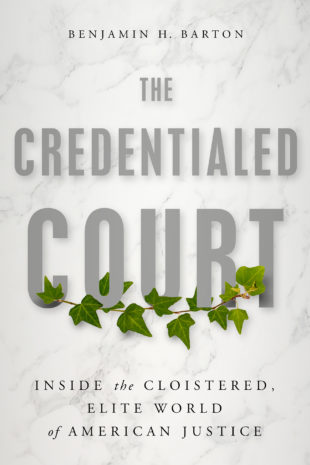
Our Credentialed Court

Earlier this year, Encounter Books published a new history of the membership of the Supreme Court from its first years to today, The Credentialed Court, by University of Tennessee Law Professor Benjamin H. Barton. Barton points out that the current membership is historically narrow in terms of life experience. All justices but one have gone to Ivy League law schools; most have been lower court judges; an increasing number are former law clerks. Nothing wrong with any of that–but perhaps something is lost when the justices’ backgrounds are so circumscribed and similar. For example, do the backgrounds of the justices influence their work in religion clause cases? It’s hard to see why that would not be the case. Would the Court’s jurisprudence over the last 50 years have looked different with the graduate of an evangelical college on the bench–or a yeshiva or madrassa?

Looks very interesting. Here’s the publisher’s description:

The Credentialed Court starts by establishing just how different today’s Justices are from their predecessors. The book combines two massive empirical studies of every Justice’s background from John Jay to Amy Coney Barrett with short, readable bios of past greats to demonstrate that today’s Justices arrive on the Court with much narrower experiences than they once did. Today’s Justices have spent more time in elite academic settings (both as students and faculty) than any previous Courts. Every Justice but Barrett attended either Harvard or Yale Law School, and four of the Justices were tenured professors at prestigious law schools. They also spent more time as Federal Appellate Court Judges than any previous Courts. These two jobs (tenured law professor and appellate judge) share two critical components: both jobs are basically lifetime appointments that involve little or no contact with the public at large. The modern Supreme Court Justices have spent their lives in cloistered and elite settings, the polar opposite of past Justices.

The current Supreme Court is packed with a very specific type of person: type-A overachievers who have triumphed in a long tournament measuring academic and technical legal excellence. This Court desperately lacks individuals who reflect a different type of “merit.” The book examines the exceptional and varied lives of past greats from John Marshall to Thurgood Marshall and asks how many, if any, of these giants would be nominated today. The book argues against our current bookish and narrow version of meritocracy. Healthier societies offer multiple different routes to success and onto bodies like our Supreme Court.

Movsesian on Legal Docket on Dobbs

For those interested, I sat down today (virtually!) with journalist Mary Reichard at the Legal Docket podcast (a feature of “The World and Everything In It”) to discuss the Dobbs leak and why it so damages the Supreme Court as an institution. Here’s an excerpt:

MOVSESIAN: I know that people will look at this and say the important thing is abortion, why do we care that the justices are embarrassed? And I think that’s because, you know, people who think that way may not appreciate just how much is being undone, when members of the court think they cannot deliberate in confidence, when members of the court think that they can’t engage in a good faith discussion of the issues with their colleagues on the court, I think that really does threaten to destroy the institution in a way that will have very bad consequences for our law.

You can listen to the whole episode here.

Around the Web

Here are some important law-and-religion news stories from around the web:

  • The U.S. Supreme Court denied review in Community Baptist Church v. Polis, a free exercise challenge to COVID restrictions imposed by Colorado. The challenge was brought by two churches and one of their pastors.
  • In Congregation Rabbinical College of Tartikov, Inc. v. Village of Pomona, New York, the Second Circuit affirmed the dismissal, on ripeness grounds, of a suit challenging two zoning laws that prevented plaintiff from building a rabbinical college on its property.
  • In Universal Life Church Monastery Storehouse v. Nabors, the Sixth Circuit allowed a lawsuit to go forward challenging a Tennessee law that prohibits persons who receive online ordination from solemnizing marriages.
  • The Seventh Circuit heard oral arguments in Halczenko v. Ascension Health, Inc., in which a pediatric intensive care doctor is seeking a religious exemption from a hospital’s COVID vaccination requirement . 
  • The Council on American-Islamic Relations Michigan Chapter (“CAIR-MI”) announced that a settlement has been reached in a suit charging the city of Ferndale’s police department with forcibly removing a Muslim woman’s hijab for a booking photo after her arrest.
  • Virginia Governor Glen Younkin, has signed House Bill 1063, which broadly defines “religion” in the state’s civil rights laws to include actions and expressions, not just personal beliefs.

Around the Web

Here are some important law-and-religion news stories from around the web:

  • In a unanimous decision, the Supreme Court ruled that the City of Boston violated the First Amendment when it rejected an application to fly a Christian flag on one of the flagpoles in front of city hall.
  • In Navy SEAL 1 v. Austin, a D.C. federal district court refused to grant a preliminary injunction to bar discharge or other adverse action against a Navy SEAL who refuses, for religious reasons, to comply with the military’s COVID-19 vaccine mandate.
  • In Cobranchi v. City of Parkersburg, a West Virginia federal district court held that Parkersburg’s City Council violated the Establishment Clause by opening its meetings with The Lord’s Prayer.
  • In South Central Conference of Seventh Day Adventists v. Alabama High School Athletic Association, suit was filed in an Alabama federal district court by the Seventh Day Adventist Oakwood Academy after it was forced to forfeit a semifinal game in the state tournament due to observance of the sabbath.
  • In State of Louisiana v. Spell (Parish of East Baton Rouge), the Louisiana Supreme Court quashed bills of information that had been issued against a pastor, charging him with violating the government’s COVID-19 orders during the pandemic.
  • Times of Israel reported last week that the Israel Religious Action Center is suing an ultra-Orthodox Jewish news website because of its policy of digitally blurring the faces of females in news photos it posts. The news site claims it blurred the faces in order to observe religious doctrines regarding modesty.

On the Leak in Dobbs

In First Things today, I argue that the leak of the Dobbs draft opinion this week differs from past SCOTUS leaks and poses a real danger for the Court. Here’s an excerpt:

Past leaks from law clerks typically have come after the Court has issued a decision. They often seem explained by desires to set the record straight for history or, perhaps, to demonstrate the leaker’s own significance (which, as a former clerk, I can attest to be typically little). If they come before a decision, leaks are usually spare and vague, hints at a likely vote tally or outcome. Such leaks do little to change the day-to-day workings of the Court.

But the leak of an entire draft opinion in the middle of deliberations in a vitally important case suggests something very different, a desire either to bully or destroy the Court as an effective institution. After this episode, justices will feel less secure about the confidentiality of their deliberations and think twice about what they put in drafts. The work of the Court will inevitably suffer. That is what makes this leak so damaging, however one feels about the ultimate issue at stake.

You can read the full essay here.

Tradition and Strict Scrutiny

Over at the Volokh site, I have a post on last week’s decision in Ramirez v. Collier, in which the Supreme Court ruled in favor of a death-row inmate who argued that prison officials violated RLUIPA by refusing to allow him to have a clergy present at his execution. RLUIPA requires prison restrictions to meet strict scrutiny: the state must justify restrictions on religion by showing that it has chosen the least restrictive means of satisfying a compelling interest.

Strict scrutiny, which applies in many areas of constitutional law, in practice operates as a balancing test. Critics (including me) have pointed out that the test is inherently indeterminate, depending largely on the intuitions of the particular judges hearing a case. In a separate concurrence in Ramirez, Justice Kavanaugh argues that tradition can help make the test less subjective:

In Ramirez, for example, prison officials had concluded that the marginal benefit of excluding pastors from the execution chamber outweighed the burden on inmates’ RLUIPA rights. Chief Justice Roberts and the majority evidently disagreed. But how were they to know? “It is difficult for a court applying” strict scrutiny, Kavanaugh wrote, “to know where to draw the line—that is, how much additional risk of great harm is too much for a court to order the State to bear.” If the justices’ intuitive judgments are all that make the difference, that hardly seems legitimate.

Here, according to Kavanaugh, is where tradition can help. For centuries in American practice, clergy have been present at executions. And that practice continues today. The presence of clergy, in other words, is a living tradition. “Although the compelling interest and least restrictive means standards are necessarily imprecise,” Kavanaugh wrote, “history and state practice can at least help structure the inquiry and focus the Court’s assessment of the State’s arguments.” Kavanaugh wrote separately to emphasize this aspect of the Court’s reasoning.

Here’s a link to my post.