van der Veer, “The Modern Spirit of Asia: The Spiritual and the Secular in China and India”

Next month, Princeton University Press will publish The Modern Spirit of Asia: The Spiritual and the Secular in China and India by Peter van der Veer (Utrecht University). The publisher’s description follows.

bookjacket

The Modern Spirit of Asia challenges the notion that modernity in China and India are derivative imitations of the West, arguing that these societies have transformed their ancient traditions in unique and distinctive ways. Peter van der Veer begins with nineteenth-century imperial history, exploring how Western concepts of spirituality, secularity, religion, and magic were used to translate the traditions of India and China. He traces how modern Western notions of religion and magic were incorporated into the respective nation-building projects of Chinese and Indian nationalist intellectuals, yet how modernity in China and India is by no means uniform. While religion is a centerpiece of Indian nationalism, it is viewed in China as an obstacle to progress that must be marginalized and controlled.

The Modern Spirit of Asia moves deftly from Kandinsky’s understanding of spirituality in art to Indian yoga and Chinese qi gong, from modern theories of secularism to histories of Christian conversion, from Orientalist constructions of religion to Chinese campaigns against magic and superstition, and from Muslim Kashmir to Muslim Xinjiang. Van der Veer, an outspoken proponent of the importance of comparative studies of religion and society, eloquently makes his case in this groundbreaking examination of the spiritual and the secular in China and India.

Crouch, “Law and Religion in Indonesia: Conflict and the courts in West Java”

Next month, Routledge will publish Law and Religion in Indonesia: Conflict and 9780415835947the courts in West Java, by Melissa Couch (National University of Singapore), part of its Contemporary Southeast Asia Series. The publisher’s description follows.

Understanding and managing inter-religious relations, particularly between Muslims and Christians, presents a challenge for states around the world. This book investigates legal disputes between religious communities in the world’s largest majority-Muslim, democratic country, Indonesia. It considers how the interaction between state and religion has influenced relations between religious communities in the transition to democracy.

The book presents original case studies based on empirical field research of court disputes in West Java, a majority-Muslim province with a history of radical Islam. These include criminal court cases, as well as cases of judicial review, relating to disputes concerning religious education, permits for religious buildings and the crime of blasphemy. The book argues that the democratic law reform process has been influenced by radical Islamists because of the politicization of religion under democracy and the persistence of fears of Christianization. It finds that disputes have been localized through the decentralization of power and exacerbated by the central government’s ambivalent attitude towards radical Islamists who disregard the rule of law.

Examining the challenge facing governments to accommodate minorities and manage religious pluralism, the book furthers understanding of state-religion relations in the Muslim world. This accessible and engaging book is of interest to students and scholars of law and society in Southeast Asia, was well as Islam and the state, and the legal regulation of religious diversity.

Duncan, “Violence and Vengeance: Religious Conflict and Its Aftermath in Eastern Indonesia”

This October, Cornell University Press will publish Violence and Vengeance: Violenve and VengeanceReligious Conflict and Its Aftermath in Eastern Indonesia by Christopher R. Duncan (Arizona State University).  The publisher’s description follows.
Between 1999 and 2000, sectarian fighting fanned across the eastern Indonesian province of North Maluku, leaving thousands dead and hundreds of thousands displaced. What began as local conflicts between migrants and indigenous people over administrative boundaries spiraled into a religious war pitting Muslims against Christians and continues to influence communal relationships more than a decade after the fighting stopped. Christopher R. Duncan spent several years conducting fieldwork in North Maluku, and in Violence and Vengeance, he examines how the individuals actually taking part in the fighting understood and experienced the conflict.

Rather than dismiss religion as a facade for the political and economic motivations of the regional elite, Duncan explores how and why participants came to perceive the conflict as one of religious difference. He examines how these perceptions of religious violence altered the conflict, leading to large-scale massacres in houses of worship, forced conversions of entire communities, and other acts of violence that stressed religious identities. Duncan’s analysis extends beyond the period of violent conflict and explores how local understandings of the violence have complicated the return of forced migrants, efforts at conflict resolution and reconciliation.

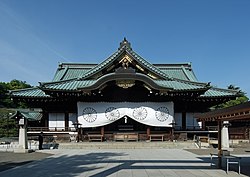
Religion and the Yasukuni Shrine Controversy

At Via Meadia, Walter Russell Mead has been doing a great job covering the controversy surrounding visits last week by top Japanese officials to the Yasukuni Shrine in Tokyo. Yasukuni is a Shinto shrine; in Shinto belief, it houses the souls of millions of people who died in the service of the Japanese Empire, including during World War II. Among the millions commemorated are approximately 1000 convicted war criminals, including wartime Prime Minister Hideki Tojo.

Japan’s neighbors, China and Korea, perceive official visits to the shrine as an outrageous insult and a sign that Japan has not fully repudiated the imperialism of its past. (In response to last week’s visits, China sent a fleet of patrol ships into Japanese territorial waters.) The latest controversy erupted when top officials in Prime Minister Shinzo Abe’s cabinet, as well more than 150 parliamentarians, visited the shrine for the annual Shinto Spring Ceremony–the largest official delegation in decades. In response to Chinese and Korean complaints, Abe doubled down, declaring in a parliamentary debate, “It’s only natural to honor the spirits of those who gave their lives for the country. Our ministers will not cave in to any threats.” Abe doubtless feels buoyed by opinion polls showing that he has a 70% approval rating from the Japanese public.

Official participation in ceremonies at Yasukuni have been controversial inside Japan as well. The Japanese Constitution, adopted after the war, disestablished Shintoism and effected, in the words of the Japanese Supreme Court, the “separation of state and religion.” In fact, in 1997 the Supreme Court ruled that the government officials could not make financial contributions to Yasukuni for use in Shinto ceremonies. With respect to this month’s visits, the officials involved were careful to point out that they were participating only as private citizens, not government officials, but that explanation has not satisfied critics. “”It doesn’t matter how or in what role Japanese leaders visit the Yasukuni shrine,” a Chinese spokesman said. “We feel it is in essence a denial of Japan’s history of militarist invasion.” And Japanese legal scholar Keisuke Abe (no relation to the Prime Minister, I believe) argues in a symposium in the St. John’s Law Review that most Japanese wouldn’t recognize the distinction, either. “Whatever the purpose of” a visit to the shrine, he writes, “the general public is likely to consider it as the government giving special support to Shintoism, associated with ancestor worship.”