In August, the Oxford University Press released “Russia and the Making of Modern Greek Identity, 1821-1844,” by Lucien J. Frary (Rider University). The publisher’s description follows:
The birth of the Greek nation in 1830 was a pivotal event in modern European history and in the history of nation-building in general. As the first internationally recognized state to appear on the map of Europe since the French Revolution, independent Greece provided a model for other national movements to emulate. Throughout the process of nation formation in Greece, the Russian Empire played a critical part. Drawing upon a mass of previously fallow archival material, most notably from Russian embassies and consulates, this volume explores the role of Russia and the potent interaction of religion and politics in the making of modern Greek identity. It deals particularly with the role of Eastern Orthodoxy in the transformation of the collective identity of the Greeks from the Ottoman Orthodox millet into the new Hellenic-Christian imagined community. Lucien J. Frary provides the first comprehensive examination of Russian reactions to the establishment of the autocephalous Greek Church, the earliest of its kind in the Orthodox Balkans, and elucidates Russia’s anger and disappointment during the Greek Constitutional Revolution of 1843, the leaders of which were Russophiles. Employing Russian newspapers and “thick journals” of the era, Frary probes responses within Russian reading circles to the reforms and revolutions taking place in the Greek kingdom. More broadly, the volume explores the making of Russian foreign policy during the reign of Nicholas I (1825-55) and provides a distinctively transnational perspective on the formation of modern identity.
 Thompson explores the way radical-left and ecumenical Protestant internationalists articulated new understandings of the ethics of international relations between the 1920s and the 1940s. Missionary leaders such as Sherwood Eddy and journalists such as Kirby Page, as well as realist theologians including Reinhold Niebuhr, developed new kinds of religious enterprises devoted to producing knowledge on international relations for public consumption. For God and Globe centers on the excavation of two such efforts—the leading left-wing Protestant interwar periodical, The World Tomorrow, and the landmark Oxford 1937 ecumenical world conference. Thompson charts the simultaneous peak and decline of the movement in John Foster Dulles’s ambitious efforts to link Christian internationalism to the cause of international organization after World War II.
 strengthened by the diverse faiths of its peoples. Between 1875 and 1925, liberal Protestant leaders abandoned religious exclusivism and leveraged their considerable cultural influence to push others to do the same. This reorientation came about as an ever-growing group of Americans found their religious faith under attack on social, intellectual, and political fronts. A new generation of outspoken agnostics assailed the very foundation of belief, while noted intellectuals embraced novel spiritual practices and claimed that Protestant Christianity had outlived its usefulness.
 development. The Polygamy Question explores the ways in which indigenous and immigrant polygamy have shaped the lives of individuals, communities, and the broader societies that have engaged with it. The book also considers how polygamy challenges our traditional notions of gender and marriage and how it might be effectively regulated to comport with contemporary notions of justice.
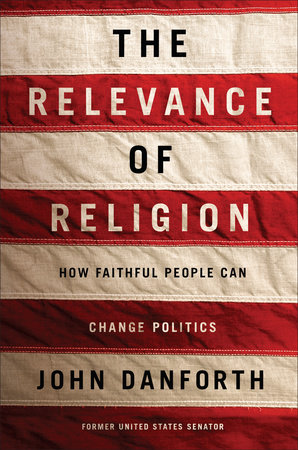 Danforth offers a fascinating, thoughtful, and deeply personal look at the state of American politics today—and how religion can be a bridge over our bitter partisan divide.
 anti-heretical repression in the first half of the fourteenth century, focusing on the figure of Jacques Fournier/Benedict XII (c.1284-1342). Throughout his career as a bishop-inquisitor in Languedoc, theologian, and, eventually, pope at Avignon, Fournier made a multi-faceted contribution to the fight against religious dissent. Making use of judicial, theological, and diplomatic sources, the book sheds light on the multiplicity of methods, discourses, and textual practices mobilized to define the bounds of heresy at the end of the Middle Ages. The integration of these commonly unrelated areas of evidence reveals the intellectual and political pressures that inflected the repression of heretics and dissidents in the peculiar context of the Avignon papacy.
 Brimming with revelations that synthesize area and ethnic studies, Crescent over Another Horizon presents a portrait of Islam’s unity as it evolved through plural formulations of identity, power, and belonging. Offering a Latino American perspective on a wider Islamic world, the editors overturn the conventional perception of Muslim communities in the New World, arguing that their characterization as “minorities” obscures the interplay of ethnicity and religion that continues to foster transnational ties.
 annual Muslim pilgrimage to Mecca. The first book in any language on the hajj under tsarist and Soviet rule, Russian Hajj tells the story of how tsarist officials struggled to control and co-opt Russia’s mass hajj traffic, seeing it not only as a liability, but also an opportunity. To support the hajj as a matter of state surveillance and control was controversial, given the preeminent position of the Orthodox Church. But nor could the hajj be ignored, or banned, due to Russia’s policy of toleration of Islam. As a cross-border, migratory phenomenon, the hajj stoked officials’ fears of infectious disease, Islamic revolt, and interethnic conflict, but Kane innovatively argues that it also generated new thinking within the government about the utility of the empire’s Muslims and their global networks.