In April, Oxford University Press will release “Transforming Post-Catholic Ireland: Religious Practice in Late Modernity” by Gladys Ganiel (Queen’s University Belfast). The publisher’s description follows:
Transforming Post-Catholic Ireland is the first major book to explore the dynamic religious landscape of contemporary Ireland, north and south, and to analyze the island’s religious transition. It confirms that the Catholic Church’s long-standing “monopoly” has well and truly disintegrated, replaced by a mixed, post-Catholic religious “market” featuring new and growing expressions of Protestantism, as well as other religions. It describes how people of faith are developing “extra-institutional” expressions of religion, keeping their faith alive outside or in addition to the institutional Catholic Church.
Drawing on island-wide surveys of clergy and laypeople, as well as more than 100 interviews, Gladys Ganiel describes how people of faith are engaging with key issues such as increased diversity, reconciliation to overcome the island’s sectarian past, and ecumenism. Ganiel argues that extra-institutional religion is especially well-suited to address these and other issues due to its freedom and flexibility when compared to traditional religious institutions. She explains how those who practice extra-institutional religion have experienced personal transformation, and analyses the extent that they have contributed to wider religious, social, and political change. On an island where religion has caused much pain, from clerical sexual abuse scandals, to sectarian violence, to a frosty reception for some immigrants, those who practice their faith outside traditional religious institutions may hold the key to transforming post-Catholic Ireland into a more reconciled society.
 adopted a system of church government, which is now in world-wide use. This book examines the development and current state of Scots law. Drawing on previous material as well as discussing current topical issues, this book makes some comparisons between Scotland and other legal and religious jurisdictions. The study first considers the Church of Scotland, its ‘Disruption’ and statutorily recognised reconstitution and then the position of other denominations before assessing the interaction of religion and law and the impact of Human Rights and various discrimination laws within this distinctive Presbyterian country. This unique book will be of interest to both students and lecturers in constitutional and civil law, as well as historians and ecclesiastics.
 contentious subject for recent generations of American readers. In The Founders and the Bible, historian Carl J. Richard carefully examines the framers’ relationship with the Bible to assess the conflicting claims of those who argue that they were Christians founding a Christian nation against those who see them as Deists or modern secularists. Richard argues that it is impossible to understand the Founders without understanding the Biblically infused society that produced them. They were steeped in a biblical culture that pervaded their schools, homes, churches, and society. To show the fundamental role of religious beliefs during the Founding and early years of the republic, Richard carefully reconstructs the beliefs of 30 Founders; their lifelong engagements with Scripture; their biblically-infused political rhetoric; their powerful beliefs in a divine Providence that protected them and guided the young nation; their beliefs in the superiority of Christian ethics and in the necessity of religion to republican government; their beliefs in spiritual equality, free will, and the afterlife; their religious differences; the influence of their biblical conception of human nature on their formulation of state and federal constitutions; and their use of biblical precedent to advance religious freedom.
 Middle East and North Africa, women made up an important part of the crowds protesting. Women’s rights were central to the demands made. However, despite this, in the ensuing social and political struggles, these rights have not progressed much beyond the situation under previous governments. Hiam El-Gousi’s book offers an examination of the status of women under Egypt’s various authoritarian regimes. In exploring the role played by religious scholars in helping to define women’s status in society, she focuses on personal status laws and health rights. In examining the issue of women’s rights El-Gousi begins with an account of feminism in Egypt: the centre of feminist thought in the Middle East at the end of the nineteenth and beginning of the twentieth century. Based on extensive research in the country, especially at grassroots level, El-Gousi goes on to analyse the constitutional and legislative rulings which have affected the lives and rights of Egyptian women. This book will become a vital primary resource for those studying feminism in the wider Middle East and North Africa.
 terrorism charges. Some have taken the fight abroad: an American was among those who planned the attacks in Mumbai, and more than eighty U.S. citizens have been charged with ISIS-related crimes. Others have acted on American soil, as with the attacks at Fort Hood, the Boston Marathon, and in San Bernardino. What motivates them, how are they trained, and what do we sacrifice in our efforts to track them?
 ideology, this edited volume seeks to understand how Buddhist values and world views have impacted on the political process of many countries in Asia. In their respective work in Myanmar, Thailand, Sri Lanka, China, Japan and Tibet, the contributors engage with an interactive typology originally proposed by the late Ian Harris, to whom the book is dedicated. Adopting an interdisciplinary approach, they explore the interaction between Buddhism and politics, religious authority and political power, considering issues that concern the politicization of monks, proliferation of violence, leadership, citizenship, democracy and communalism in order to further understand the interface between Buddhism and politics in modern and contemporary times.
 legal diversity that is available to citizens and why such recognition sometime results in more individual and collective freedom and sometime in a threat to equality of citizens before the law. The first part of the book contains a few contributions that place this discussion within the wider debate on legal pluralism. While State law and religious rules are two normative systems among many others, the specific characteristics of the latter are at the heart of tensions that emerge with increasing frequency in many countries. The second part is devoted to the analysis of about twenty national cases that provide an overview of the different tools and strategies that are employed to manage the relationship between State law and religious rules all over the world.
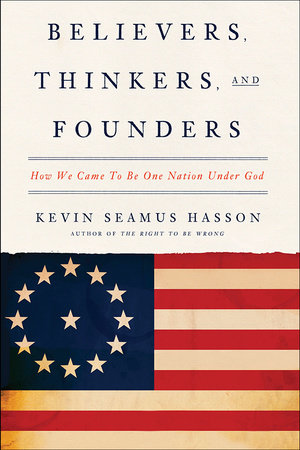 Under God, Kevin Seamus Hasson—founder and president emeritus of the Becket Fund for Religious liberty—offers a refreshing resolution to the age-old dispute surrounding the relationship of religion and state: a return to first principles.
 magazine, Charlie Hebdo, in Paris, opened fire and killed twelve people, including a Muslim policeman, in the deadliest terrorist attack on France for 50 years. We live in a time of suspicion and fear, not least because religion has returned to the centre stage of collective memories in Europe and in the United States. Amidst claims of threats to national identities in an era of increasing diversity, should we be worried about the upsurge in religious animosity in the United States, as well as Europe? Paola Mattei and Andrew Aguilar show that French society is divided along conflicts about religious identity, increasingly visible in public schools. Republicanism, based on the solidarity and secularism, is viewed by many as the cause of discrimination and unfairness against minority groups. Policies invoking laïcité are frequently criticised as a disguised form of Islamophobia. Secular Institutions, Islam, and Education Policy suggests, on the contrary, that secularism in France is a flexible concept, translated into contradictory policy programmes, and subject to varying political interpretations. This book presents original data showing how schools have become, once again, a central theatre of political action and public engagement regarding laicité, an ideal grounded in the republican origins of the public education system in France.