
It’s not a new insight that many contemporary secular movements substitute for God. Communism, nationalism, left-liberalism, and other encompassing causes offer a kind of transcendence for individuals, who can find meaning in commitments to moral progress in the world. But what happens when progress doesn’t occur? The failure of secular movements to deliver can lead to great frustration and bitterness, without the consolations of ultimate justice in the world to come. That, suggests Harvard philosopher Michael Rosen in a new book from Harvard University Press, The Shadow of God, is our current predicament. Here is the publisher’s description:
Once in the West, our lives were bounded by religion. Then we were guided out of the darkness of faith, we are often told, by the cold light of science and reason. To be modern was to reject the religious for the secular and rational. In a bold retelling of philosophical history, Michael Rosen explains the limits of this story, showing that many modern and apparently secular ways of seeing the world were in fact profoundly shaped by religion.
The key thinkers, Rosen argues, were the German Idealists, as they sought to reconcile reason and religion. It was central to Kant’s philosophy that, if God is both just and assigns us to heaven or hell for eternity, we must know what is required of us and be able to choose freely. In trying to live moral lives, Kant argued, we are engaged in a collective enterprise as members of a “Church invisible” working together to achieve justice in history. As later Idealists moved away from Kant’s ideas about personal immortality, this idea of “historical immortality” took center stage. Through social projects that outlive us we maintain a kind of presence after death. Conceptions of historical immortality moved not just into the universalistic ideologies of liberalism and revolutionary socialism but into nationalist and racist doctrines that opposed them. But how, after global wars and genocide, can we retain faith in any conception of shared moral progress and, if not, what is to become of the idea of historical immortality? That is our present predicament.
A seamless blend of philosophy and intellectual history, The Shadow of God is a profound exploration of secular modernity’s theistic inheritance.

 This book considers the theory and application of ethics for a multifaith society. Much ethics taught in the UK has been dominated by Christian ethics, their relation to secularism and by the Enlightenment’s reaction against theology as a basis for ethical thought. In contrast to these perspectives this book brings secular and theological ethics into dialogue, considering the degree to which secular ethics has common roots with theological perspectives from various traditions. The book assesses the application of ethical and theological principles in today’s multifaith society. Aiming to enhance ethical understanding and awareness across divergent worldviews, identifying at what points divergence does occur, the author examines topics such as reason and ethics in theology, natural law, utilitarianism and deontology and differences of approach to interpreting religious scriptures. The focus on ethical methods is illustrated through topical concerns in religion and ethics, for example sexuality, marriage and education and religion in relation to global ethics and human rights.
 practitioners who have lived, taught, or worked in the areas of conflict about which they write. Connecting the theory and practice of religious peacebuilding to illuminate key challenges facing interreligious dialogue and interreligious peace work, the volume is explicitly interreligious, intercultural, and global in perspective. The chapters approach religion and peace from the vantage point of security studies, sociology, ethics, ecology, theology, and philosophy. A foreword by David Smock, the Vice President of Governance, Law and Society and Director of the Religion and Peacebuilding Center at the United States Institute of Peace, outlines the current state of the field.
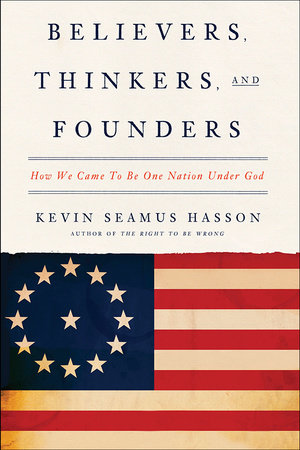 Under God, Kevin Seamus Hasson—founder and president emeritus of the Becket Fund for Religious liberty—offers a refreshing resolution to the age-old dispute surrounding the relationship of religion and state: a return to first principles.
 reductive definitions of secularity. In one, multiple faiths and nonfaiths coexist free from a dominant belief in God. In the other, we deny the sacred altogether and exclude religion from rational thought and behavior. But is there a third way for those who wish to rediscover the sacred in a skeptical society? What kind of faith, if any, can be proclaimed after the ravages of the Holocaust and the many religion-based terrors since?
 shows that theological discourse is never philosophically neutral and always politically loaded. Raising questions concerning the conditions of modern philosophy, religion, and political ideas, Marius Timmann Mjaaland follows a dark thread of thought back to its origin in Martin Luther. Thorough analyses of the genealogy of secularization, the political role of the apocalypse, the topology of the self, and the destruction of metaphysics demonstrate the continuous relevance of this highly subtle thinker.