“Tafsir and Islamic Intellectual History: Exploring the Boundaries of a Genre” (Görke & Pink, eds.)

In February, Oxford University Press released “Tafsir and Islamic Intellectual History: Exploring the Boundaries of a Genre”  edited by Andreas Görke (University of Edinburgh) and Johanna Pink (University of Freiburg, Germany). The publisher’s description follows:

How and when did Qur’anic exegesis (tafsir) emerge as a literary genre of its own? To what extent was it influenced by other disciplines, such as law, theology, or philosophy? How did different political or theological agendas shape works of tafsir, and in what ways did the genre develop over time and in different regions? These are some of the major questions which this book seeks to address.

This book constitutes the first comprehensive attempt at describing the genre of Qur’anic exegesis in its broader intellectual context. Its aim is to provide a framework for understanding the boundaries of tafsir and its interaction with other disciplines of learning, as well as the subgenres and internal divisions within the genre. It discusses the emergence of the genre in the beginnings of Islamic history and the changes and potential ruptures it has experienced in later times, the role of hadith, law, language, philosophy, theology, and political ideology for the interpretive process, the regional dimension, the influx of modernist ideas and the process of writing tafsir in languages other than Arabic.

Among the fifteen authors who have contributed to the volume are leading scholars in the field as well as young researchers, which makes for a unique and fresh perspective on a field that has long been reduced to its instrumental value for understanding the Qur’an. Covering the time from the formation of Qur’anic exegesis until the present, it is a valuable resource for advanced students and scholars in the field.

Stendhalian Interlude

I’m listening to Stendhal’s The Charterhouse of Parma in the car, a wonderful

Farnese Tower, Castell'Arquato, Parma
Farnese Tower, Castell’Arquato, Parma

work of novelistic “realism” set in the early 19th century world of Italian city-state court life. Stendhal’s portrait of these small time courts is none too flattering, but neither is its chief alternative: “From the whole business one can derive this moral, that the man who mingles with a court compromises his happiness, if he is happy, and, in any event, makes his future depend on the intrigues of a chambermaid. On the other hand in America, in the Republic, one has to spend the whole weary day paying serious court to the shopkeepers in the street, and must become as stupid as they are; and there, one has no Opera.”

The hero of the story, Fabrizio del Dongo, is a figure of perfect aristocratic early Romantic integrity–the sort of man who brashly leaves his suffocating palace life in Como to join the army of Napoleon, only to reach him right as the Battle of Waterloo is concluding. For Fabrizio, the only thing that matters is to get confirmation that he has actually participated in a battle–any battle–something about which he is never quite certain.

Since prisons and prison life (and even prison escape!) have been a subject of discussion here at the Center for Law and Religion Forum this past week, and since a large portion of the key section of The Charterhouse of Parma occurs in a prison (the Farnese Tower in Parma, at right), I thought the following was interesting. The prison warden, a General Fabio Conti, is a detestable person and fairly universally hated, including by many of the guards (to say nothing of the prisoners). At one point, it appears that he may have died by poisoning. But he revives. Yet rather than feeling crushed by the news, the prisoners sing his praises. Stendhal writes:

Fabio Conti was a jailer who was always uneasy, always unhappy, always seeing in his dreams one of his prisoners escaping: he was loathed by everyone in the citadel; but misfortune inspiring the same resolutions in all men, the poor prisoners, even those who were chained in dungeons three feet high, three feet wide and eight feet long, in which they could neither stand nor sit, all the prisoners, even these, I say, had the idea of ordering a  Te Deum to be sung at their own expense, when they knew that their governor was out of danger. Two or three of these wretches composed sonnets in honor of Fabio Conti. Oh, the effect of misery upon men! May he who would blame them be led by his destiny to spend a year in a cell three feet high, with eight ounces of bread a day and fasting on Fridays!

Happy 450th Birthday to William Shakespeare

250px-Shakespeare

Measure for Measure (Act II, Scene 2):

ANGELO.
Your brother is a forfeit of the law,
And you but waste your words.
ISABELLA.
Alas, alas!
Why, all the souls that were were forfeit once,
And He that might the vantage best have took
Found out the remedy. How would you be
If He, which is the top of judgment, should
But judge you as you are? O, think on that,
And mercy then will breathe within your lips,
Like man new made.
ANGELO.
Be you content, fair maid,
It is the law, not I, condemn your brother.
Were he my kinsman, brother, or my son,
It should be thus with him: he must die tomorrow.
ISABELLA.
Tomorrow? O, that’s sudden! Spare him, spare him!
He’s not prepar’d for death. Even for our kitchens
We kill the fowl of season. Shall we serve heaven
With less respect than we do minister
To our gross selves? Good, good my lord, bethink you:
Who is it that hath died for this offense?
There’s many have committed it.
LUCIO.
Aside to Isabella: Ay, well said.
ANGELO.
The law hath not been dead, though it hath slept.
Those many had not dar’d to do that evil
If the first that did th’ edict infringe
Had answer’d for his deed. Now ’tis awake,
Takes note of what is done, and like a prophet
Looks in a glass that shows what future evils,
Either now, or by remissness new conceiv’d
And so in progress to be hatch’d and born,
Are now to have no successive degrees,
But here they live, to end.
ISABELLA.
Yet show some pity.
ANGELO.
I show it most of all when I show justice;
For then I pity those I do not know,
Which a dismiss’d offense would after gall,
And do him right that, answering one foul wrong,
Lives not to act another. Be satisfied;
Your brother dies tomorrow; be content.
ISABELLA.
So you must be the first that gives this sentence,
And he, that suffers. O, it is excellent
To have a giant’s strength; but it is tyrannous
To use it like a giant.
LUCIO.

 Aside to Isabella: That’s well said.

ISABELLA.
Could great men thunder
As Jove himself does, Jove would never be quiet,
For every pelting, petty officer
Would use his heaven for thunder,
Nothing but thunder! Merciful heaven,
Thou rather with thy sharp and sulphurous bolt
Splits the unwedgeable and gnarled oak
Than the soft myrtle; but man, proud man,
Dress’d in a little brief authority,
Most ignorant of what he’s most assur’d
(His glassy essence), like an angry ape
Plays such fantastic tricks before high heaven
As makes the angels weep; who, with our spleens,
Would all themselves laugh mortal.

Tocqueville on Pantheism: Part I

We have seen that Tocqueville believes that the dominant American faith, Ralph Waldo EmersonProtestantism, will tend to decompose. The process of dissolution will occur in two phases. In the first, Protestantism (or more accurately, Calvinism) will tend to become a form of natural religion, such as he believed he had encountered in Unitarianism. This movement will take place chiefly among American élites; working class American Protestants, he believes, will be increasingly drawn to Catholicism. In the second phase, Unitarianism or natural religion will itself tend to become what he calls “pantheism.” These movements are traced out, albeit in very summary and schematic form, in Vol. II, Pt. I, chh. 6-7 of Democracy in America, dealing, respectively, with Catholicism and pantheism. In a powerful and illuminating study, Peter Lawlor has described these as two of the “least studied and strangest chapters” of Democracy in America. See Peter Augustine Lawlor, Tocqueville on Pantheism, Materialism, and Catholicism, 30 Perspectives on Political Science 218 (2001).
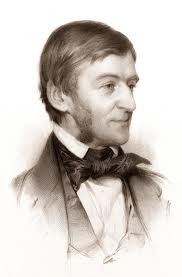
Tocqueville’s notions may seem very wayward and idiosyncratic to us. After Walt Whitmanall, contemporary America is neither predominantly Catholic nor predominantly pantheistic. Nonetheless, when examined more closely, Tocqueville’s analysis is full of interest and even, remarkably, of current applicability.

The “decline” of Protestantism

Since the 1960s, there has been vigorous and ongoing debate over whether American Protestantism – or at any rate “mainstream” Protestantism – is dead or dying. See, e.g., Stanley Hauerwas, The end of American Protestantism (July 2, 2013), available at http://www.abc.net.au/religion/articles/2013/07/02/3794561.htm. Equally, the question whether American Catholicism has become, or is becoming, a form of Protestantism also provokes current controversy. (Tocqueville himself had noted the tendency of American Catholicism to be less dogmatic and less ritualized than French Catholicism.) Neither of these interesting issues can detain us here. What is more relevant to our purpose is why Tocqueville should have thought that Protestantism would decline, and whether the evidence from the period in which he wrote might have supported the prediction that it would turn into something radically different from traditional Christianity.

Bossuet

Tocqueville could certainly have derived his thesis from reading the work of the great eighteenth century French Catholic theologian, historian and apologist, Jacques-Bénigne Bossuet, the Bishop of Meaux and the tutor of Louis XIV’s eldest child, the Dauphin of France. Probably the greatest work by the prolific Bossuet was his History of the Variations of the Protestant Churches (1688; English trans. 1836). Bossuet’s History is a massively learned account of what the author sees as the steady fragmentation of the main branches of Protestantism into different and discordant sects. We know that Tocqueville had studied this work. In his letter of November 15, 1835 to Gustave Beaumont, he says that after finishing reading Machiavelli’s History of Florence, I turned to Bossuet’s Variations. Finding the “distance” between Machiavelli and Bossuet “great,” he writes that “I had never looked at [the Variations] so closely, and I cannot tell you how much I admired its content, and even more perhaps, its form. It is truly a magnificent and powerful arrangement.” Selected Letters 112. In thinking that Protestantism was bound to disintegrate, Tocqueville was very possibly adopting, if quietly, the polemical case that Bossuet had made for that proposition.

Tocqueville seems to have drawn on Bossuet in the places in Democracy in America in which he connects the growth of democracy with Divine Providence. For instance, in Vol. I, Pt. ii, ch. 17 of Democracy, entitled “A Few Sources of Poetry in Democratic Nations,” he writes that in egalitarian ages, as “each man . . . begins to perceive humanity itself, God reveals himself more and more to the human mind in his full and complete majesty . . . Observing the human race as a single entity, men find it easy to imagine that the same plan rules its destiny and they are inclined to perceive, in the actions of any individual, the trace of that universal and consistent design by which God guides our race.” Bevan trans. 563-64. Likewise, in his Introduction to Part I, Tocqueville speaks of the “gradual unfurling of equality in social conditions” as “a providential fact which reflects its principal characteristics: it is universal, it is lasting and it constantly eludes human interference; its development is served equally by every event and every human being.” Id. at 15. In such passages, Tocqueville is echoing another of Bossuet’s works, the Discourse on Universal History (1681), which he had also read. (For a fuller treatment of providentialism in Democracy, which downplays the influence of Bossuet, see David A. Selby, Tocqueville’s politics of providence: Pascal, Jansenism and the author’s introduction to Democracy in America, 33 The Tocqueville Review 167 (2012)).

Rousseau

It is also possible that Tocqueville formulated his thesis about Protestantism on the basis of reading Rousseau. After the publication of The Vicar of Savoy (on which see posting Tocqueville on Protestantism and Natural Religion: Part II), Rousseau was compelled to defend his views against the Protestant authorities of his native city of Geneva, who accused him of undermining the Reformed religion. Rousseau defended himself in a series of lengthy pieces called Letters Written from the Mountain (1764). In the second of these Letters, Rousseau identifies what he considers to be the “two fundamental points of the Reform,” and contends that his writings fully comply with both. Collected Writings of Rousseau, vol. 9 at 154. These two core principles are “to acknowledge the Bible as the rule of one’s belief, and not to admit any other interpreter of the Bible than oneself.” Id. To this he adds: “Combined, these two points form the principle on which the Reformed Christians separated from the Roman Church, and they could not do any less without falling into contradiction; for what interpretive authority could they have reserved to themselves, after having rejected that of the body of the Church?” Id.

To make the Bible the sole rule for deciding questions of faith and practice appears to be adopting a common standard of truth that transcends any individual opinion; but to take the principle of private judgment to mean that each believer is the final judge for himself or herself of the Bible’s meaning is to abandon the idea of a common authority.

Read more

Beale Reviews Coelho

This is far afield of law, but it’s Sunday and there will be time enough to return to law in the coming week.

On the recommendation of various relatives and sundry others, I recently listened to Paulo Coelho’s The Alchemist in the car.  It was recommended to me as representing an interesting new spiritual and mystical sensibility–an author who took the claims of religion seriously but explored them in novel ways.

I detested it.  I found it empty and pretentious, and pretentious about its emptiness.  It was truly one of the worst books I’ve listened to.  Coelho’s intolerably schmaltzy themes in the book are about pursuing one’s dreams (“Personal Legend”) and that nobody but you can help you to know and achieve your star.  Here is an absolutely splendid review by Victoria Beale that does justice to the novel, and remarks on similar themes in his other work, which it appears I won’t be reading.  From the review:

What is it in Coelho’s writing that has convinced so many millions of readers of his sagacity? In part, it is the universality of his central theme: A young person sets out on a spiritual quest, discovers that his elders are no wiser than he is, and ultimately realizes the power for change comes from within . . . . The worst aspect of Coelho (setting aside the fuzzy prose, which does a good job of concealing the greater flaws) is his absolute failure to genuinely, movingly, and convincingly, depict pain and suffering—the types of obstacles that positive thinking, however forceful, often cannot overcome . . . . This isn’t surprising. A realistic depiction of human difficulties would invalidate Coelho’s core teaching: every obstacle is surmountable and believing is all. The Alchemist lays out the grim future for those who don’t yearn sufficiently for their destiny: “Most people see the world as a threatening place and, because they do, the world turns out, indeed, to be a threatening place.’’ This is the alarming flipside of Coelho’s vapid optimism: Anyone in dire circumstances is suffering because they think it’s possible to suffer.

For a serious religious meditation by a Portuguese writer–a hard-core atheist with a knack for describing the human condition–may I humbly recommend the  novels of the late José Saramago, especially his excellent Blindness.

John Milton on Secularized Law

From Paradise Lost, Book 5.  An exchange between Satan and the angel Abdiel — “than whom none with more zeal adored The Deity” — after Abdiel angrily asks, “Shall thou give law to God? shalt thou dispute With him the points of liberty, who made Thee what thou art, and formed the Powers of Heaven Such as he pleased and circumscribed their being? . . . . His laws our laws; all honor to him done Returns our own.” 

Whereat rejoiced th’ Apostate, and more haughty thus replied:
That we were form’d then, say’st thou? and the work 
Of secondary hands, by task transfer’d
From Father to his Son? Strange point, and new!
Doctrine which we would know whence learn’d: who saw 
When this creation was? Remember’st thou
Thy making, while the Maker gave thee being?
We know no time when we were not as now;
Know none before us, self-begot, self-raised
By our own quick’ning pow’r, when fatal course
Had circled his full orb, the birth mature
Of this our native Heav’n, ethereal sons.
Our puissance is our own; our own right hand
Shall teach us highest deeds, by proof to try
Who is our equal: then thou shalt behold
Whether by supplication we intend
Address, and to begirt th’almighty throne
Beseeching or besieging. This report,
These tidings, carry to th’Anointed King;
And fly, ere evil intercept thy flight.

Hammill, “The Mosaic Constitution”

Here is a very interesting contribution to intellectual, literary, and political history, The Mosaic Constitution: Political Theology and Imagination from Machiavelli to Milton (U. Chicago Press 2012), by Graham Hammill (SUNY Buffalo).  The publisher’s description follows.

It is a common belief that scripture has no place in modern, secular politics. Graham Hammill challenges this notion in The Mosaic Constitution, arguing that Moses’s constitution of Israel, which created people bound by the rule of law, was central to early modern writings about government and state.

Hammill shows how political writers from Machiavelli to Spinoza drew on Mosaic narrative to imagine constitutional forms of government. At the same time, literary writers like Christopher Marlowe, Michael Drayton, and John Milton turned to Hebrew scripture to probe such fundamental divisions as those between populace and multitude, citizenship and race, and obedience and individual choice. As these writers used biblical narrative to fuse politics with the creative resources of language, Mosaic narrative also gave them a means for exploring divine authority as a product of literary imagination. The first book to place Hebrew scripture at the cutting edge of seventeenth-century literary and political innovation, The Mosaic Constitution offers a fresh perspective on political theology and the relations between literary representation and the founding of political communities.

Robinson on the Bible and Literature

In connection with my earlier post about how anyone, let alone a federal judge, could believe that the Establishment Clause requires the elimination of religious texts in public school classrooms, here is a complex essay by Marilynne Robinson (of Gilead fame) about the relationship between the Bible and important works of literature.  A bit:

The Bible is the model for and subject of more art and thought than those of us who live within its influence, consciously or unconsciously, will ever know . . . .

A number of the great works of Western literature address themselves very directly to questions that arise within Christianity. They answer to the same impulse to put flesh on Scripture and doctrine, to test them by means of dramatic imagination, that is visible in the old paintings of the Annunciation or the road to Damascus. How is the violence and corruption of a beloved city to be understood as part of an eternal cosmic order? What would be the consequences for the story of the expulsion from Eden, if the fall were understood as divine providence? What if Job’s challenge to God’s justice had not been overawed and silenced by the wild glory of creation? How would a society within (always) notional Christendom respond to the presence of a truly innocent and guileless man? Dante created his great image of divine intent, justice and grace as the architecture of time and being. Milton explored the ancient, and Calvinist, teaching that the first sin was a felix culpa, a fortunate fall, and providential because it prepared the way for the world’s ultimate reconciliation to God. So his Satan is glorious, and the hell prepared for his minions is strikingly tolerable. What to say about Melville? He transferred the great poem at the end of Job into the world of experience, and set against it a man who can only maintain the pride of his humanity until this world overwhelms him. His God, rejoicing in his catalog of the splendidly fierce and untamable, might ask, “Hast thou seen my servant Ahab?” And then there is Dostoyevsky’s “idiot” Prince Myshkin, who disrupts and antagonizes by telling the truth and meaning no harm, the Christ who says, “Blessed is he who takes no offense at me.”

Each of these works reflects a profound knowledge of Scripture and tradition on the part of the writer, the kind of knowledge found only among those who take them seriously enough to probe the deepest questions in their terms. These texts are not allegories, because in each case the writer has posed a problem within a universe of thought that is fully open to his questioning once its terms are granted. Here the use of biblical allusion is not symbolism or metaphor, which are both rhetorical techniques for enriching a narrative whose primary interest does not rest with the larger resonances of the Bible. In fact these great texts resemble Socratic dialogues in that each venture presupposes that meaning can indeed be addressed within the constraints of the form and in its language, while the meaning to be discovered through this argument cannot be presupposed. Like paintings, they render meaning as beauty.

Secular Britain?

Contemporary Britain, Americans understand, is a secular place. Weekly church attendance is quite low. Although in surveys majorities continue to identify themselves as “Christian,” most observers dismiss this as evidence of merely vestigial attachments, like the crosses on the Union Jack (left). When Americans think of religion in Britain, they tend to think of stories like sociologist Peter Berger’s, about the time he asked a London hotel concierge for the nearest Church of England parish. Not only did the concierge not know where the parish was; he didn’t know what the Church of England was.

It’s always a little surprising for Americans, then, when Britain’s Christian identity reasserts itself, as it did on two occasions this month. On Sunday, the BBC broadcast the traditional Queen’s Christmas Message, which ended with a meditation on the “great Christian festival” of Christmas and a prayer “that on this Christmas day we might all find room in our lives for the message of the angels and for the love of God through Christ our Lord.” Not so secular.

Now, the Queen is the Supreme Governor of the Church of England, and I guess most people, if they thought about it, would expect her Christmas message to be, well, Christian. Earlier in the month, though, Prime Minister David Cameron gave a remarkable address, on the 400th Anniversary of the King James Bible, which also highlighted Britain’s Christian identity. “We are a Christian country,” he declared, “and we should not be afraid to say so.” He did not mean to minimize the contributions of Britons of other faiths, or of no faith, he insisted. But there was no reason to hide the fact that the Christian tradition, including especially the King James Bible, had helped shape British culture and values. Cameron rejected state “secular neutrality” as “profoundly wrong,” both in its Read more