Treasure, “The Huguenots”

This month, Yale University Press publishes The Huguenots, by Geoffrey Treasure.  The publisher’s description follows. Huguenots

Following the Reformation, a growing number of radical Protestants came together to live and worship in Catholic France. These Huguenots survived persecution and armed conflict to win—however briefly—freedom of worship, civil rights, and unique status as a protected minority. But in 1685, the Revocation of the Edict of Nantes abolished all Huguenot rights, and more than 200,000 of the radical Calvinists were forced to flee across Europe, some even farther.   In this capstone work, Geoffrey Treasure tells the full story of the Huguenots’ rise, survival, and fall in France over the course of a century and a half. He explores what it was like to be a Huguenot living in a “state within a state,” weaving stories of ordinary citizens together with those of statesmen, feudal magnates, leaders of the Catholic revival, Henry of Navarre, Catherine de’ Medici, Louis XIV, and many others. Treasure describes the Huguenots’ disciplined community, their faith and courage, their rich achievements, and their unique place within Protestantism and European history. The Huguenot exodus represented a crucial turning point in European history, Treasure contends, and he addresses the significance of the Huguenot story—the story of a minority group with the power to resist and endure in one of early modern Europe’s strongest nations.

Tocqueville on Pantheism: Part I

We have seen that Tocqueville believes that the dominant American faith, Ralph Waldo EmersonProtestantism, will tend to decompose. The process of dissolution will occur in two phases. In the first, Protestantism (or more accurately, Calvinism) will tend to become a form of natural religion, such as he believed he had encountered in Unitarianism. This movement will take place chiefly among American élites; working class American Protestants, he believes, will be increasingly drawn to Catholicism. In the second phase, Unitarianism or natural religion will itself tend to become what he calls “pantheism.” These movements are traced out, albeit in very summary and schematic form, in Vol. II, Pt. I, chh. 6-7 of Democracy in America, dealing, respectively, with Catholicism and pantheism. In a powerful and illuminating study, Peter Lawlor has described these as two of the “least studied and strangest chapters” of Democracy in America. See Peter Augustine Lawlor, Tocqueville on Pantheism, Materialism, and Catholicism, 30 Perspectives on Political Science 218 (2001).
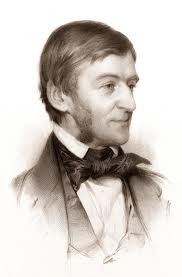
Tocqueville’s notions may seem very wayward and idiosyncratic to us. After Walt Whitmanall, contemporary America is neither predominantly Catholic nor predominantly pantheistic. Nonetheless, when examined more closely, Tocqueville’s analysis is full of interest and even, remarkably, of current applicability.

The “decline” of Protestantism

Since the 1960s, there has been vigorous and ongoing debate over whether American Protestantism – or at any rate “mainstream” Protestantism – is dead or dying. See, e.g., Stanley Hauerwas, The end of American Protestantism (July 2, 2013), available at http://www.abc.net.au/religion/articles/2013/07/02/3794561.htm. Equally, the question whether American Catholicism has become, or is becoming, a form of Protestantism also provokes current controversy. (Tocqueville himself had noted the tendency of American Catholicism to be less dogmatic and less ritualized than French Catholicism.) Neither of these interesting issues can detain us here. What is more relevant to our purpose is why Tocqueville should have thought that Protestantism would decline, and whether the evidence from the period in which he wrote might have supported the prediction that it would turn into something radically different from traditional Christianity.

Bossuet

Tocqueville could certainly have derived his thesis from reading the work of the great eighteenth century French Catholic theologian, historian and apologist, Jacques-Bénigne Bossuet, the Bishop of Meaux and the tutor of Louis XIV’s eldest child, the Dauphin of France. Probably the greatest work by the prolific Bossuet was his History of the Variations of the Protestant Churches (1688; English trans. 1836). Bossuet’s History is a massively learned account of what the author sees as the steady fragmentation of the main branches of Protestantism into different and discordant sects. We know that Tocqueville had studied this work. In his letter of November 15, 1835 to Gustave Beaumont, he says that after finishing reading Machiavelli’s History of Florence, I turned to Bossuet’s Variations. Finding the “distance” between Machiavelli and Bossuet “great,” he writes that “I had never looked at [the Variations] so closely, and I cannot tell you how much I admired its content, and even more perhaps, its form. It is truly a magnificent and powerful arrangement.” Selected Letters 112. In thinking that Protestantism was bound to disintegrate, Tocqueville was very possibly adopting, if quietly, the polemical case that Bossuet had made for that proposition.

Tocqueville seems to have drawn on Bossuet in the places in Democracy in America in which he connects the growth of democracy with Divine Providence. For instance, in Vol. I, Pt. ii, ch. 17 of Democracy, entitled “A Few Sources of Poetry in Democratic Nations,” he writes that in egalitarian ages, as “each man . . . begins to perceive humanity itself, God reveals himself more and more to the human mind in his full and complete majesty . . . Observing the human race as a single entity, men find it easy to imagine that the same plan rules its destiny and they are inclined to perceive, in the actions of any individual, the trace of that universal and consistent design by which God guides our race.” Bevan trans. 563-64. Likewise, in his Introduction to Part I, Tocqueville speaks of the “gradual unfurling of equality in social conditions” as “a providential fact which reflects its principal characteristics: it is universal, it is lasting and it constantly eludes human interference; its development is served equally by every event and every human being.” Id. at 15. In such passages, Tocqueville is echoing another of Bossuet’s works, the Discourse on Universal History (1681), which he had also read. (For a fuller treatment of providentialism in Democracy, which downplays the influence of Bossuet, see David A. Selby, Tocqueville’s politics of providence: Pascal, Jansenism and the author’s introduction to Democracy in America, 33 The Tocqueville Review 167 (2012)).

Rousseau

It is also possible that Tocqueville formulated his thesis about Protestantism on the basis of reading Rousseau. After the publication of The Vicar of Savoy (on which see posting Tocqueville on Protestantism and Natural Religion: Part II), Rousseau was compelled to defend his views against the Protestant authorities of his native city of Geneva, who accused him of undermining the Reformed religion. Rousseau defended himself in a series of lengthy pieces called Letters Written from the Mountain (1764). In the second of these Letters, Rousseau identifies what he considers to be the “two fundamental points of the Reform,” and contends that his writings fully comply with both. Collected Writings of Rousseau, vol. 9 at 154. These two core principles are “to acknowledge the Bible as the rule of one’s belief, and not to admit any other interpreter of the Bible than oneself.” Id. To this he adds: “Combined, these two points form the principle on which the Reformed Christians separated from the Roman Church, and they could not do any less without falling into contradiction; for what interpretive authority could they have reserved to themselves, after having rejected that of the body of the Church?” Id.

To make the Bible the sole rule for deciding questions of faith and practice appears to be adopting a common standard of truth that transcends any individual opinion; but to take the principle of private judgment to mean that each believer is the final judge for himself or herself of the Bible’s meaning is to abandon the idea of a common authority.

Read more

Tocqueville on Protestantism and Natural Religion: Part II

Rousseau: “The Savoyard Vicar”

In my last post, I introduced the subject of Tocqueville’s views on natural religion. As we shall see, Tocqueville believed that Protestantism had an inherent tendency to collapse into natural religion, and indeed that its transmutation into something very distinct from traditional Christianity might not cease there. Because of Tocqueville’s insistence on the importance of religion to American democracy, the transformation or decline of American Protestantism would be, from his perspective, a momentous development.

One of the main sources of Tocqueville’s understanding of natural religion, I argued last time, was likely to have been Montesquieu. We reviewed Montesquieu’s thought on that subject in his epistolary novel, The Persian Letters. A second likely influence on Tocqueville’s understanding of natural religion is Rousseau’s Profession of Faith of a Savoyard Vicar (1783), which forms a section of Rousseau’s novel, Emile.

Although Tocqueville is silent on the matter, I believe that the Savoyard Vicar exercised a lasting and extensive influence on Tocqueville’s thinking, and I would even conjecture that reading this very work precipitated the shattering crisis of belief that Tocqueville underwent in his father’s library in Metz when he was sixteen.

The Savoyard Vicar is a complex and many-layered work, and I cannot pretend to do anything like full justice to it here. Its complexity stems, in part, from the ambiguity of Rousseau’s intentions in writing it. Although Rousseau’s critics, then and later, found nothing, or almost nothing, of Christian doctrine or sentiment in it, Rousseau himself contended vehemently that the work to provide a more secure foundation for revealed religion, above all Protestantism, that would make it more attractive to his contemporaries. See Robert Derathe, “Jean-Jacques Rousseau et le Christianisme,” in 53 Revue de Métaphysique et de Morale, 375, 381-85, 410-14 (1948). (As noted in my last post, Rousseau’s hostility towards Roman Catholicism was unremitting.) Furthermore, the work can be read both to extend the Enlightenment’s scathing critique of Christianity and at the same time to point towards a post-Enlightenment return to Christianity. See Arthur M. Melzer, “The Origin of the Counter-Enlightenment: Rousseau and the New Religion of Sincerity,” 90 American Political Science Review 344 (1996).

The Savoyard Vicar consists chiefly in a lengthy discourse delivered by a Catholic priest (the Vicar) to a young man identified in the story as Rousseau himself in his twenties. The discourse is divided into two parts of unequal length, marked by a short intervention by the young Rousseau. In the first and longer discourse, the Vicar discusses natural religion; the second and shorter speech concerns revealed religion. Rousseau later explained that the “more important” first part was “intended to combat modern materialism, to establish the existence of God and natural religion” and “contains what is truly essential to Religion,” while the second part “raises doubts and difficulties about revelation in general” and is designed to make believers “more circumspect.” J.-J. Rousseau, Letter to Christophe Beaumont, Archbishop of Paris (1763), in The Collected Writings of Rousseau, vol. 9 at 75 (Christopher Kelly and Eve Grace eds. 2001). In the break between the two parts, the young Rousseau exclaims that during the Vicar’s speech, “I imagined myself attending to the divine Orpheus singing his hymns and teaching mankind the worship of the g Read more

Tocqueville on Protestantism and Natural Religion: Part I

To this point, we have seen that Tocqueville believes that religion is necessary to the well-being of society, and especially to market democracies. Since the religious sentiment is natural to human beings, religion should flourish when it does not lend itself to exploitation by the State. But the natural tendency toward religious belief is weakened or even overcome by a competing passion for wealth. Because American democracy celebrates and encourages the pursuit of wealth, our democracy exerts a ceaseless, grinding pressure that gradually wears down our religion. Thus, American democracy has a built-in disposition to destroy a necessary condition of its own existence. To guard against that, Tocqueville urges American leaders and opinion-makers to surround religion with their protection – without, however, enmeshing it in the State. If they are wise, they will understand that our religion is “the most valuable bequest from aristocratic times.” Democracy in America at 633 (Bevan trans.). “It is vital that all those who are involved in the future of democratic societies unite together and . . . diffuse throughout these societies the taste for the infinite, the appreciation of greatness, and the love of spiritual pleasures.” Id. at 632.

But what, exactly, are the doctrines of the “religion” that Tocqueville considers necessary for the proper functioning of American democracy? Granted, America in the period of his visit was overwhelmingly a Protestant Christian nation, and would surely remain so for the foreseeable future. But Tocqueville does not contend that American democracy depended on the vitality of Protestantism. Instead, in an important chapter entitled “How Religious Belief Sometimes Diverts the Thoughts of Americans Toward Spiritual Pleasures,” he argues that “[t]he belief in a spiritual and immortal principle united for a time with matter is . . . indispensable to man’s greatness.” Id. at 633. That is, he appears at first to argue that a prevalent belief in one religious doctrine — the immortality of the human soul — is the irreducible minimum required for a healthy democracy. He does not, however, mention here any other doctrine that is characteristic of Christianity, Protestant or other, even the existence of God.

Furthermore, when read closely, Tocqueville does not even insist on the belief in immortality, as Christianity has traditionally taught it. Rather, he indicates that the belief which he considers necessary need not extend to “the idea of rewards and punishments” after bodily death, nor even that the “divine principle” that survives death be understood as personal: it would suffice if most citizens believe that that the soul was “absorbed in God or transformed to bring life to some other creature.” Id. Thus, he says that it is better for citizens to believe in transmigration, “believing that their souls will pass into the body of a pig,” than for them to think that “their soul is nothing at all.” Id. Finally, he concludes with an observation that seems intended for his more perceptive readers: “It is doubtful whether Socrates and his school had very definite opinions upon what was to happen in the afterlife.” Id. Instead, “Platonic philosophy” simply teaches the “one belief” that “the soul has nothing in common with the body and would survive it.” Id. The prevalence of that “one belief,” which does not even amount to the idea of personal immortality, is the indispensable prerequisite for a vital democracy.

Tocqueville thus does not teach that Christianity, or any other form of revealed religion, is absolutely indispensable for democracy. Indeed, he does not even say that democracy cannot function well unless belief in natural religion in its entirety is widespread. Rather, at least in this place, he reduces the indispensable minimum to something even less demanding than natural religion as that was generally understood – i.e., to the “one belief” that he associates with Platonic philosophy. All he contends for, in other words, is an extremely thin belief that amounts to little more than the rejection of philosophical materialism, i.e., of the metaphysical position that he associates with the dominance of the drive for physical pleasure and wealth. Nonetheless, some religious, or at least metaphysical, belief must be widely held in order to ensure against political calamity.

In order to understand his thinking fully, we need to start with the idea of “natural religion.” What did Tocqueville think constituted natural religion, and from what sources did he acquire that idea? We will see that a large and important body of French thought underlies the brief and enigmatic remarks cited above from Democracy.

The doctrines of natural religion

In his marvelous account of the origins of Unitarianism in America, Conrad Wright distilled the essence of “natural religion” down to three essentials: “the existence of God, the obligations of piety and benevolence, and a future state of rewards and punishments.” Conrad Wright, The Beginnings of Unitarianism in America 140 (1955). The chief points of natural religion were understood to be discoverable by Read more

Hollinger, “After Cloven Tongues of Fire”

Princeton University Press has published After Cloven Tongues of Fire: Protestant Liberalism in Modern American History (2013) a collection of essays by Berkeley historian David A. Hollinger. The publisher’s description follows:

The role of liberalized, ecumenical Protestantism in American history has too often been obscured by the more flamboyant and orthodox versions of the faith that oppose evolution, embrace narrow conceptions of family values, and continue to insist that the United States should be understood as a Christian nation. In this book, one of our preeminent scholars of American intellectual history examines how liberal Protestant thinkers struggled to embrace modernity, even at the cost of yielding much of the symbolic capital of Christianity to more conservative, evangelical communities of faith.

If religion is not simply a private concern, but a potential basis for public policy and a national culture, does this mean that religious ideas can be subject to the same kind of robust public debate normally given to ideas about race, gender, and the economy? Or is there something special about religious ideas that invites a suspension of critical discussion? These essays, collected here for the first time, demonstrate that the critical discussion of religious ideas has been central to the process by which Protestantism has been liberalized throughout the history of the United States, and shed light on the complex relationship between religion and politics in contemporary American life.

After Cloven Tongues of Fire brings together in one volume David Hollinger’s most influential writings on ecumenical Protestantism. The book features an informative preface as well as concise introductions to each essay.

Michelson, “The Pulpit and the Press in Reformation Italy”

This looks like an absolutely terrific book about the intellectual work of theThe Pulpit and the Press Italian clergy “in the public square” at a time of great political and social turmoil, The Pulpit and the Press in Reformation Italy (Harvard 2013), by Emily Michelson (St. Andrews).  The historical importance of the American political sermon has been understudied as well, though this is slowly changing (for me, Michael McConnell’s work has been helpful in bringing these fascinating texts to light, though others have written about them as well).  From the description below, it also appears that Professor Michelson usefully puts into some question the dichotomy that one often hears: Americans “choose” their religion while Europeans are “born into” theirs.  At any rate, I am greatly looking forward to reading Professor Michelson’s book.  The publisher’s description follows.

Italian preachers during the Reformation era found themselves in the trenches of a more desperate war than anything they had ever imagined. This war—the splintering of western Christendom into conflicting sects—was physically but also spiritually violent. In an era of tremendous religious convolution, fluidity, and danger, preachers of all kinds spoke from the pulpit daily, weekly, or seasonally to confront the hottest controversies of their time. Preachers also turned to the printing press in unprecedented numbers to spread their messages.

Emily Michelson challenges the stereotype that Protestants succeeded in converting Catholics through superior preaching and printing. Catholic preachers were not simply reactionary and uncreative mouthpieces of a monolithic church. Rather, they deftly and imaginatively grappled with the question of how to preserve the orthodoxy of their flock and maintain the authority of the Roman church while also confronting new, undeniable lay demands for inclusion and participation.

These sermons—almost unknown in English until now—tell a new story of the Reformation that credits preachers with keeping Italy Catholic when the region’s religious future seemed uncertain, and with fashioning the post-Reformation Catholicism that thrived into the modern era. By deploying the pulpit, pen, and printing press, preachers in Italy created a new religious culture that would survive in an unprecedented atmosphere of competition and religious choice.

Ross on Mosaic Law in Early Protestant Jurisprudence

From the beginning, Christian jurisprudence has tried to distinguish the “moral” elements of the Mosaic Law, which continue to bind Christians, from the “ceremonial,” which do not. Richard Ross (University of Illinois) has written what looks to be a fascinating essay, Distinguishing Eternal from Transient Law: Natural Law and the Judicial Law of Moses,  on the efforts of Protestants in early modern Europe and New England to grapple with this distinction. He ties their work  to similar efforts by natural law theorists of the period to differentiate between eternal and merely local principles. The abstract follows.

This essay examines two interlinked efforts in early modern Europe and New England to distinguish legal provisions valid across different societies and time periods from those that were local and transitory and therefore not compulsory in the present. Consider, first, the judicial laws of Moses. A minority of Protestants, whom I will call the “Mosaic legalists,” tried to ascertain which Old Testament judicial ordinances were no longer obligatory because they were particular to the Jewish commonwealth, and which were eternally-valid “appendices” to the natural law and Decalogue. The challenge of differentiating the perpetual from the local also occupied early modern students of the law of nature. Whether one believed that God impressed natural law upon the world or that people deduced natural law Read more

Botham, “Almighty God Created the Races: Christianity, Interracial Marriage, and American Law”

This February, the University of North Carolina Press will publish a paperback edition of Almighty God Created the Races: Christianity, Interracial Marriage, and American Law by Fay Botham (visiting assistant professor at Hobart and William and Smith Colleges). The publisher’s description follows.

 In this fascinating cultural history of interracial marriage and its legal regulation in the United States, Fay Botham argues that religion–specifically, Protestant and Catholic beliefs about marriage and race–had a significant effect on legal decisions concerning miscegenation and marriage in the century following the Civil War. She contends that the white southern Protestant notion that God “dispersed” the races and the American Catholic emphasis on human unity and common origins point to ways that religion influenced the course of litigation and illuminate the religious bases for Christian racist and antiracist movements.

Religious Affiliation in America

This month’s Pew Report on religious affiliation in America has drawn much well-deserved attention, particularly two of its findings: a continuing increase in the percentage of Americans who do not identify with any religion – the “Nones” – and a continuing decrease in the percentage who identify as Protestant. In the last five years, the Nones have gone from roughly 15% of American adults to roughly 20%. The increase is especially pronounced among adults under the age of 30, a third of whom say they are religiously unaffiliated. And, for the first time since Pew started polling, the percentage of adults who identify as Protestant has dropped below 50%.

These statistics could have profound significance for the future of American religion and law. Take the increased percentage of Nones among people under 30. In a couple of decades, this age cohort will be running American cultural, legal, and political institutions. Traditionally, American institutions have viewed religion as a good thing, both for individuals and society. Will they continue to do so if they are run by people who themselves lack a religious identity, who view religion, at best, with indifference? Will legislatures accommodate religious minorities as readily? Will courts defer to traditions that reflect assumptions large percentages of the population no longer share? It seems doubtful.

The media has jumped on the rise of the Nones, predicting everything from a political realignment (good news for Democrats, bad news for Republicans) to major changes in education and family structure. Maybe – but we need to be cautious. We shouldn’t assume that the increase in the percentage of Nones will Read more

What Really Matters

This fall, as the Eurozone’s constitutional and economic crisis deepened, some observers suggested a religious explanation: the crisis had resulted from different worldviews in the Protestant north and the Catholic (and Orthodox) south. The Protestant culture of the north is thrifty, sober, and bourgeois: a contract society. The Catholic (and Orthodox) culture of the south is profligate, emotional, and traditional: a status society. Among the observers who have offered such explanations are Estonian President Toomas Hendrik Ilves and Harvard Professor Steven Ozment.

As First Things’s Matt Schmitz points out in a fun post yesterday, these observations have an implicit moral component: Protestant values are better, or at least better promote economic efficiency. Maybe, says Schmitz, morality cuts the other way. The “passionate and ecstatic culture” of the Catholic and Orthodox south, he writes (quoting Christopher Dawson), a culture which “finds its supreme expressions in the art of music and in religious mysticism,” may, in fact, be morally superior. Schmitz would doubtless agree with Hillaire Belloc’s famous observation:

Wherever the Catholic sun doth shine,
There’s always laughter and good red wine.
At least I’ve always found it so.
Benedicamus Domino!

I need to think some more about all this. But it’ll have to wait till tomorrow. Here at the Center, we knock off early on Fridays, so we can drink ouzo and listen to Monteverdi.