On October 24-25 in New York, the Centro Primo Levi, the NYU Casa Italiana Zerilli Marim, and the Museum of Tolerance will co-sponsor a conference, “The Lateran Pacts, the Rights of Jews and Other Religious Minorities”:
In view of the upcoming 85th anniversary of the Lateran Pacts and the current debates on the position of the Church toward the Jews during Fascism and World War II, Centro Primo Levi has invited an interdisciplinary group of scholars to closely examine and discuss the legal, social, political and economic aspects of this redefinition of the relations between Church and State in Italy and in totalitarian Europe.
The conference will offer an overview of the Lateran Pacts, the background of negotiations between Mussolini and Pius XI as well as an analysis of the ways the Pacts affected Italian society, the rights of minorities vis-à-vis family law, education, public moral, protection of minority rights, with a particular focus on the subsequent re-organization of the Jewish communities. Scholars will present new research on the changes to the civil and penal codes brought about by the Pacts, as well as the reforms of key public institution that became necessary in order to make them compatible with a state religion.
Here’s a puzzle. The mosaic in this photo is in Rome’s Santa Costanza, a lovely fourth-century church with some of the oldest surviving Christian art. The mosaic is famous among scholars of Christian iconography, even among scholars of Christian jurisprudence. It depicts Christ–blond, beardless, looking like the god Apollo–giving a scroll to St. Peter. Christ is dressed in a golden toga. Scholars believe the image is meant to represent Christ giving the Law to the Church.
According to French scholar Rémi Brague, during the patristic period, “Christianity came to think of itself as a law brought by Christ in the same way that Judaism is a law brought by Moses.” This understanding, he says,
received artistic representation in images such as that of a lawgiver Christ giving St. Peter the scroll of the Law in a mosaic in the church of Santa Costanza in Rome, on the sarcophagus of Probus in Rome, or in the basilica of St. Ambrose in Milan.This scene is adapted from the pagan model of the investiture of a high functionary by the emperor. After Constantine, the ideology of the Christian empire utilized the notion of a unique law. This iconographic theme is present from the fourth century to the sixth, when it was replaced by another image in which Christ gives Peter not the Law but rather the Keys to the Kingdom.
If this reading is correct, the mosaic is an important object, not only in the history of Western art, but Western law as well. A key piece of evidence that supports the reading is the inscription on the scroll Christ holds. According to most scholars, the inscription is “DOMINUS LEGEM DAT,” or, “The Lord Gives Law.” If that’s what the scroll says, it does indeed confirm the reading of scholars like Brague.
Except that isn’t what the scroll says. As the photo, which I took this summer, shows, the scroll reads, “DOMINUS PACEM DAT,” or “The Lord Gives Peace.” Not “Law,” “Peace.” Now, I suppose, the inscription may be elliptical: Christ gives Law, the Law of Christ gives Peace, so Christ gives Peace. But that’s a strain. Besides, in Christian teaching, the Law of Christ is usually described as Love, not Peace. Does the scroll refer to Christ’s words at the Last Supper, “My peace I give to you”? Maybe. But that would definitely change the meaning of the image.
So, what’s the explanation? Perhaps, as Brague suggests, this was a conventional image in late antiquity, so the mosaic must be about law. One scholar I’ve read thinks the word “PACEM” on the scroll is an simply an incorrect reconstruction of the original “LEGEM.” Sounds plausible. But when did the reconstruction take place? The Middle Ages? Why are scholars so confident that the image is about law, when the words on the scroll are about peace? Anybody know?
In Trying Biology, Adam R. Shapiro convincingly dispels many conventional assumptions about the 1925 Scopes “monkey” trial. Most view it as an event driven primarily by a conflict between science and religion. Countering this, Shapiro shows the importance of timing: the Scopes trial occurred at a crucial moment in the history of biology textbook publishing, education reform in Tennessee, and progressive school reform across the country. He places the trial in this broad context- alongside American Protestant antievolution sentiment- and in doing so sheds new light on the trial and the historical relationship of science and religion in America.
For the first time we see how religious objections to evolution became a prevailing concern to the American textbook industry even before the Scopes trial began. Shapiro explores both the development of biology textbooks leading up to the trial and the ways in which the textbook industry created new books and presented them as “responses” to the trial. Today, the controversy continues over textbook warning labels, making Shapiro’s study- particularly as it is plays out in one of America’s most famous trials- an original contribution to a timely discussion.
When he died, roughly 50 years ago at the age of 59, Raphael Lemkin was impoverished and embittered, an unnoticed man. Only 7 people attended his funeral. Yet he was one of the most influential international human rights lawyers of the twentieth century. Lemkin, whom Jay Winter describes in a recent piece as a “one-man NGO,” coined the word “genocide” for the destruction of a national, ethnic, racial or religious group, and was the driving force behind adoption of the UN Genocide Convention of 1948.
He came up with the term “genocide” in reflecting on the massacres of Armenian Christians in Ottoman Turkey during World War I–events we now know as the Armenian Genocide–but he had an example closer to home as well. A Polish Jew, he lost about 50 relatives in the Holocaust, and himself escaped the Nazis only after taking a bullet in the hip. He made his way to America, where he joined the law faculty at Duke, wrote his most important book, Axis Rule in Occupied Europe, and worked, successfully, for adoption of the UN Convention.
What explains his bitterness and isolation at the end? Lemkin was a loner and a difficult man; that was part of it, no doubt. And he could surely see, as Winter writes, that naming a crime, even legislating against a crime, does not necessarily reduce its frequency. It’s hard to argue that the Genocide Convention has been a great success. Still, Lemkin’s career had a public impact which most of us, especially in the legal academy, would be proud to claim.
I reflect on all this because, this month, Yale University Press releases Lemkin’s unfinished autobiography, Totally Unofficial: The Autobiography of Raphael Lemkin, edited by historian Donna-Lee Frieze. It looks very interesting. Here’s the publisher’s description:
Among the greatest intellectual heroes of modern times, Raphael Lemkin lived an extraordinary life of struggle and hardship, yet altered international law and redefined the world’s understanding of group rights. He invented the concept and word “genocide” and propelled the idea into international legal status. An uncommonly creative pioneer in ethical thought, he twice was nominated for the Nobel Peace Prize. Although Lemkin died alone and in poverty, he left behind a model for a life of activism, a legacy of major contributions to international law, and—not least—an unpublished autobiography. Presented here for the first time is his own account of his life, from his boyhood on a small farm in Poland with his Jewish parents, to his perilous escape from Nazi Europe, through his arrival in the United States and rise to influence as an academic, thinker, and revered lawyer of international criminal law.
I spent this morning at the fourth annual Religious Legal Theory Conference, hosted this year by Sam Levine at Touro Law School. I moderated a panel, “Religious Legal Theory and the Perspectives of ‘Others.'” The idea for the panel, which was Sam’s, was to bring together scholars who write about law in religious traditions other than their own, something that I tried to do a few years ago at the first Religious Legal Theory Conference with my essay, Fiqh and Canons.
The presentations were interesting and covered a variety of perspectives. Randy Lee (Widener) spoke about his experience as a Christian studying Jewish law. He said that this experience had taught him the importance of “listening Jewish”–to find the best in others. He wondered whether “Godly lawyers” who listened to clients in this way might actually transform lives. In response to a question from me, Randy stated that he did not think that all lawyers who study religious law would have his experience, or should; but, in studying Jewish law, he realized that he himself was a “variable,” not a “constant,” and that he himself had been transformed.
David Friedman (Santa Clara) is an atheist who studies the history of religious legal systems. He argued that Jewish and Islamic law both rest in part on pre-existing, decentralized “feud systems,” characterized by private retaliation for wrongs. He gave examples from both systems. Friedman also addressed the problems that arise in legal systems that have God, rather than humans, as “the legislator,” and the various interpretive devices such systems employ to mitigate what seem to be disproportionate penalties called for in sacred scripture- Islamic law rules calling for amputation as punishment for theft, for example.
Philip Ackerman-Lieberman (Vanderbilt), who is Jewish, spoke about his work on the interactions between Islamic and Jewish commercial law in medieval Cairo. He argued that scholars should not concern themselves only with a comparison of legal details, but should study social and legal structures as a whole. Structural analysis reveals that the Islamic legal culture and Jewish legal subculture influenced each other in a kind of “dialogue.” The two systems shared ideas, but also differentiated themselves from one another–and in this differentiation may be found the distinctive elements of each legal tradition. Philip suggested that the study of legal theory and commercial practice in medieval Cairo could have an impact on contemporary issues faced by Islam and Judaism.
Next weekend, the Center for Irish and Irish-American Studies at NYU will host a conference marking the bicentennial of People v. Phillips, an early freedom-of-religion case involving the priest-penitent privilege:
“Religious Freedom in America, 1813 to 2013: Bicentennial Reflections on People v. Philips” is a weekend of events that marks the landmark 1813 case that is the earliest known constitutional test of freedom of religion and the priest-penitent evidentiary privilege in American law. A dynamic line-up of events will demonstrate how a trial for a petty jewelry theft escalated into an argument for religious freedom when the local priest was subpoenaed to testify what he had heard in confession.
In People v. Philips, William Sampson — a banished political exile from Ireland and a Protestant — argued on behalf of the Trustees of St. Peter’s Roman Catholic Church on Barclay Street before the presiding judge, Mayor DeWitt Clinton [left]. William Sampson’s experience of religious-based intolerance in Ireland propelled him to persuade the court that America should not look to British common law for legal precedent when dealing with Catholics, then a small but growing minority in New York City.
William Sampson’s own published account of the case, The Catholic Question in America, will be presented in a staged reading adapted by Steve DiUbaldo of New York University’s Tisch School of the Arts on Friday evening, 12 April. A full-day symposium follows on Saturday, 13 April, where scholars from a wide variety of disciplines — especially law, religion, history, and politics — will comment on Sampson’s 1813 record of the trial and consider it in relation to their own understanding of contemporary issues. On Sunday morning 14 April, Green-Wood Cemetery in Brooklyn, the final resting place of lawyer William Sampson and DeWitt Clinton, will mark the 200th anniversary of the case with an encore reading of The Catholic Question and a wreath-laying ceremony.
The Glorious Revolution is one of the most important events in the political and religious history of the English-speaking world, providing the context for liberal Lockean ideas of government that influenced the American Constitution a century later. I’ve always had the impression that the Revolution was essentially a Protestant rebellion against the last of the Stuart Monarchs, James II, who seemed poised to restore Catholicism in England. A new book by Northwestern historian Scott Sowerby, Making Toleration: The Repealers and the Glorious Revolution (HUP 2013) , apparently revises the traditional understanding of the Revolution, characterizing the event as an essentially conservative reaction to James II’s liberalism. The publisher’s description follows:
In the reign of James II, minority groups from across the religious spectrum, led by the Quaker William Penn, rallied together under the Catholic King James in an effort to bring religious toleration to England. Known as repealers, these reformers aimed to convince Parliament to repeal laws that penalized worshippers who failed to conform to the doctrines of the Church of England. Although the movement was destroyed by the Glorious Revolution, it profoundly influenced the post-revolutionary settlement, helping to develop the ideals of tolerance that would define the European Enlightenment.
Based on a rich array of newly discovered archival sources, Scott Sowerby’s groundbreaking history rescues the repealers from undeserved obscurity, telling the forgotten story of men and women who stood up for their beliefs at a formative moment in British history. By restoring the repealer movement to its rightful prominence, Making Toleration also overturns traditional interpretations of King James II’s reign and the origins of the Glorious Revolution. Though often depicted as a despot who sought to impose his own Catholic faith on a Protestant people, James is revealed as a man ahead of his time, a king who pressed for religious toleration at the expense of his throne. The Glorious Revolution, Sowerby finds, was not primarily a crisis provoked by political repression. It was, in fact, a conservative counter-revolution against the movement for enlightened reform that James himself encouraged and sustained.
While the Spanish Inquisition has laid the greatest claim to both scholarly attention and the popular imagination, the Roman Inquisition, established in 1542 and a key instrument of papal authority, was more powerful, important, and long-lived. Founded by Paul III and originally aimed to eradicate Protestant heresy, it followed medieval antecedents but went beyond them by becoming a highly articulated centralized organ directly dependent on the pope. By the late sixteenth century the Roman Inquisition had developed its own distinctive procedures, legal process, and personnel, the congregation of cardinals and a professional staff. Its legal process grew out of the technique of inquisitio formulated by Innocent III in the early thirteenth century, it became the most precocious papal bureaucracy on the road to the first “absolutist” state.
As Thomas F. Mayer demonstrates, the Inquisition underwent constant modification as it expanded. The new institution modeled its case management and other procedures on those of another medieval ancestor, the Roman supreme court, the Rota. With unparalleled attention to archival sources and detail, Mayer portrays a highly articulated corporate bureaucracy with the pope at its head. He profiles the Cardinal Inquisitors, including those who would play a major role in Galileo’s trials, and details their social and geographical origins, their education, economic status, earlier careers in the Church, and networks of patronage. At the point this study ends, circa 1640, Pope Urban VIII had made the Roman Inquisition his personal instrument and dominated it to a degree none of his predecessors had approached.
This historical exploration, treating limit moments of copyright law, illuminates correspondences among copyright, censorship, pacts between the sovereign and commercial profit seekers, and inheritance law. Relevant to all of these are powerful forebears’ desires for recognition, modeled on the theological pattern of the father God’s omnipotent Will. Failure to recognize the wide persistence of this premodern theological pattern–which contrasts considerably with the common view that copyrights main function is to incentivize the new–may result in faulty analysis of copyright law, including fair use.
The study begins with Henry VIII’s 1538 Proclamation, which initiates a nationwide book-licensing regime. The Proclamation is put into context with other concerns of Henry at that time. Additional moments treated in this study include: Venetian printing privileges in the late fifteenth century; the London Stationers’ Company as an incorporated mechanism suitable to the crown’s ideology-control projects; efforts by Ponsonby, Greville, and Walsingham to block a competitor’s licensing of a Sidney Arcadia manuscript; the intellectual property clause of the U.S. Constitution; Wordsworth’s later-in-life attempts to make endure eternally, through copyright, the atemporal moment of creation that arose from his early poetry; and Sonny Bono’s (and our own) surprising resemblance to Wordsworth. The conclusion urges joint consideration of copyright and inheritance-law policies.
We didn’t want to let the month pass without noting the 1700th anniversary of the Edict of Milan, one of the most important events in the history of religious liberty. In February 313, the emperors Constantine (left) and Licinius met in Milan to discuss imperial business. While there, they agreed to grant religious freedom to Christians–and, incidentally, everyone else in the Roman empire. Their decision came to be known as an “edict,” though it’s not clear an official document ever issued. The historian Eusebius supplies the text:
When I, Constantine Augustus, and I, Licinius Augustus, came under favorable auspices to Milan and took under consideration everything which pertained to the common weal and prosperity, we resolved among other things, or rather first of all, to make such decrees as seemed in many respects for the benefit of every one; namely, such as should preserve reverence and piety toward the deity. We resolved, that is, to grant both to the Christians and to all men freedom to follow the religion which they choose, that whatever heavenly divinity exists may be propitious to us and to all that live under our government.
We have, therefore, determined, with sound and upright purpose, that liberty is to be denied to no one, to choose and to follow the religious observances of the Christians, but that to each one freedom is to be given to devote his mind to that religion which he may think adapted to himself, in order that the Deity may exhibit to us in all things his accustomed care and favor.
Note a couple of things. The edict does not, as commonly believed, make Christianity the state religion. That decision came later, under a different emperor, Theodosius–which suggests that Christians who condemn the “Constantinian compromise” that weakened the faith have got their emperors wrong. And, although it is famous for legalizing the practice of Christianity in Rome, the edict does not cover only Christians. It grants religious liberty to everyone in the empire. Everyone should follow the religion he thinks best, the edict proclaims, so that “whatever heavenly divinity exists” will continue his favors to Rome. Which puts one in mind of Gibbon’s famous jibe: to the magistrate, all religions are equally useful.
At length, Licinius changed his mind about the edict and began persecuting Christians in his part of the empire. A power struggle followed; Constantine eventually defeated Licinius, thereby becoming sole emperor. Constantine was always cagey about his own Christianity, perhaps because he wished to avoid upsetting those powerful Romans who remained pagan. He advanced the interests of the church and influenced (or interfered in) doctrinal developments, but he did not actually become a Christian until shortly before his death. Today, both he and Theodosius are commemorated as saints in Eastern churches. Licinius? Not so much.


 impoverished and embittered, an unnoticed man. Only 7 people attended his funeral. Yet he was one of the most influential international human rights lawyers of the twentieth century. Lemkin, whom
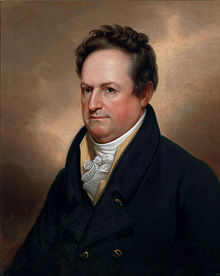 In People v. Philips, William Sampson — a banished political exile from Ireland and a Protestant — argued on behalf of the Trustees of St. Peter’s Roman Catholic Church on Barclay Street before the presiding judge, Mayor DeWitt Clinton [left]. William Sampson’s experience of religious-based intolerance in Ireland propelled him to persuade the court that America should not look to British common law for legal precedent when dealing with Catholics, then a small but growing minority in New York City.
 religious history of the English-speaking world, providing the context for liberal Lockean ideas of government that influenced the American Constitution a century later. I’ve always had the impression that the Revolution was essentially a Protestant rebellion against the last of the Stuart Monarchs, James II, who seemed poised to restore Catholicism in England. A new book by Northwestern historian Scott Sowerby,
  Inquisition: A Papal Bureaucracy and Its Laws in the Age of Galileo
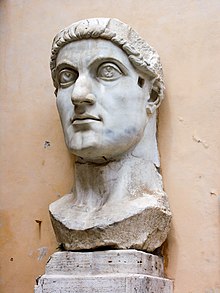 We didn’t want to let the month pass without noting