Holt et al., “Women, Islam, and Resistance in the Arab World”

This September, Lynne Rienner Publishers will publish Women, Islam, and Resistance in the Arab World by Maria Holt (U. of Westminster) and Haifaa Jawad (U. of Birmingham). The publisher’s description follows.

How are women in the Arab world negotiating the male-dominated character of Islamist movements? Is their participation in the Islamic political project—including violent resistance against foreign invasion and occupation—the result of coercion, or of choice? Questioning assumptions about female powerlessness in Muslim societies, Maria Holt and Haifaa Jawad explore the resistance struggles taking place in Lebanon, Iraq, Palestine, and elsewhere in the Middle East from the perspectives of the women involved.

The authors make extensive use of vivid personal testimonies as they examine the influence of such factors as religion, patriarchy, and traditional practices in determining women’s modes of participation in conflicts. In the process, they add to our knowledge not only of how women are affected by political violence, but also of how their involvement is beginning to change the rules that govern their societies.

Is the US Selling Out the Middle East’s Christians?

Elizabeth Prodromou, a former Vice Chair of the US Commission on International Religious Freedom, or USCIRF, has some harsh words for the commission’s annual report, issued last month. Prodromou sharply criticizes USCIRF and the entire US foreign policy team for ignoring human rights violations endured by Orthodox Christians in the Middle East.

For example, Prodromou complains that neither the US Administration nor USCIRF (an independent agency) has issued a statement about the kidnapping in Syria last month, most likely by Islamists in the opposition, of two Orthodox bishops. The kidnapping of two bishops sends an ominous message to Syria’s Christians, and Prodromou is outraged that the US did not see fit to introduce a Security Council resolution condemning the kidnapping. Russia, she notes, did introduce such a resolution.

I share Prodromou’s outrage about what is happening to Christians in Syria, most of whom are Orthodox, and her frustration at the West’s lack of attention to the problem. (This lack of attention is nothing new; the last US administration seemed more or less indifferent to the plight of Iraq’s Christians). But I’m not sure that official American statements would help the situation. Perversely, official expressions of concern from the outside often increase the danger for Christians in the Middle East. When Pope Benedict spoke about the obvious mistreatment of Copts a while ago, for example, Egypt withdrew its Vatican ambassador in protest. Things have not improved for the Copts since.

Moreover, it’s not plain how much credibility US government statements have in Syria at the moment. The US has worked itself into a situation in which neither of the major players in the conflict, neither Assad nor the Islamists who dominate the opposition, have an incentive to listen to what the US says. I’m not suggesting the US and the West should ignore the plight of Syria’s Christians and leave them to their fate; not at all. I mean only that official statements, without the wherewithal to back them up, do little, and often backfire.

Prodromou is on firmer ground when she criticizes the USCIRF report’s about-face on Turkey. Last year’s USCIRF report declared Turkey a “country of particular concern,” or CPC, a designation that signified that Turkey had an especially problematic record on religious freedom. This year’s report upgrades Turkey’s status from a CPC to a country that merely warrants monitoring. But, Prodromou notes, there hasn’t been any appreciable improvement of the situation for Orthodox Christians (and other religious minorities) in Turkey over the last year:

By the USCIRF’s own report in 2013, Halki [a famous Greek Orthodox seminary] remains shuttered 42 years after its closing and 10-plus years into the Erdogan era; there has been no overhaul of the property rights regime used to economically disenfranchise the country’s Orthodox Christian citizens and strip Orthodox foundations of their lands, so that the USCIRF characterized random returns of property, as in the case of forest lands around Halki returned to the Ecumenical Patriarchate, as “commendable” but “not codified by law.”  The 2013 USCIRF report also cited rising fear amongst Armenian Orthodox citizens of Turkey, because of hate crimes committed against members of their community, the most grotesquely emblematic case being that of an 84-year-old Armenian woman who was murdered in her Istanbul home with a cross carved into her chest.  The Commission obliquely commented that the “Turkish local police promptly launched investigations into three cases, but it is not known if any arrests have been made connected to any of these incidents.”

It does seem very strange that a country could go from being a “country of particular concern” to one merely “worth watching” in the space of a year, especially a country with Turkey’s spotty religious-freedom record. In fact, four commissioners dissented from USCIRF’s decision. USCIRF shouldn’t have named Turkey as a CPC in the first place, the dissenters wrote, but, having made that decision, USCIRF is now making the opposite mistake. “We believe that Turkey has not shown nearly enough improvement in addressing religious freedom violations over the past year to justify its promotion to the status of a country that is merely being monitored,” they explained. The dissenters would have placed Turkey in an intermediate category–among “Tier 2” religious freedom violators, in the parlance of USCIRF.

You can read Prodromou’s entire post here.
Panel: “The Muslim Brotherhood and the West” (March 20)

The Foreign Policy Research Institute will host a briefing, “The Muslim Brotherhood and the West,” on March 20 in Washington:

Few observers foresaw the Arab Spring, but it should not have surprised anyone that the Islamist movements–the most organized movements in the Arab world–became the main beneficiaries of the turmoil that ensued. Islamism, in its gradualist and pragmatic approach embodied by the Muslim Brotherhood and its offshoots worldwide, seems ready to reap the rewards of its three decades-old decision to abandon violence and focus on grassroots activities. This monumental change has created many concerns among liberals, religious minorities and, more generally, all non-Islamists in the countries where Islamists have won. In addition, Arab states ruled by non-Islamist regimes have expressed concern. The former worry that Islamist ideology–even in its more contemporary, pragmatic form–remains deeply divisive and anti-democratic, often at odds with their values and interests. The latter believe that on foreign policy issues, most of the positions of various Brotherhood-inspired parties are on a collision course with the policies of established regimes in the region.

The event will be webcast live. Details are here.

What’s Next for Syria’s Christians?

This week, the United States recognized the Syrian National Coalition, an umbrella organization of groups opposed to the Assad regime, as the government of Syria. Now, as everyone knows, the SNC relies heavily on fighters from the al-Nusra Front, an Islamist group that the United States has designated as a terrorist organization. There is very little chance that al-Nusra and other Islamists won’t play a major role in a post-Assad Syria, and the fact that the US calls them terrorists isn’t likely to change things. Already, in fact, the head of the Syrian opposition has called on America to reconsider its designation of al-Nusra as terrorists – and this while the SNC still needs American support in a life-or-death struggle with Assad.

What does all this mean for Syria’s Christians? Frankly, nothing good. Although the Syrian opposition has pledged to respect the rights of religious minorities, the minorities do not appear persuaded. And for good reason. All Christians have to do is look to Egypt, where, in the aftermath of a democratic revolution, Islamists have pushed aside Christians and secularists to draft a new, pro-Islamist constitution. Why should Christians believe that Syrian Islamists will behave differently? The fact that the Syrian opposition has made common cause with the Islamist government of Turkey, the historical persecutor of many of the Christian communities in Syria, only makes Christians more worried about their future.

For a sense of how Syria’s Christians perceive things, it’s worth reading this article from the New York Times about Syria’s Armenian community. Armenian Christians have been in Syria in numbers since the Genocide of 1915, when they fled or were forced out of neighboring Turkey. They have integrated into Syrian society and feel that Syria is their home. Yet they worry that the religious toleration they have known will cease if Assad falls and Islamists come to power. They could stay to see what happens, but, as one member of the community tells the Times, referring to the 1915 Genocide, “We lost 1.5 million people to this mentality that it will all work out.” Armenians feel they have no choice but to leave. Many have relocated to Armenia, a place which most of them have never seen and where cultural adjustments can be very difficult.

Or watch this elegiac documentary from Swiss television about the Syriac Orthodox community across the border in eastern Turkey. In the film, a Syriac Orthodox family that fled Turkey for Switzerland in the 1980s returns to see what has become of their village. What few Christians remain keep their heads down. They explain about phony land disputes and other strategies the Turkish state has adopted to make their life difficult. “Turkey is supposed to be secular,” someone explains, “but in practice it’s not like that.” Christians who can do so have escaped – to Europe, mostly. If this is the model for the future of Christian communities in Syria, it’s no wonder Christians are trying to get out while they can.

According to the New Testament, the followers of Jesus were first called Christians in Antioch, in Syria. It is hard to escape the feeling that one is witnessing the end of one of the world’s oldest religious civilizations in the place of its birth.

Boubekeur & Roy, “Whatever Happened to the Islamists?”

This fall, Columbia University Press published a new book by Amel Boubekeur  of the Center for European Policy Studies and Olivier Roy of the European University Institute, Whatever Happened to the Islamists? Salafis, Heavy Metal Muslims, and the Lure of Consumerist Islam. The publisher’s description follows:

Islamism and political Islam might seem like contemporary phenomena, but the roots of both movements can be traced back more than a century. Nevertheless, the utopian beliefs of Islamism have been irrevocably changed by the processes of modernization, especially globalization, which have taken the philosophy in unmistakable new directions.

Through meticulous theoretical and ethnographic research, this collection maps the movements of current and former Islamists to determine what has become of political Islam. Islam continues to be Read more

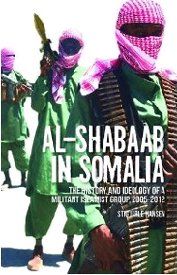
Hansen, “Al Shabaab in Somalia: The History and Ideology of a Militant Islamist Group, 2005-2012”

This November, The Columbia University Press will publish Al Shabaab in Somalia: The History and Ideology of a Militant Islamist Group, 2005-2012 by Stig Jarle Hansen (University of Life Science, Norway). The publisher’s description follows.

Harakat Al Shabaab is Somalia’s infamous though under-researched militant Islamist group. An offshoot of the Islamic Courts Union, the organization seeks to impose Sharia law across the country, has been linked to acts of maritime piracy, and was until recently the de facto rulers of the land. Along with the group’s international connections to Al Qaeda and other Islamist networks, Harakat Al Shabaab is heavily involved in local clan structures. Combining intensive field research with interviews of Shabaab leaders, this volume builds a history of the organization while critically analyzing the roots of its resilency.

The Wall Street Journal on Syria’s Christians

An interesting piece in today’s Wall Street Journal about the dire situation of Syria’s Christians, “Can Syria’s Christians Survive?” The secularism of the Assad regime has provided a space for Christians, mostly Catholic and Orthodox, who make up roughly 10% of Syria’s population. The opposition “Free Syrian Army,” made up principally of Sunni Muslims, has murky ties to Islamists, and Christians worry what will happen to them if Islamists ever gain power – as Islamists have done in other Arab Spring revolutions, like Egypt’s. One possibility the article suggests is a restoration of classical dhimmi restrictions on Christians. (I’m not sure where the reporters got that idea; even the Muslim Brotherhood in Egypt hasn’t seriously proposed restoring the dhimmi rules). The more likely outcome is that Christians will be caught in a crossfire between Sunnis and Alawites — the sect to which the Assad family belongs, which Sunni Islam sees as heretical — and be forced to leave the country, as Iraq’s Christians did in the last decade.

Tibi, “Islamism and Islam”

An interesting book by Bassam Tibi (Göttingen), Islamism and Islam (Yale 2012).  The publisher’s description follows.

Despite the intense media focus on Muslims and their religion since the tragedy of 9/11, few Western scholars or policymakers today have a clear idea of the distinctions between Islam and the politically based fundamentalist movement known as Islamism. In this important and illuminating book, Bassam Tibi, a senior scholar of Islamic politics, provides a corrective to this dangerous gap in our understanding. He explores the true nature of contemporary Islamism and the essential ways in which it differs from the religious faith of Islam.

Drawing on research in twenty Islamic countries over three decades, Tibi describes Islamism as a political ideology based on a reinvented version of Islamic law. In separate chapters devoted to the major features of Islamism, he discusses the Islamist vision of state order, the centrality of antisemitism in Islamist ideology, Islamism’s incompatibility with democracy, the reinvention of jihadism as terrorism, the invented tradition of shari’a law as constitutional order, and the Islamists’ confusion of the concepts of authenticity and cultural purity. Tibi’s concluding chapter applies elements of Hannah Arendt’s theory to identify Islamism as a totalitarian ideology.

Law, Religion, and Politics in Tunisia

An interesting, though rather inaptly titled, article about, among other things, a trial for blasphemy in Tunisia which has generated enormous controversy.  Tunisia’s future, like that of Egypt, appears very uncertain.  I also found the comments about the worries of the residents of Tunis interesting.  Years ago, I spent several weeks in Tunis working as part of an archeological dig in ancient Carthage.  I enjoyed that time in Tunis very much.  It is a sophisticated and cosmopolitan sea-side resort and it is unsurprising that its residents would be alarmed about Tunisia’s future.  It is the democracy that seems to be what they fear.

Helfont Reviews Lacroix’s “Awakening Islam”

A superb review at The New Republic’s on-line book review, The Book, by Samuel Helfont (a Ph.D. student at Princeton) of Stéfane Lacroix’s Awakening Islam: The Politics of Religious Dissent in Saudi Arabia (HUP 2011).  After noting that Saudi Arabia has always posed something of a “blind spot” to scholars of Islamic societies, Helfont gives a very good summary of this book and concludes with this:

In the era of the Arab Spring, it is enticing to see Arab history as moving steadily toward a more democratic and less authoritarian future: the will of the people has finally challenged and even overthrown entrenched dictatorial regimes. But again the kingdom of Saudi Arabia seems like a holdover from a past era, and in the surge of scholarship that is beginning to appear on popular movements and democracy in the Arab World, Saudi Arabia may again seem passé and unimportant. This would be a mistake. If the history of Saudi Arabia teaches anything, it is that Western social scientists often miss the mark when assessing where the Middle East is headed. While it would be tempting to assume that the Saudi monarchy will fade into the ancient sands of the Arabian Peninsula, destined to be replaced by a more modern and democratic state, it would be incredibly dangerous to do so.

Read the whole thing.

UPDATE: A propos of this review, see also this dreadful news story about the execution of a woman in Saudi Arabia for practicing sorcery.  (h/t Volokh).