Joseph & Castan, “The International Covenant on Civil and Political Rights”

In September Oxford University Press publishes a new edition of The International Covenant on Civil and Political Rights by Sarah Joseph (Monash University) and Melissa Castan (Monash University). The publisher’s description follows.Cover

Now in its third edition, this book is the authoritative text on one of the world’s most important human rights treaties, the International Covenant on Civil and Political Rights. The Covenant is of universal relevance. Adopted by the UN General Assembly in 1966 and in force from 1976, it commits the signatories and parties to respect the civil and political freedoms and rights of individuals. Monitored by the UN Human Rights Committee, the Covenant ratified by the majority of UN member states.

The book meticulously extracts and analyzes the jurisprudence over nearly forty years of the UN Human Rights Committee, on each of the various ICCPR rights, including the right to life, the right to freedom from torture, the right of freedom of religion, the right of freedom of expression, and the right to privacy, as well as admissibility criteria under the First Optional Protocol. Key miscellaneous issues, such as reservations, derogations, and denunciations, are also thoroughly assessed.

Comprehensively indexed and cross-referenced, this book offers elegant and straight-forward access to the jurisprudence of the Human Rights Committee and other UN human rights treaty bodies. Presented in a clear and illuminating manner, it will be of use to the judiciary, human rights practitioners, human rights activists, government institutions, academics, and students alike.

Zucca on Freedom of Religion as an International Human Right

Lorenzo Zucca (King’s College London) has published Prince or Pariah? The Place of Freedom of Religion in a System of International Human Rights, as part of the Working Paper Series produced by the ReligioWest project at the European University Institute. The abstract follows:

The human right to freedom of religion (HRFR) at the international level is a deeply contested concept and is interpreted in radically different ways in the respective historical constitutional instruments of the US and Europe. It is, for example, embedded in the First Amendment of the American
Constitution, but finds no explicit recognition in the French Declaration of Rights. The question that emerges from this simple starting point is: what is the place of freedom of religion in a system of protection of international human rights? Is there a single answer to this question, or is it a deeply contingent matter that depends on discrete constitutional histories? This paper attempts to unravel this deeply contentious issue, which goes to the very core of disagreement about the nature of the human
rights to freedom of religion. Lacking agreement as to what constitutes freedom of religion, international intervention should limit itself to the bare minimum in this area. This renders freedom of religion a pariah at the international level.

Coptic Pope Cancels Weekly Bible Study; Fears for Congregation’s Safety

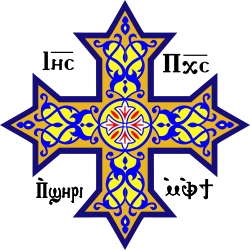
The BBC reports that Pope Tawadros of the Coptic Orthodox Church (below) has cancelled his weekly public Bible study because he fears for the safety of his audience. At these weekly gatherings, Tawadros takes questions on Bible passages from a congregation gathered inside St. Mark’s Cathedral in Cairo. Since the fall of the Morsi government, however, threats have increased against Copts throughout Egypt. In one incident recently, someone raised an al-Qaeda flag outside a Coptic church while people worshipped inside. A large public gathering at Cairo’s main cathedral might provide too tempting a target.

Things have been bad for Copts for some time. Even under Mubarak, Copts complained that the state failed to protect them from sectarian violence. The situation has worsened, however, in the weeks following the fall of the Morsi government. Several Copts have been murdered and scores injured.  “We had never experienced the kind of persecution we suffer now,” one Copt from the south of Egypt, a pharmacist and mother of two, recently told the AP. “We are insulted every day.”

Traditionally, Copts avoided Egyptian politics. That changed during the Arab Spring. Copts were prominent in the protests that led to the overthrow of Mubarak and vocal in protesting their treatment under the Muslim Brotherhood. Then, Pope Tawadros appeared in that famous TV broadcast announcing the overthrow of the Morsi regime–along with the leader of Al-Azhar, it should be pointed out–to voice his support for the military. His appearance seems to have exposed Copts to even more danger than usual. Pointing to the broadcast, Islamists now allege that the overthrow of Morsi was a Christian-orchestrated plot against Islam.

I’ve written before about the persecution of Christians in the Middle East and the lack of interest among American elites, even in the human rights community. But the situation for Copts has become truly dire, and Americans are beginning to take notice. There isn’t too much the US can do to help, unfortunately. Expressions of support for Mideast Christians can easily backfire. As Nina Shea has argued, however, America can do more to ensure that humanitarian assistance actually reaches Mideast Christians–in Syria, for example. And the US can fast-track asylum applications from Copts and other Mideast Christians in order to provide a haven for those who wish to leave. This last option isn’t a great solution, as it would only accelerate the depopulation of Christian communities in the Middle East. But leaving these Christians to their fate shouldn’t be an option, either.

Perry, “Human Rights in the Constitutional Law of the United States”

9781107666085This July, Cambridge University Press will publish Human Rights in the Constitutional Law of the United States, by Emory’s Michael Perry The publisher’s description follows.

In the period since the end of the Second World War, there has emerged what never before existed: a truly global morality. Some of that morality – the morality of human rights – has become entrenched in the constitutional law of the United States. This book explicates the morality of human rights and elaborates three internationally recognized human rights that are embedded in U.S. constitutional law: the right not to be subjected to cruel, inhuman, or degrading punishment; the right to moral equality; and the right to religious and moral freedom. The implications of one or more of these rights for three great constitutional controversies – capital punishment, same-sex marriage, and abortion – are discussed in-depth. Along the way, Michael J. Perry addresses the question of the proper role of the Supreme Court of the United States in adjudicating these controversies.

Christians in America and the Middle East

The Economist’s religion blog, “Erasmus,” has an interesting post on the sympathetic response of American Christians to the plight of Christians in the Middle East. Erasmus says this is a new development: Until recently, politically active American Christians, particularly on the right, have “seemed deeply ambivalent” about Mideast Christians. Recent events may have changed things. Erasmus notes the appearance at a congressional subcommittee hearing last week by the Hudson Institute’s Nina Shea, who spoke about the suffering of Mideast Christians and America’s responsibility to them.

It’s true that for the past few decades, the situation of the Mideast Christians hasn’t been a priority for American Christians. This wasn’t always so. In the nineteenth and early twentieth centuries, American churches agitated for aid to persecuted Christian minorities in Ottoman Turkey. More recently, though, American Christians, especially conservatives, have viewed Israelis, not Christians, as their natural allies in the region.

There are a few reasons for this. Ignorance is one. Many Americans don’t realize that there are Christians in the Middle East. In America, Christians who speak Arabic are repeatedly mistaken for Muslims. A Christian immigrant from Egypt who wears a cross once told me that Americans ask her about her mosque. Theological, cultural, and political factors play a role as well. For most American Christians, especially Evangelicals, Mideast Christians are decidedly “other.” Most are Orthodox; some are Eastern-rite Catholics; hardly any are Protestants, even mainline Protestants. In terms of worship and ecclesiology, most Mideast Christians are about as far from contemporary American Christianity as you can get and still be in the Christian fold. 

Culturally, most Mideast Christians are, well, Middle Eastern. Their values with respect to family and identity are apt to differ from those of the West. In purely cultural terms, a Christian from Minnesota may feel he has more in common with a secular Jew from Tel Aviv than a Christian from Tur Abdin. Politically, Christians in Arab countries have tended to be nationalists. Those that live in Israel feel like outsiders; they complain, with some justification, that the state is indifferent to their concerns. All this differentiates Mideast Christians from American Christians, who strongly support Israel as an embattled democracy to which the West owes a moral obligation. And this is putting aside the “end times theology” that persuades some American Evangelicals to support the Jewish state–a theology, needless to say, that Christians in the Middle East do not share. 

So what explains the new sympathy for Mideast Christians? Part of the explanation, Erasmus argues, is politics. Conservative Christians who didn’t object when Bush Administration policy led to the displacement of half the Christian population of Iraq are quite vocal now. There is some truth to this charge.

But, as Erasmus explains, it isn’t simply politics. Across the Middle East, the rise of Islamism has made the situation of  Christians truly dire. Just in the last couple of weeks, Islamists in the Syrian opposition murdered a Catholic priest. Unfortunately, this example of anti-Christian brutality is not unusual. Two Orthodox bishops kidnapped by Islamists in Syria have yet to be found. In Egypt, the Copts suffer greatly. In Turkey, the government is seizing the land of Syriac Christians on the basis of phony claims. One could give many other examples.

It bears repeating: Christianity in the Middle East faces an existential threat. And the Obama Administration–like the Bush Administration before it–has other priorities. Reportedly, the US ambassador to Egypt recently asked the Coptic Pope, Tawadros, to discourage Christians from taking part in anti-Morsi protests. And the Administration has decided to arm the Syrian opposition–a decision that seems likely, over time, to result in arming the Syrian Islamists.

The Administration undoubtedly believes that democracy is the only long-run hope for the Middle East, and that democratically-elected Islamist governments, if that is what the region’s people wish, are the short-term price one has to pay. I suppose an argument could be made. But of course Americans aren’t the ones paying the price. Christianity in the Middle East is going to the wall. As this tragedy becomes known, largely through the work of people like Shea, American Christians are taking notice.

House Hearing on Religious Minorities in Syria

CLR Forum reader Anahid Ugurlayan kindly points us to an important joint subcommittee hearing yesterday at the US House of Representatives, Religious Minorities in Syria: Caught in the Middle. Co-sponsored by the Subcommittee on Africa, Global Health, Global Human Rights, and International Organizations and the Subcommittee on the Middle East and North Africa, the hearing heard from four witnesses, including USCIRF Commissioner Zuhdi Jasser. The hearing extensively addressed the plight of Syria’s Christians.

The whole hearing is worthwhile, but the testimony of the Hudson Institute’s Nina Shea is particularly useful. Shea concedes that “no religious community has been spared suffering” in Syria’s civil war. But “Syria’s ancient Christian minority” faces an existential threat:

Christians, however, are not simply caught in the middle, as collateral damage. They are the targets of a more focused shadow war, one that is taking place alongside the larger conflict between the Shiite-backed Baathist Assad regime and the largely Sunni rebel militias. Christians are the targets of an ethno-religious cleansing by Islamist militants and courts. In addition, they have lost the protection of the Assad government, making them easy prey for criminals and fighters, whose affiliations are not always clear.

Shea documents anti-Christian incidents, some of them quite harrowing. She recommends, among other things, that the US Government direct aid to institutions caring for Christian refugees (who often fear going to refugee camps); expedite immigration applications from Syrian Christians; and ensure that none of its assistance to the Syrian opposition finds its way into the hands of Islamist groups responsible for the ethnic cleansing of Christians.

Bayir, “Minorities and Nationalism in Turkish Law”

As Walter Russell Mead notes, the recent falling-out between Germany and Turkey over Turkey’s accession to the EU confirms what Samuel Huntington wrote in the 1990s: Deep civilizational divides continue to exist and are impossible to ignore. Notwithstanding Kemalist dreams of transformation, Muslim-majority Turkey and liberal, secularist Europe represent different ways of being. It was never clear how the two could successfully merge in one political entity. Under Erdogan’s AKP, the marriage seems further away than ever.

A recent book from Ashgate, Minorities and Nationalism in Turkish Law, seems like it would provide helpful background to today’s events. The author, Derya Bayir, is a lawyer who specializes in international human rights and the Turkish legal system. Here’s the publisher’s abstract:

Examining the on-going dilemma of the management of diversity in Turkey from a historical and legal perspective, this book argues that the state’s failure to accommodate ethno-religious diversity is attributable to the founding philosophy of Turkish nationalism and its heavy penetration into the socio-political and legal fibre of the country. It examines the articulation and influence of the founding principle in law and in the higher courts’ jurisprudence in relation to the concepts of nation, citizenship, and minorities. In so doing, it adopts a sceptical approach to the claim that Turkey has a civic nationalist state, not least on the grounds that the legal system is generously littered by references to the Turkish ethnie and to Sunni Islam. Also arguing that the nationalist stance of the Turkish state and legal system has created a legal discourse which is at odds with the justification of minority protection given in international law, this book demonstrates that a reconstruction of the founding philosophy of the state and the legal system is necessary, without which any solution to the dilemmas of managing diversity would be inadequate. Adopting an interdisciplinary approach, this timely book will interest those engaged in the fields of Middle Eastern, Islamic, Ottoman and Turkish studies, as well as those working on human rights and international law and nationalism.

Raphael Lemkin Was a Remarkable Man

When he died, roughly 50 years ago at the age of 59, Raphael Lemkin was impoverished and embittered, an unnoticed man. Only 7 people attended his funeral. Yet he was one of the most influential international human rights lawyers of the twentieth century. Lemkin, whom Jay Winter describes in a recent piece as a “one-man NGO,” coined the word “genocide” for the destruction of a national, ethnic, racial or religious group, and was the driving force behind adoption of the UN Genocide Convention of 1948.

He came up with the term “genocide” in reflecting on the massacres of Armenian Christians in Ottoman Turkey during World War I–events we now know as the Armenian Genocide–but he had an example closer to home as well. A Polish Jew, he lost about 50 relatives in the Holocaust, and himself escaped the Nazis only after taking a bullet in the hip. He made his way to America, where he joined the law faculty at Duke, wrote his most important book, Axis Rule in Occupied Europe, and worked, successfully, for adoption of the UN Convention.

What explains his bitterness and isolation at the end? Lemkin was a loner and a difficult man; that was part of it, no doubt. And he could surely see, as Winter writes, that naming a crime, even legislating against a crime, does not necessarily reduce its frequency. It’s hard to argue that the Genocide Convention has been a great success. Still, Lemkin’s career had a public impact which most of us, especially in the legal academy, would be proud to claim.

I reflect on all this because, this month, Yale University Press releases Lemkin’s unfinished autobiography, Totally Unofficial: The Autobiography of Raphael Lemkin, edited by historian Donna-Lee Frieze. It looks very interesting. Here’s the publisher’s description:

Among the greatest intellectual heroes of modern times, Raphael Lemkin lived an extraordinary life of struggle and hardship, yet altered international law and redefined the world’s understanding of group rights. He invented the concept and word “genocide” and propelled the idea into international legal status. An uncommonly creative pioneer in ethical thought, he twice was nominated for the Nobel Peace Prize. Although Lemkin died alone and in poverty, he left behind a model for a life of activism, a legacy of major contributions to international law, and—not least—an unpublished autobiography. Presented here for the first time is his own account of his life, from his boyhood on a small farm in Poland with his Jewish parents, to his perilous escape from Nazi Europe, through his arrival in the United States and rise to influence as an academic, thinker, and revered lawyer of international criminal law.

“Orthodox Christianity and Human Rights” (Bruning & van der Zweerde, eds.)

We’re a little late getting to this, but last year Peeters published an interesting looking collection on the conception of human rights in Orthodox Christianity, particularly in nations from the former Soviet Union: Orthodox Christianity and Human Rights (Bruning & van der Zweerde, eds.). As the Pussy Riot trial showed, the view of human rights in those nations sometime diverges from the Western consensus in a way that leaves everyone a bit confused. This book may help resolve some of that confusion. Here’s the publisher’s summary:

Orthodox theology and the Orthodox Churches had, and continue to have an ambiguous relationship towards the concept of Human Rights: principal approval often stands alongside serious criticism. This is especially true for those Orthodox Churches which have their centre in a country of the former Soviet sphere. On the one hand, especially since the fall of Communism they enjoy religious freedom that forms a central element within the framework of Human Rights. On the other hand, the transformation process of the 1990s and the challenge of pluralism and globalization have all confronted them with aspects of freedom that could not but affect their stance towards the Human Rights concept in general. This also means, that doubts and reservations related to this concept came to the fore again, which had yet existed already decades before. These reservations focused on such issues as Church and secular society, Church and state, furthermore on the understanding of central terms such as “freedom”, “dignity”, “rights” – central also for an Orthodox anthropology, that needs to be reconciled with the partly differing approaches behind the Human Rights concept.

The chapters of this volume try and explore as much the philosophical and theological as the social, historical and practical aspects of this complex relationship. Based either on the discussion of differing theological concepts, or on empirical and concrete case studies respectively, they clearly show the tensions and fractures that do exist. On the other hand, in this way they also hint at possibilities to overcome these tensions, to continue a dialogue that already has begun, and to avoid the numerous misunderstandings between East and West which currently tend to form a hindrance to this dialogue at various points.

H/T: Eastern Christian Books

Sezgin, “Human Rights Under State-Enforced Religious Family Laws”

9781107041400iThis September, Cambridge University Press will publish Human Rights Under State-Enforced Religious Family Laws in Israel, Egypt, and India by Yüksel Sezgin (Syracuse University). The publisher’s description follows.

About one-third of the world’s population currently lives under pluri-legal systems where governments hold individuals subject to the purview of ethno-religious rather than national norms in respect to family law. How does the state-enforcement of these religious family laws impact fundamental rights and liberties? What resistance strategies do people employ in order to overcome the disabilities and limitations these religious laws impose upon their rights? Based on archival research, court observations and interviews with individuals from three countries, Yüksel Sezgin shows that governments have often intervened in order to impress a particular image of subjectivity upon a society, while people have constantly challenged the interpretive monopoly of courts and state-sanctioned religious institutions, re-negotiated their rights and duties under the law, and changed the system from within. He also identifies key lessons and best practices for the integration of universal human rights principles into religious legal systems.