In May, Bloomsbury Academic Publishing will release “Religion or Belief, Discrimination and Equality: Britain in Global Contexts” by Paul Weller (University of Derby), Kingsley Purdam (University of Manchester), Nazila Ghanea (University of Oxford), Sariya Cheruvallil-Contractor (University of Derby). The publisher’s description follows:
 In recent years, controversial issues related to religion or belief, discrimination, equality and human rights have come to the fore, especially in the context of public debates around multiculturalism following the ‘social policy shock’ created by the impact of violent religious extremism. For example should there be restrictions on what people can wear in the work place based on their religious identity? Should religious organizations be exempt from aspects of equalities legislation which are not in line with their beliefs and values? How should non-religious identities be recognized?
In the context of increasing cultural and religion or belief diversity, it is vitally important for the future to understand the nature and extent of discrimination and unfair treatment on the grounds of religion or belief, and to assess the adequacy of policies, practices and laws designed to tackle this. This includes the overlap of religion or belief identities with other aspects of people’s identity including characteristics such as age, disability, race, sex and sexual orientation which can also be legally protected.
This volume is a benchmark publication on religion, discrimination and equality. It includes data and insights derived from the fieldwork, focus groups and questionnaire survey of a recent national research project in Britain. Its analysis presents a unique insight into continuity and change in people’s reported experience over a decade of equalities legislation and political and social change of unfair treatment on the basis of religion or belief. Grounded in empirical and contextualized data, its findings are placed in the context of European and international human rights law.
Its findings will be of special interest to both scholars and practitioners working in the specific fields of education, employment, the media, criminal justice and immigration, housing, health care, social services, and funding, as well as in the broader fields of religion or belief, the law and public policy.

 attempts to institutionalize them in many ways. The question of the connection between religion and human rights is a crucial point here. The genealogy of the Human Rights is still a point of controversies in the academic discussion. Nevertheless, there is consensus that the Christian tradition – especially the doctrine that each human being is an image of God – played an important role within the emergence of the codification of the Human Rights in the period of enlightenment. It is also obvious that the struggle against the politics of apartheid in South Africa was strongly supported by initiatives of churchy and other religious groups referring to the Human Rights. Christian churches and other religious groups do still play an important role in the post-apartheid South Africa. They have a public voice concerning all the challenges with which the multiethnic and economically still deeply divided South African society is faced with. The reflections on these questions in the collected lectures and essays of this volume derive from an academic discourse between German and South African scholars that took place within the German-South African Year of Science 2012/13.
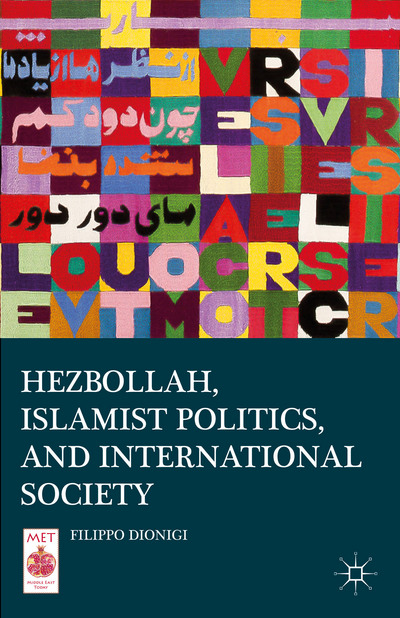 Islamist movements? This book assesses the extent to which Islamist groups, which have traditionally attempted to shield their communities from ‘external’ moral conceptions, have been influenced by the principles that regulate international society. Through an analysis of Lebanon’s Hezbollah, Filippo Dionigi concludes that international norms are significant factors changing Islamist politics. We are still far from an accomplished resolve of the tension between Islamist communitarianism and liberal normative views, but a precarious equilibrium may emerge whereby Islamists are persuaded to rethink the idea of an allegedly ‘authentic’ Islamic morality as opposed to the legitimacy of international norms.
