Also, They Will Need to Use Electric Typewriters

This is rather silly. Inside Higher Ed reports that the International Studies Association–according to its website, “the most respected and widely known scholarly association dedicated to international studies”–has proposed a ban on personal blogging by editors of its journals. The proposal would allow editors to blog only at official sites affiliated with their journals. The ISA’s President says the association is concerned about the lack of professionalism at many academic blogs and that it doesn’t want readers to confuse editors’ personal posts with the association’s official products.

Maybe international studies blogs tend to tackiness, I don’t know. But I can’t see how a scholarly association would think to ban personal blogging in the year 2014. Leave aside for the moment concerns about academic freedom. Blogs serve a useful academic function. Sure, blogs aren’t the same thing as long-form scholarship; a writer can’t fully develop ideas in the blogging format. But blogs allow scholars to carry on helpful conversations with colleagues across the world and to engage the wider public as well. They can highlight current issues that merit further study. And blogs can be equalizers for scholars from smaller and less well-known institutions. Scholars who would never be asked on PBS’s News Hour can use blogs as a way to get their ideas out and influence debate. It would be wrong to lose these benefits because of a vague concern about professionalism. If the ISA is having trouble with editors who post childish comments on personal blogs–apparently, this is one of the reasons the association has proposed the ban–it ought to speak to those editors directly, rather than adopt a blanket prohibition. (H/T: Instapundit).

Pomposity/Quality Relationship of Legal Scholarship

An inside joke for our readers who are law professors, from Eric Posner. “Law and Religion” doesn’t get a data point, surprisingly, but I’m pretty sure we’d be down in the lower right somewhere.

Religious Knowledge Quiz

Relatives staying too long? Christmas tree lights breaking out of the box? Johnny Mathis starting to get on your nerves? If you need a break from all the holiday cheer, take the US Religious Knowledge Quiz, sponsored by Pew. Afterwards, you can look up the results of the actual survey and see how you compare with the American public. (H/T: Perry Dane.)

Colossal Armenian Jesus Towers Over Syria

Here’s a curious little story about a gigantic statue of Jesus (standing a Armenian Jesusgargantuan 128 feet tall, and weighing in at several tons) cast in Armenia that has been installed on top of a mountain near the Monastery of the Cherubim in the Syrian city of Saidnaya (which is itself apparently already 2,100 meters above sea level). This story reports that the project was supported by the Russian government and the Russian Orthodox Church. The statue is reportedly visible from Lebanon, Jordan, Palestine, and Israel.

Earthly and Infernal Judges

Justice Scalia has caused quite a stir by confessing to the New York Magazine that he believes in hell. I suppose that belief in heaven is deemed somewhat less distressing today, though perhaps just as off the wall. Hell is very unfashionable–indeed, tiresomely obsolete.

The reporter in this Huffington Post story wonders how belief in heaven Minos the Judgeand hell affects Justice Scalia’s judgment on the Supreme Court. But of course, if hell exists, that’s a perfectly trivial matter. What he ought to be asking about is the far more relevant and important question of how judgment is meted out in hell.

As to that issue, fortunately we have an unimpeachable authority:

There stands Minos horribly, and snarls;
Examines the transgressions at the entrance;
Judges, and sends according as he girds him.
I say, that when an evil spirit
Comes before him, wholly it confesses;
And this discriminator of transgressions
Sees what place in Hell is meet for it;
Girds himself with his tail as many times
As grades he wishes it should be thrust down.
Always before him many of them stand;
They go by turns each one unto the judgment;
They speak, and hear, and then are downward hurled.

Dante, The Divine Comedy: Inferno, Canto V.

Plus, We Keep Electing These Puritanical Mayors

Here’s a surprise for a summer Friday. Christianity Today posts about a new list, published by the real-estate blog, Movoto, of the “saintliest” cities in the United States. Can you guess number one? Bet you can’t. It’s Babylon on the Hudson–and my home town–New York City!

However did the nice people at Movoto come up with this? Christianity Today explains:

Movoto says it reached its conclusions by reversing the data it collected to compile its “sinful cities” list, which it released last month. It based those calculations for the country’s 95 most populous cities on data selected to represent each of the seven deadly sins, including:

Strip clubs per capita (Lust) Cosmetic surgeons per capita (Pride) Violent crime per year per 1,000 residents (Wrath) Theft per year per 1,000 residents (Envy) Percentage of disposable income given to charity each year (Greed) Percentage of obese residents (Gluttony) Percentage of physically inactive residents (Sloth)

Whichever cities ranked highest in those categories were determined to be “sinful.” To determine which cities were most saintly, however, Movoto looked “at the same criteria (the sins) from the opposite perspective…. This time around the cities with the least amount of these things would rank highest and thus be the most saintly.

The most saintly city, according to these criteria, is good old Gotham. I’m sure Evangelical readers will be offended by the obvious works-righteousness of this reasoning, but, really, it makes a lot of sense, when you think about it. It’s like the old parenting advice: busy kids stay out of trouble. We New Yorkers are far too busy pursuing money and career advancement to fall into temptations. Greed and pride, for example.

Legal Monstrosities: from Book I of More’s Utopia

Thomas More’s “Utopia” (1516) is written in two books.  The second of these, Utopia Frontispiecedescribing in detail the island of Utopia, is the more famous.  Here’s an enjoyable passage from the first book, in which More is getting to know the traveler Raphael Hythloday and asking him about his geographic explorations:

But what he told us that he saw in every country where he came, it were very long to declare. Neither it is my purpose at this time to make rehearsal thereof. But peradventure in another place I will speak of it, chiefly such things as shall be profitable to be known, as in special be those decrees and ordinances that he marked to be well and wisely provided and enacted among such peoples as do live together in a civil policy and good order. For of such things did we busily inquire and demand of him, and he likewise very willingly told us of the same. But as for monsters, because they be no news, of them we were nothing inquisitive. For nothing is more easy to be found than barking Scyllas, ravening Celaenos, and Laestrygons, devourers of people, and suchlike great and incredible monsters. But to find citizens ruled by good and wholesome laws, that is an exceeding rare and hard thing. But as he marked many fond and foolish laws in those new found lands, so he rehearsed divers acts and constitutions whereby these our cities, nations, countries, and kingdoms may take example to amend their faults, enormities, and errors.

Should Richard III Receive a Catholic Burial?

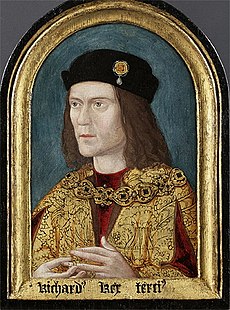
You thought there couldn’t be a law and religion angle to today’s news–fascinating for us history nerds–that archaeologists have discovered the mortal remains of Richard III beneath a parking lot in Leicester? Think again. Plans are underway to re-inter the bones in the city’s Anglican Cathedral. Not so fast, say some: the hunchback king wasn’t a Protestant, but a Catholic, and he requires a Catholic burial. In fact, as Shakespeare fans know, Richard died at Bosworth Field (“A horse! A horse! My kingdom for a horse!”), defending his throne from Henry Tudor. Henry went on to reign as Henry VII;  his son, Henry VIII, broke with Rome. As The Tablet’s blog argued this morning, “Had Richard prevailed at the Battle of Bosworth Field, there would have been no Henry VII, therefore no Henry VIII and no Reformation. England today might still be a Catholic country.” Think of it: no Reformation, no Established Church, no Archbishop Laud, no Puritans, no Great Migration — no Massachusetts! — and no Establishment Clause. Surely there’s a law review article in there somewhere.

Leicester Cathedral seems to know it’s facing a sensitive situation. A Catholic priest is keeping watch over Richard’s remains (as is an Anglican, I believe), and the cathedral is planning a “multifaith” burial ceremony. Personally, I’m not sure why English Catholics are so keen to claim Richard, anyway. They must be forgetting the nephews in the Tower.

Mystery Millinery

By far the most fascinating story to be covered at today’s inaugural festivities involves the genesis and meaning of Justice Scalia’s head-dress.  The voracious hunger for conspiratorial explanations in the Twitterverse was predictable, but it was sated (or perhaps ‘whetted’ is the mot juste) by CLR Forum friend Kevin Walsh, whose dash and sense of medieval panache is second to none.