Reflections from the City of God: On the Miseries of Just War

I am blessed to be on sabbatical this semester. In addition to beginning several City of Mennew writing projects, I thought it might be good to take on some meaty reading projects. One of these projects will be to read through St. Augustine’s City of God and to become familiar with some of the secondary literature related specifically to his political thought (the project is not purely a private one–future students in my spring Professional Responsibility course, take note!). In connection with that project, I hope to post a weekly reflection from the City of God that is relevant to some law and religion issue of current moment.

I’m confident that I will say nothing original about Augustine’s political thought. Indeed, I am sure that many readers of this blog will know much more about Augustine than I will learn in these few months and well beyond that. But because I have been enjoying greatly what I have read so far, and because what I have read relates in various ways to many of the questions we consider at the Center for Law and Religion, and because it may be a pleasure for readers to see some of Augustine’s words again before their eyes (and a pleasure for me to re-write them), and simply for the joy that comes in replowing well-tilled fields, I thought to give it a try. Those of our readers who are Augustine scholars or otherwise knowledgeable: please let me know in the comments what secondary literature I ought to be reading. I am reading the Marcus Dods translation (would that I could read it in Latin, but as Dods–writing in 1871–said, “[T]here are not a great many men nowadays  who will read a work in Latin of twenty-two books”).

Here is a passage from of the famous Book XIX on the miseries of war, including of just war:

But the imperial city has endeavored to impose on subject nations not only her yoke, but her language, as a bond of peace, so that interpreters, far from being scarce, are numberless. This is true; but how many great wars, how much slaughter and bloodshed, have provided this unity! And though these are past, the end of these miseries has not yet come. For though there have never been wanting, nor are yet wanting, hostile nations beyond the empire, against whom wars have been and are waged, yet, supposing there were no such nations, the very extent of the empire itself has produced wars of a more obnoxious description–social and civil wars–and with these the whole race has been agitated, either by the actual conflict or the fear of a renewed outbreak. If I attempted to give an adequate description of these manifold disasters, these stern and lasting necessities, though I am quite unequal to the task, what limit could I set? But, say they, the wise man will wage just wars. As if he would not rather lament the necessity of just wars, if he remembers that he is a man; for if they were not just he would not wage them, and would therefore be delivered from all wars. For it is the wrongdoing of the opposing party which compels the wise man to wage just wars; and this wrongdoing, even though it gave rise to no war, would still be matter of grief to man because it is man’s wrongdoing. Let everyone, then, who thinks with pain on all these great evils, so horrible, so ruthless, acknowledge that this is misery. And if anyone either endures or thinks of them without mental pain, this is a more miserable plight still, for he thinks himself happy because he has lost human feeling.

One striking feature of this paragraph is the ubiquity of misery in all matters related to war. The misery not only of the initial wrongdoing that leads to war, and not only of war itself, but also of the waging of just war in response to (in fact, ‘compelled’ by) the existence of miserably wrongful conduct.

An Ancient Mystery

Rome 2013 006
Mosaic in S. Costanza, Rome

Here’s a puzzle. The mosaic in this photo is in Rome’s Santa Costanza, a lovely fourth-century church with some of the oldest surviving Christian art. The mosaic is famous among scholars of Christian iconography, even among scholars of Christian jurisprudence. It depicts Christ–blond, beardless, looking like the god Apollo–giving a scroll to St. Peter. Christ is dressed in a golden toga. Scholars believe the image is meant to represent Christ giving the Law to the Church.

According to French scholar Rémi Brague, during the patristic period, “Christianity came to think of itself as a law brought by Christ in the same way that Judaism is a law brought by Moses.” This understanding, he says,

received artistic representation in images such as that of a lawgiver Christ giving St. Peter the scroll of the Law in a mosaic in the church of Santa Costanza in Rome, on the sarcophagus of Probus in Rome, or in the basilica of St. Ambrose in Milan.This scene is adapted from the pagan model of the investiture of a high functionary by the emperor. After Constantine, the ideology of the Christian empire utilized the notion of a unique law. This iconographic theme is present from the fourth century to the sixth, when it was replaced by another image in which Christ gives Peter not the Law but rather the Keys to the Kingdom.

If this reading is correct, the mosaic is an important object, not only in the history of Western art, but Western law as well. A key piece of evidence that supports the reading is the inscription on the scroll Christ holds. According to most scholars, the inscription is “DOMINUS LEGEM DAT,” or, “The Lord Gives Law.” If that’s what the scroll says, it does indeed confirm the reading of scholars like Brague.

Except that isn’t what the scroll says. As the photo, which I took this summer, shows, the scroll reads, “DOMINUS PACEM DAT,” or “The Lord Gives Peace.” Not “Law,” “Peace.” Now, I suppose, the inscription may be elliptical: Christ gives Law, the Law of Christ gives Peace, so Christ gives Peace. But that’s a strain. Besides, in Christian teaching, the Law of Christ is usually described as Love, not Peace. Does the scroll refer to Christ’s words at the Last Supper, “My peace I give to you”? Maybe. But that would definitely change the meaning of the image.

So, what’s the explanation? Perhaps, as Brague suggests, this was a conventional image in late antiquity, so the mosaic must be about law. One scholar I’ve read thinks the word “PACEM” on the scroll is an simply an incorrect reconstruction of the original “LEGEM.” Sounds plausible. But when did the reconstruction take place? The Middle Ages? Why are scholars so confident that the image is about law, when the words on the scroll are about peace? Anybody know?

Harper, “From Shame to Sin”

Culture and law have a mutually-reinforcing relationship. Cultural transformation typically promotes legal change, and legal change often speeds up cultural transformation. A good example is the sexual revolution of the 1960s. As the revolution became mainstream, it put pressure on family law concepts that had been based on traditional Christian sexual ethics. And changes in family law have  no doubt accelerated the weakening of traditional Christian sexual morality.
Next month, Harvard University Press will publish a book that describes another cultural transformation that had an effect on law: the movement from pagan to Christian sexual ethics that occurred in late antiquity. In some ways, this seems the mirror image of what is happening today. As Christian values displaced the pagan sexual ethic, Roman law changed as well. Doubtless, pagan traditionalists grumbled about the revolution, just as religious traditionalists grumble today. It’s a good reminder that history doesn’t really move in a one-way direction.

The book is From Shame to Sin: The Christian Transformation of Sexual Morality in Late Antiquity by Kyle Harper (University of Oklahoma). Here’s the publisher’s description:

When Rome was at its height, an emperor’s male beloved, victim of an untimely death, would be worshipped around the empire as a god. In this same society, the routine sexual exploitation of poor and enslaved women was abetted by public institutions. Four centuries later, a Roman emperor commanded the mutilation of men caught in same-sex affairs, even as he affirmed the moral dignity of women without any civic claim to honor. The gradual transformation of the Roman world from polytheistic to Christian marks one of the most sweeping ideological changes of premodern history. At the center of it all was sex. Exploring sources in literature, philosophy, and art, Kyle Harper examines the rise of Christianity as a turning point in the history of sexuality and helps us see how the roots of modern sexuality are grounded in an ancient religious revolution.

While Roman sexual culture was frankly and freely erotic, it was not completely unmoored from constraint. Offending against sexual morality was cause for shame, experienced through social condemnation. The rise of Christianity fundamentally changed the ethics of sexual behavior. In matters of morality, divine judgment transcended that of mere mortals, and shame—a social concept—gave way to the theological notion of sin. This transformed understanding led to Christianity’s explicit prohibitions of homosexuality, extramarital love, and prostitution. Most profound, however, was the emergence of the idea of free will in Christian dogma, which made all human action, including sexual behavior, accountable to the spiritual, not the physical, world.

Happy Birthday, Edict of Milan

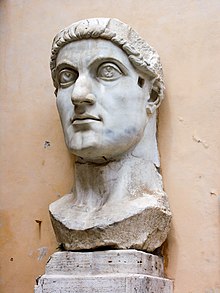
We didn’t want to let the month pass without noting the 1700th anniversary of the Edict of Milan, one of the most important events in the history of religious liberty. In February 313, the emperors Constantine (left) and Licinius met in Milan to discuss imperial business. While there, they agreed to grant religious freedom to Christians–and, incidentally, everyone else in the Roman empire. Their decision came to be known as an “edict,” though it’s not clear an official document ever issued. The historian Eusebius supplies the text:

When I, Constantine Augustus, and I, Licinius Augustus, came under favorable auspices to Milan and took under consideration everything which pertained to the common weal and prosperity, we resolved among other things, or rather first of all, to make such decrees as seemed in many respects for the benefit of every one; namely, such as should preserve reverence and piety toward the deity. We resolved, that is, to grant both to the Christians and to all men freedom to follow the religion which they choose, that whatever heavenly divinity exists may be propitious to us and to all that live under our government.

We have, therefore, determined, with sound and upright purpose, that liberty is to be denied to no one, to choose and to follow the religious observances of the Christians, but that to each one freedom is to be given to devote his mind to that religion which he may think adapted to himself, in order that the Deity may exhibit to us in all things his accustomed care and favor.

Note a couple of things. The edict does not, as commonly believed, make Christianity the state religion. That decision came later, under a different emperor, Theodosius–which suggests that Christians who condemn the “Constantinian compromise” that weakened the faith have got their emperors wrong. And, although it is famous for legalizing the practice of Christianity in Rome, the edict does not cover only Christians. It grants religious liberty to everyone in the empire. Everyone should follow the religion he thinks best, the edict proclaims, so that “whatever heavenly divinity exists” will continue his favors to Rome. Which puts one in mind of Gibbon’s famous jibe: to the magistrate, all religions are equally useful.

At length, Licinius changed his mind about the edict and began persecuting Christians in his part of the empire. A power struggle followed; Constantine eventually defeated Licinius, thereby becoming sole emperor. Constantine was always cagey about his own Christianity, perhaps because he wished to avoid upsetting those powerful Romans who remained pagan. He advanced the interests of the church and influenced (or interfered in) doctrinal developments, but he did not actually become a Christian until shortly before his death. Today, both he and Theodosius are commemorated as saints in Eastern churches. Licinius? Not so much.

Elm, “Sons of Hellenism”

One of the lessons of Peter Brown’s new book, about which I posted last week, is that Constantine’s conversion had only a limited effect on Roman society. For decades afterwards, Christianity and Paganism squared off as intellectual and political adversaries; Christianity’s triumph took time. A recent book by Berkeley historian Susanna Elm, Sons of Hellenism, Fathers of the Church (University of California Press 2012) describes the conflict between Julian the Apostate, the Emperor who tried to restore Paganism, and his chief rival, Gregory of Nazianzus, the Archbishop of Constantinople. She argues that their debate obscures the fact they they shared a common intellectual and social grounding. The publisher’s description follows:

This groundbreaking study brings into dialogue for the first time the writings of Julian, the last non-Christian Roman Emperor, and his most outspoken critic, Bishop Gregory of Nazianzus, a central figure of Christianity. Susanna Elm compares these two men not to draw out the obvious contrast between the Church and the Emperor’s neo-Paganism, but rather to find their common intellectual and social grounding. Her insightful analysis, supplemented by her magisterial command of sources, demonstrates the ways in which both men were part of the same dialectical whole. Elm recasts both Julian and Gregory as men entirely of their times, showing how the Roman Empire in fact provided Christianity with the ideological and social matrix without which its longevity and dynamism would have been inconceivable.

Brown, “Through the Eye of a Needle”

As a break from grading exams over the last couple of weeks, I worked my way through Peter Brown’s immense new work, Through the Eye of a Needle: Wealth, the Fall of Rome, and the Making of Christianity in the West (Princeton 2012). Brown is the greatest living historian of late antiquity, and in this work he sets out to show how the Christian church gradually attracted the rich and powerful in the century or so following the conversion of Constantine. According to Brown, it was Christianity’s ability to attract the Roman super rich, rather than the moderately wealthy people who had made up the bulk of the pre-Constantinian church, that really “marks the turning point in the Christianization of Europe” — not the conversion of Constantine itself, which had little immediate effect on Roman society. It’s a useful lesson for law and religion scholars, who tend to assume, the way lawyers do, that official acts like Constantine’s are the most important force in social change. Brown’s erudition is incredible and the book offers many insights about late Roman culture and society. Many readers will love the immersion in the past — though, candidly, some might think Brown’s obsessive attention to detail occasionally detracts from the sweep of his narrative. Here’s the publisher’s description:

Jesus taught his followers that it is easier for a camel to go through the eye of a needle than for a rich man to enter heaven. Yet by the fall of Rome, the church was becoming rich beyond measure. Through the Eye of a Needle is a sweeping intellectual and social history of the vexing problem of wealth in Christianity in the waning days of the Roman Empire, written by the world’s foremost scholar of late antiquity.

Peter Brown examines the rise of the church through the lens of money and the challenges it posed to an institution that espoused the virtue of poverty and called avarice the root of all evil. Drawing on the writings of major Christian thinkers such as Augustine, Ambrose, and Jerome, Brown examines the controversies and changing attitudes toward money caused by the influx of new wealth into church coffers, and describes the spectacular acts of divestment by rich donors and their growing influence in an empire beset with crisis. He shows how the use of wealth for the care of the poor competed with older forms of philanthropy deeply rooted in the Roman world, and sheds light on the ordinary people who gave away their money in hopes of treasure in heaven.

Through the Eye of a Needle challenges the widely held notion that Christianity’s growing wealth sapped Rome of its ability to resist the barbarian invasions, and offers a fresh perspective on the social history of the church in late antiquity.

Dillon, “The Justice of Constantine”

For most church-and-state types, the word “Constantine” is likely to evoke the so-called “Constantinian Compromise,” in which the Christian Church in the late Roman Empire purportedly accepted imperial protection in exchange for subordination.  When he wasn’t convening church councils, though, Constantine had other affairs of state to attend to, including the workings of the Roman legal system. John Noël Dillon (University of Exeter) has a new study of Constantine’s contributions to Roman law, The Justice of Constantine: Law, Communication, and Control (University of Michigan Press 2012). The publisher’s description follows.

As the first Christian emperor of Rome, Constantine the Great has long interested those studying the establishment of Christianity. But Constantine is also notable for his ability to control a sprawling empire and effect major changes. The Justice of Constantine examines Constantine’s judicial and Read more

From Gibbon’s Volume 2: Christianity and the Civil Authority

Until Judge Posner’s recent dissent in the Elmbrook School District case (discussed here and here), I don’t think I can remember the last time a judge cited to Gibbon’s Decline and Fall of the Roman Empire (a quick Westlaw search shows only a handful of citations).  If evidence were needed that Judge Posner writes his own opinions, one could probably stop with that quotation.  I’ve got an old 1925 edition of the seven volumes edited by J.B. Bury which had been gathering dust here at home, and I started paging through it last night (a 12-volume on-line set may be found here).  The beginning of Volume 2 (Chapters 15 and 16) is all about the rise of Christianity and the early Christians’ view of the existing Roman civil power.  Here’s a bit from Chapter 15 where Gibbon’s, one might say, ambivalent view of the early Christians shines through:

The Christians were not less averse to the business [of war] than to the pleasures of this world.  The defence of our persons and property they knew not how to reconcile with the patient doctrine which enjoined an unlimited forgiveness of past injuries and commanded them to invite the repetition of fresh insults.  Their simplicity was offended by the use of oaths, by the pomp of magistracy, and by the active contention of public life, nor could their humane ignorance be convinced that it was lawful on any occasion to shed the blood of our fellow-creatures, either by the sword of justice or by that of war; even though their criminal or hostile attempts should threaten the peace and safety of the whole community.*  It was acknowledged that, under a less perfect law, the powers of the Jewish constitution had been exercised, with the approbation of Heaven, by inspired prophets and by anointed kings.  The Christians felt and confessed that such institutions might be necessary for the present system of the world, and they cheerfully submitted to the authority of their Pagan governors.  But, while they inculcated the maxims of passive obedience, they refused to take any active part in the civil administration or the military defence of the empire.  Some indulgence might perhaps be allowed to those persons who, before their conversion, were already engaged in such violent and sanguinary occupations; but it was impossible that the Christians, without renouncing a more sacred duty, could assume the character of soldiers, of magistrates, or of princes.  

* The same patient principles have ben revived since the Reformation by the Socinians, the modern Anabaptists, and the Quakers . . . . [MOD note: see Philip Hamburger’s piece about 6 years ago, Religious Freedom in Philadelphia, for parallel disagreements between the Revolutionaries and the Quakers on the question of conscientious objection to military service]

Rupke, “Religion in Republican Rome”

Here is a fascinating looking book by Jörg Rüpke (Erfurt), Religion in Republican Rome: Rationalization and Ritual Change (U. Penn. Press 2012).  The publisher’s description follows:

Roman religion as we know it is largely the product of the middle and late republic, the period falling roughly between the victory of Rome over its Latin allies in 338 B.C.E. and the attempt of the Italian peoples in the Social War to stop Roman domination, resulting in the victory of Rome over all of Italy in 89 B.C.E. This period witnessed the expansion and elaboration of large public rituals such as the games and the triumph as well as significant changes to Roman intellectual life, including the emergence of new media like the written calendar and new genres such as law, antiquarian writing, and philosophical discourse.

In Religion in Republican Rome Jörg Rüpke argues that religious change in the period is best understood as a process of rationalization: rules and principles were abstracted from practice, then made the object of a specialized discourse with its own rules of argument and institutional loci. Thus codified and elaborated, these then guided future conduct and elaboration. Rüpke concentrates on figures both famous and less well known, including Gnaeus Flavius, Ennius, Accius, Varro, Cicero, and Julius Caesar. He contextualizes the development of rational argument about religion and antiquarian systematization of religious practices with respect to two complex processes: Roman expansion in its manifold dimensions on the one hand and cultural exchange between Greece and Rome on the other.

Sarris, “Empires of Faith”

A very interesting looking history of two eventful centuries, Empires of Faith: The Fall of Rome to the Rise of Islam, 500-700 (OUP 2011), by Peter Sarris (Cambridge).  The publisher’s description follows.

Drawing upon the latest historical and archaeological research, Dr Peter Sarris provides a panoramic account of the history of Europe, the Mediterranean, and the Near East from the fall of Rome to the rise of Islam. The formation of a new social and economic order in western Europe in the fifth, sixth, and seventh centuries, and the ascendancy across the West of a new culture of military lordship, are placed firmly in the context of on-going connections and influence radiating outwards from the surviving Eastern Roman Empire, ruled from the great imperial capital of Constantinople. The East Roman (or ‘Byzantine’) Emperor Justinian’s attempts to revive imperial fortunes, restore the empire’s power in the West, and face down Constantinople’s great superpower rival, the Sasanian Empire of Persia, are charted, as too are the ways in which the escalating warfare between Rome and Persia paved the way for the development of new concepts of ‘holy war’, the emergence of Islam, and the Arab conquests of the Near East. Processes of religious and cultural change are explained through examination of social, economic, and military upheavals, and the formation of early medieval European society is placed in a broader context of changes that swept across the world of Eurasia from Manchuria to the Rhine.

Warfare and plague, holy men and kings, emperors, shahs, caliphs, and peasants all play their part in a compelling narrative suited to specialist, student, and general readership alike.