Coptic Pope Cancels Weekly Bible Study; Fears for Congregation’s Safety

The BBC reports that Pope Tawadros of the Coptic Orthodox Church (below) has cancelled his weekly public Bible study because he fears for the safety of his audience. At these weekly gatherings, Tawadros takes questions on Bible passages from a congregation gathered inside St. Mark’s Cathedral in Cairo. Since the fall of the Morsi government, however, threats have increased against Copts throughout Egypt. In one incident recently, someone raised an al-Qaeda flag outside a Coptic church while people worshipped inside. A large public gathering at Cairo’s main cathedral might provide too tempting a target.
Things have been bad for Copts for some time. Even under Mubarak, Copts complained that the state failed to protect them from sectarian violence. The situation has worsened, however, in the weeks following the fall of the Morsi government. Several Copts have been murdered and scores injured.  “We had never experienced the kind of persecution we suffer now,” one Copt from the south of Egypt, a pharmacist and mother of two, recently told the AP. “We are insulted every day.”

Traditionally, Copts avoided Egyptian politics. That changed during the Arab Spring. Copts were prominent in the protests that led to the overthrow of Mubarak and vocal in protesting their treatment under the Muslim Brotherhood. Then, Pope Tawadros appeared in that famous TV broadcast announcing the overthrow of the Morsi regime–along with the leader of Al-Azhar, it should be pointed out–to voice his support for the military. His appearance seems to have exposed Copts to even more danger than usual. Pointing to the broadcast, Islamists now allege that the overthrow of Morsi was a Christian-orchestrated plot against Islam.

I’ve written before about the persecution of Christians in the Middle East and the lack of interest among American elites, even in the human rights community. But the situation for Copts has become truly dire, and Americans are beginning to take notice. There isn’t too much the US can do to help, unfortunately. Expressions of support for Mideast Christians can easily backfire. As Nina Shea has argued, however, America can do more to ensure that humanitarian assistance actually reaches Mideast Christians–in Syria, for example. And the US can fast-track asylum applications from Copts and other Mideast Christians in order to provide a haven for those who wish to leave. This last option isn’t a great solution, as it would only accelerate the depopulation of Christian communities in the Middle East. But leaving these Christians to their fate shouldn’t be an option, either.

Mansfield on Tocqueville, Aristocracy, and Democracy

As a complement to Robert’s ongoing series of learned posts on Tocqueville and religion, do see this decidedly mixed review (which I am late in noting) by eminent political theorist (and Tocqueville translator) Harvey Mansfield, “The Aristocracy in Democracy,” of Lucien Jaume’s Tocqueville: The Aristocratic Sources of Liberty (2013). The subject of the book, according to Mansfield: “Can a democracy sustain itself without the help of its rival, apparently its enemy, aristocracy?” And here is an interesting bit:

Yet democracy in America has certain features that date from aristocracy but are now democratized: the notion of rights that originated in the willingness of feudal nobles to stand up against the monarchy; juries of one’s peers, once fellow nobles, now fellow citizens; democratic associations that arise through the “art of association” rather than, but in imitation of, the feudal responsibilities of a single aristocrat; the devotion of lawyers to the traditions of the law; religion that restrains human excess while connecting heaven and earth. Moreover, these inheritances from aristocracy are grounded in the intractable nature of democratic peoples that makes them desire to rule themselves rather than be ruled by others. This is an assertive impulse contrary to aristocracy that resembles the very desire to rule that constitutes an aristocracy. Intractability is the untaught basis on which democrats build the constructions of self-government—in America ranging from the spontaneous cooperation of the township to the theoretical artifices of the American Constitution (whose Federalist framers Tocqueville praised as a party of aristocrats) . . . .

M. Jaume refers to Tocqueville’s use of classical style in writing as opposed to democratic floridity, but he does not discuss the two most prominent themes in Democracy in America: political liberty (or self-government) and greatness. Tocqueville ends his book by looking at politics from the standpoint of God, in which democracy and aristocracy appear as two aspects of one whole. This standpoint is available at least dimly to a legislator or political scientist like Tocqueville, because it uncovers God’s intellect rather than piously accepting God’s mysteries (for Tocqueville, God’s providence in bringing democracy is not hidden, as M. Jaume has it, but apparent in history). But God’s standpoint is not available to most human beings, because their partisanship prevents them from seeing the whole impartially, thus forcing them to construct their own partial wholes, typically democracy and aristocracy as Tocqueville contrasts them. That is why he says that there are almost—don’t forget the “almost”—two humanities in the two regimes and that a mixed regime is a chimera—though a necessary one in his own mind! Paradoxically, the desire of partisans to make their favorite part, the few or the many, into a whole makes compromise with the opposing part seem unnecessary as well as unwelcome.

More on Yoga in the Public Schools

Yoga Class at Encinitas School (NYT)

Last month, a California state court ruled that including yoga in an elementary school phys ed program does not violate the Establishment Clause. The program was funded by a half-million dollar grant from the Jois Foundation, a private organization that promotes the form of yoga known as Ashtanga. The court ruled that the Encinitas Union School District had scrubbed religious references from the classes, so that what remained was simply a fitness and stress reduction program for kids. To use the language of the so-called “endorsement test,” the court concluded that a reasonable observer would not believe the school district had impermissibly endorsed a religion–in this case, Hinduism.

This week, the Oxford University Press blog published an interesting interview with Candy Gunther Brown, an Indiana University religious studies professor who served as an expert witness for the plaintiffs in the case. Brown argues convincingly that Ashtanga yoga is in fact deeply religious. “Ashtanga,” she says, “emphasizes postures and breathing on the premise that these practices will ‘automatically’ lead practitioners to …  ‘become one with God’… ‘whether they want it or not'”:

Although EUSD officials reacted to parent complaints by modifying some practices, EUSD classes still always begin with “Opening Sequence” (Surya Namaskara) [a prayer to the sun god] and end with “lotuses” and “resting” (aka shavasana or “corpse”—which encourages reflection on one’s death to inspire virtuous living), and teach symbolic gestures such as “praying hands” (anjalimudra) and “wisdom gesture” (jnanamudra), which in Ashtanga yoga symbolize union with the divine and instill religious feelings.

It’s quite possible for people, especially kids, to be influenced by these religious messages, she says:

Scientific research shows that practicing yoga can lead to religious transformations. For example, Kristin is a Catholic who started Ashtanga for the stretching; she now prefers Ashtanga’s “eight limbs” to the “Ten Commandments.” Kids who learn yoga in public schools may also be learning religion.

Perhaps Brown overstates the difficulty of separating religious and non-religious elements in yoga, I don’t know. After reading her interview, though, the question I have is this. How could anyone not think Ashtanga yoga is religious, and that by sponsoring this class–especially with funding from an organization that promotes Ashtanga’s religious message–the school district has endorsed religion in a manner that current law forbids?

Perhaps, with our deeply Protestant religious culture, Americans simply dismiss the notion that physical practices can be genuinely “religious.” Religion is a matter of mind and spirit, not body; stretching is purely physical, just a nice way to relax. Stretching isn’t prayer, after all. Brown’s point, however–and it is a very important one–is that these practices are a kind of prayer. Ashtanga yoga purports to instill religious feelings and lead one to God, whether one intends it or not. (In fact, Hindus might find the claim that yoga is just a stretching exercise rather insulting). And the school district has students participate in these prayers, not just learn about them from a book. The Supreme Court has said the Constitution forbids even displaying the Ten Commandments inside a public school classroom, lest students feel pressured to read and meditate on them. But this is OK?

Let’s try a thought experiment. Orthodox Christianity has a tradition known as hesychasm, in which hermits discipline themselves to meditate, shut out the world, and experience God inside them. It’s a very difficult mystical practice, not for everyone–though some people like to dabble. Apparently it gives great inner peace. The key element is repetition of the Jesus Prayer: “Lord Jesus Christ, Son of God, Have Mercy on Me, a Sinner.” Suppose some enterprising Orthodox Christian foundation adapted these practices, put the Jesus Prayer in an esoteric language, and proffered the package to a public school district as a stress-reduction program for kids. Would anyone think such a program constitutional under present law?

The plaintiffs in the case have indicated they plan to appeal. I hope they do, because this could turn out to be be a very significant case. As Eastern religious practices continue to seep into mainstream culture, situations like this are bound to recur. They may lead to a change in the way Americans understand religion.

Tocqueville on Religion and the Limits of the Political Imagination

In my last post, I argued that despite the existence of important areas of agreement, Tocqueville rejected (what he took to be) Machiavellianism because he found that it left the ruler “capable of doing anything.” For Tocqueville, it appeared, there were certain inviolable moral limits to political action. Without such limits, Tocqueville feared, a society’s liberty would be lost. The question thus arises: how did Tocqueville think that such limits were to be defined and enforced?

The most obvious answer would seem to be: through religion. Indeed, by restraining political leaders and democratic peoples from pursuing certain courses of action, Tocqueville argues, religion performs one of its greatest services for human society. This is especially so in a democracy, for whose vitality religious beliefs are “more necessary” than they are in other systems. Democracy in America at 632 (Bevan trans.).

Tocqueville’s thinking on this point seems to have deepened in the five years that separated the publication of Part I of Democracy (1835) and Part II (1840). In a passage in Part I, he suggested that religion and morality usually regulated political action effectively in America, even when a democratic majority supported such action. He wrote (id. at 465; emphasis added):

Republicans in the United States value customs, respect beliefs, recognize rights. They hold the view that a nation must be moral, religious, and moderate in proportion as it is free. What is called a republic in the United States is the quiet rule of the majority, which is the communal source of power once it has had the time to acknowledge and confirm its existence. But the majority is not all-powerful. Above it, in the world of moral issues, lie humanity, justice, and reason; in the world of politics lie rights acquired. The majority acknowledges both these limits. . . .

If the majority should ever fail to observe such moral and political limits, Tocqueville says, “it is because, like any individual, it has its passions and . . . it can act badly even though it knows what is good.” Id. The American people, in other words, may, in episodic fits of “passion,” suffer from weakness of will; but “know[ing] what is good,” it will eventually correct itself.

In Part II of Democracy (published in 1840), Tocqueville offered a more penetrating analysis. Here he argues that the strength and pervasiveness of Christianity in America ensure that the American people and their leaders will observe certain defined moral limits. Christianity operates to set bounds to the moral imagination, so that certain courses of action become literally Read more

No Catholic Burial for Richard III

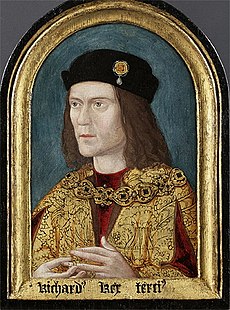
I imagine some of our readers already know this, but here’s a follow up on a story we covered earlier this year. In February, archaeologists confirmed that they had discovered the remains of King Richard III beneath a parking lot in Leicester. Richard died in battle at Bosworth Field in August 1485; the Tudor victors gave him a rather unceremonious burial in what was then a local abbey. Richard will now be re-interred in Leicester’s Anglican cathedral, most likely next May. Back in February, some Catholics objected that Richard, who was Catholic, should by rights be buried in a Catholic ceremony in a Catholic sanctuary. According to the Law and Religion UK blog, however, the Catholic Church in the UK will not insist. The Catholic Bishop of Nottingham states:
The Bishop is pleased that the body of King Richard III has been found under the site of Greyfriars Church in Leicester, in which it was buried following the Battle of Bosworth in 1485, and that it will be reinterred with dignity in the city where he has lain for over five hundred years. Richard III was one of the last Catholic monarchs of England and his death was a decisive moment in British history, but the ultimate decision as to what form the interment takes lies with the Government and the Church of England, since he will be buried in Leicester Cathedral. In accordance with long-established ecumenical practice, Bishop Malcolm will be happy to take part in any form of ceremony which takes place to mark his final burial.

A little hard to follow, but the meaning seems to be, as the government has already decided to bury Richard in the Church of England, the government can also decide on the ceremony. So that’s that. The event will surely be less tense than Richard’s coronation. But will they serve strawberries at the reception?

Tocqueville and Machiavellianism

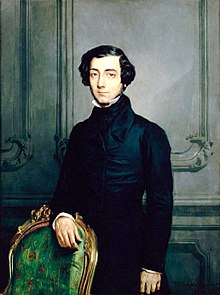
Alexis de Tocqueville

In my last post, I discussed Tocqueville’s personal religious opinions. Here I extend that discussion by considering his relationship to Machiavellianism.

Few theorists have emphasized the usefulness of religious belief for government and society as strongly as Tocqueville. Yet, if the interpretation of his private views that I sketched out in my previous post is correct, it would seem unlikely that Tocqueville was an advocate of a purely “civil religion.” To be more precise: Tocqueville did not advocate the “Machiavellian” position that the “magistrate” ought to inculcate religion in the “populace” because of its social utility, even while disbelieving it himself.

There are at least three ways by which Tocqueville reached this conclusion: through logic, through personal observation and through the study of history.

The Illogic of the Utilitarian Case for Religion

First, it would have been especially difficult to have advocated this “Machiavellian” policy for America. In the United States, the sovereign “People,” which Tocqueville described as acting “in the American political world like God over the universe,” see Democracy in America at 71 (Bevan trans.), was itself at once magistrate and populace. Hence, to have any chance of being effective, the policy would have required collective self-deception on a mass scale. (Note, however, that one of Tocqueville’s subtlest and most profound interpreters seems to think that this was indeed Tocqueville’s view. See Pierre Manent, Tocqueville and the Nature of Democracy 92 (John Waggoner trans. 1996)).

Furthermore, if the American public generally accepted religion solely for its utilitarian consequences, then its faith would be unable to produce the desired effects: religion can only serve social utility if the public generally believes it to be true. Just as a placebo will do good only if the patient believes that it is a medicine and not a placebo, so religious belief will promote public welfare only Read more

The Economist on Christian Sorrows

Photo from The Economist

The Economist has a couple of interesting stories this week on the continuing plight of Christians in the Middle East. First, from the magazine’s valuable religion blog, Erasmus, is this story about the continued disappearance of two bishops in Syria. One hundred days ago, Islamists in the Syrian opposition kidnapped the two clerics, one from the Greek Orthodox and the other from the Syriac Orthodox Church. Their whereabouts have not been revealed; some reports say they have already been murdered, though that is very unclear.  A Jesuit priest from Italy, who has been working in Syria for 20 years, has also gone missing recently. Meanwhile, the magazine reports that a court in Trabzon, Turkey, has agreed with Turkey’s ruling AKP party that the Byzantine Church of the Holy Wisdom (above) in that city should be reconverted to a mosque. The church had been converted to a mosque after the Ottoman conquest in the 15th Century; in the 20th Century, under the Kemalist regime, it became a museum. Turkey’s tiny Greek Orthodox population worries that another Byzantine church by the same name, Istanbul’s famous Hagia Sophia, may be next.

Tocqueville’s Faith

To begin with, I would like to express my gratitude to Marc DeGirolami and Mark Movsesian for inviting me to write this month for the Center for Law and Religion Forum.

What I propose to do over the course of the month is to post a series of short essays dealing with the great French nineteenth century thinker Alexis de Tocqueville.  Specifically, I shall aim to discuss a set of questions arising from his work that concern the relationships between Church and State in the United States and France.  These are well-studied subjects, to be sure. But I hope to have some new things to say.   Moreover, although my primary interest here will be historical and exegetical, I will also consider the application of Tocqueville’s ideas to contemporary matters.

I need hardly stress that Tocqueville remains a thinker of lasting influence and importance.  He plays a prominent role, e.g., in the Harvard historian Niall Ferguson’s recent book, The Great Degeneration:  How Institutions Decay and Economies Die (2013).  Other significant works on contemporary society and culture bear the impress of Tocqueville’s thought, including Robert Putnam’s Bowling Alone:  The Collapse and Revival of American Community (2001) and Habits of the Heart:  Individualism and Commitment in American Life (original edition 1985) by Robert N. Bellah (whose death Mark Movsesian noted in this forum this week) and Bellah’s associates.   (Indeed, the title of the last of these books encapsulates a phrase of Tocqueville’s.)   But however valuable Tocqueville remains as a student of culture and society, his thinking pivots on religion and its varied relationships to political regimes.  He was, he wrote, “convinced . . . that man’s true grandeur lies only in the harmony of the liberal sentiment and religious sentiment, both working simultaneously to animate and restrain souls,” and he noted that he had worked “for thirty years . . . to bring about this harmony.”  (Letter to Claude-François de Corcelle, September 17, 1853, in Alexis de Tocqueville, Selected Letters on Politics and Society 295 (Roger Boesche (ed.) 1985)).   The power, depth and complexity of Tocqueville’s analyses of the relationships between the “liberal” and the “religious” sentiments repay close and repeated study.

Tocqueville was the intellectual heir to both the Enlightenment and Christianity.  In a sense, his entire work can be understood as a dialogue between these two traditions in his mind.  In a letter of October 10, 1836 to his life-long friend Count Louis de Kergolay, he writes that he is passing part of each day reading “three men, Pascal, Montesquieu and Rousseau.”   The choice of these three writers is revealing:  Tocqueville’s interest in Pascal reflects the Christian (and Jansenist) side of his mind; Rousseau and Montesquieu speak for the Enlightenment side.  No less revealing is the fact that Tocqueville does not name any figures from the radical French Enlightenment, such as Diderot or D’Holbach.  He appears to have had little acquaintance with or interest in their ideas.  Rather, he turns to Montesquieu, the leading figure in the moderate Enlightenment, and Rousseau who, though a revolutionary figure, can be considered to represent the counter-Enlightenment.  (For the distinction between “radical” and moderate” Enlightenments, see Jonathan Israel, A Revolution of the Mind:  Radical Enlightenment and the Origins of Modern Democracy (2011)).

Tocqueville’s Deconversion

Before turning to the particular questions that will concern us in later posts, it will be useful to consider Tocqueville’s personal religious beliefs.  These rarely appear in his published works.  But we can infer them from his manner of living and from his extensive Read more

Gray on Machiavelli and the Weakness of Law

This is a bracing essay by the skeptical philosopher John Gray about legal scholar Philip Bobbitt’s new book on Machiavelli. Way back in the stone age, I studied Machiavelli and Guicciardini (whose immense Storia d’Italia is a relatively unknown masterpiece) in graduate school and wrote my master’s thesis about contemporary misinterpretations of Machiavelli’s writing (I called this “Machiavellianism,” and I argued that the aristocrat Guicciardini had a much more acute understanding of Machiavelli than did most contemporary commenters). But Gray’s piece actually says something larger about the comparative weakness of law as against politics. And what he says has direct application to the way in which it is fashionable to discuss many legal issues–from religious freedom to international human rights. Here is a fragment of the essay:

One of the peculiarities of political thought at the present time is that it is fundamentally hostile to politics. Bismarck may have opined that laws are like sausages – it’s best not to inquire too closely into how they are made – but for many, the law has an austere authority that stands far above any grubby political compromise. In the view of most liberal thinkers today, basic liberties and equalities should be embedded in law, interpreted by judges and enforced as a matter of principle. A world in which little or nothing of importance is left to the contingencies of politics is the implicit ideal of the age.

The trouble is that politics can’t be swept to one side in this way. The law these liberals venerate isn’t a free-standing institution towering majestically above the chaos of human conflict. Instead – and this is where the Florentine diplomat and historian Niccolò Machiavelli (1469-1527) comes in – modern law is an artefact of state power. Probably nothing is more important for the protection of freedom than the independence of the judiciary from the executive; but this independence (which can never be complete) is possible only when the state is strong and secure. Western governments blunder around the world gibbering about human rights; but there can be no rights without the rule of law and no rule of law in a fractured or failed state, which is the usual result of western sponsored regime change. In many cases geopolitical calculations may lie behind the decision to intervene; yet it is a fantasy about the nature of rights that is the public rationale, and there is every sign that our leaders take the fantasy for real . . . .

If Bobbitt misreads Machiavelli, it is because Machiavelli is as much of a heretic today as he ever was. Resistance to his thought comes now not from Christian divines but from liberal thinkers. According to the prevailing philosophy of liberal legalism, political conflict can be averted by a well-designed constitution and freedoms enshrined in a regime of rights. In reality, as Machiavelli well knew, constitutions and legal systems come and go. According to Bobbitt, “The lesson of Machiavelli’s advice to statesmen is: don’t kid yourself. What annoyed . . . Machiavelli was the willingness of his contemporaries to pretend that quite simple formulations were adequate to the task of governing in the common interest.” Plainly, the market state is a formula of precisely this kind.

The true lesson of Machiavelli is that the alternative to politics is not law but unending war. When they topple tyrants for the sake of faddish visions of rights, western governments enmesh themselves in intractable conflicts they do not understand and cannot hope to control. Yet if Machiavelli could return from the grave, he would hardly be annoyed or frustrated by such folly. Ever aware of the incurable human habit of mistaking fancy for reality, he would simply respond with a Florentine smile.