Leopardiana

John Gray has an incisive and learned comment on the occasion of the firstLeopardi English translation of Giacomo Leopardi’s Zibaldone–partly a notebook of commentary and partly a diary from this brilliantly melancholy Romantic mind. Much of Gray’s commentary considers Leopardi’s relationship to Enlightenment rationalism, on the hand, and Christianity, on the other. For those with an interest in Leopardi’s political thought, may I also recommend Joshua Foa Dienstag’s superb discussion of Leopardi in his Pessimism: Philosophy, Ethic, Spirit.

Probably Leopardi’s poetry (his “Canti” especially) is the best known of his corpus, but my favorite of his work has always been Le Operette Morali or “Little Moral Tales.” These have been translated into English before, and for some years, I have set myself the project of doing a new translation. Let’s just say it’s in progress.

Here is a translation (Iris Origo and John Heath-Stubbs) of the opening passages from the first of the Operette Morali, “The Story of the Human Race”:

The story is told that all the men who first peopled the earth were created everywhere at the same time, and all as infants, and were nourished by bees, goats, and doves, as the poets describe in their fable about the nurture of Jove. They say, too, that the earth was much smaller than it is now, and all the land was flat, that the sky was starless, that there was no sea, and that there was much less variety and magnificence in the world than we see there now. But men, nevertheless, delighted in the pleasure they took in regarding and considering the earth and sky with great wonder, thinking them most beautiful, and not only vast but infinite in size, majesty, and loveliness; and they also nourished very joyous hopes, deriving an incredible delight from all their awareness of this life, and became most contented, so that they almost believed in happiness.

Having thus passed their childhood and early youth most sweetly and having reached a riper age, a change came over them. For their hopes, which they had postponed from day to day until then, had not yet been realized, so that they lost faith in them. And they did not feel that they could still be content with what they were then enjoying, without some promise of an increase of happiness, particularly as the appearance of nature and of every part of their daily life–whether because they had become accustomed to them, or because their spirits were no longer so lively as they had once been–no longer seemed as delightful and pleasing to them as in the beginning. They wandered about the earth visiting very distant regions–for they could do so easily, since the land was flat and not divided by seas or any other impediments–and after many years most of them became aware that the earth, even though it was large, had definite boundaries, instead of ones so vast that one could not define them; and that, but for a few very slight differences, all the places in the earth and all its inhabitants were just alike. And their discontent increased so much on this account that, though their youth was scarcely at an end, they were all overcome by a conscious distaste for their own nature. And in their manhood, and still more as their years declined, their satiety was converted into hatred, so that some of them came to be so despairing that they were no longer able to bear the light and the life they had at first loved so much, and thus of their own accord–some in one way, some in another–they brought their life to an end.

It seemed terrible to the gods that living creatures should prefer death to life, and that–without the compulsion of necessity–they should become the instruments of their own destruction….Therefore, Jove, having decided–since it seemed to be necessary–to improve the human condition and to help it to further the pursuit of happiness, reached the conclusion that the chief human complaint was that things were not as beautiful, various, and perfect as they had believed at first, but instead were very restricted, imperfect, and monotonous….

For Jove’s strategy to cure this state of depression and “noia” (ultimately unsuccessful, I’m afraid), get yourself a copy of Le Operette Morali!
Pew Report on American Jews: Kind of Like Everyone Else

The Pew Religion and Public Life Project released its most recent survey yesterday, “A Portrait of Jewish Americans.” It turns out that Jews, who make up a little less than two percent of the population, mirror larger trends in American religious life. For example:

  • The Rise of the Nones: More and more American Jews say they have no religion–that is, they view their identity as ethnic or cultural. According to Pew, 22% percent of American Jews now qualify as “Nones.” This percentage is close to the percentage of Nones in the general population (20%). As with the general population, religious disaffiliation is more pronounced among Millennials (ages 18-29). Here the numbers are exactly the same: 32% of Millennial Jews say they have no religion, the same percentage as among Millennials generally.
  • Increased Intermarriage: In their 2010 study, American Grace, sociologists Robert Putnam and David Campbell estimate that something like half the marriages in America today are religiously mixed. For Jews, the rate of interfaith marriage is similarly very high. Indeed, according to Pew, the majority of Jews who marry today choose non-Jewish spouses.
  • Religious Politics: As many observers have noted, the key political divide in America today is not between religions–Catholics vs. Protestants–but between people who are religious, in any faith tradition, and people who are not. People who are religiously active tend to vote Republican, and people who are not religiously active tend to vote Democrat. A similar pattern holds true for American Jews. As a whole, Jews favor the Democratic Party by more than three to one. For Orthodox Jews, however, the trend is reversed: 57% of Orthodox Jews are Republican or lean Republican, while only 36% of Orthodox Jews are Democrat or lean Democrat.

You can read Pew’s summary of the survey here.

Garnett on the Legislative Prayer Case

My friend Rick Garnett has an extremely sensible post about the legislative prayer case, Town of Greece v. Galloway, which will be heard this term by the Supreme Court. A bit from Rick’s analysis:

[J]udges evaluate, and sometimes disallow, policies that majorities considered, argued about, and embraced.  Because, again, majority rule is the usual way we go about political decisionmaking, this evaluation and – especially! – disallowing is a big deal, and it’s important that the work of judicial review be done right.  Whether or not it is depends, I suggest, on (at least) three related variables:  First, identifying, as correctly as possible, the judicially enforceable meaning of the constitutional text in question; secondthe prudent design and development of workable doctrines that courts can use to decide real-world cases; and third, affording the appropriate deference, if any, to those actors whose decisions are being reviewed and who, presumably, decided that those decisions were constitutionally sound . . . .

[T]he Court can aspire to do well with respect to…doctrine and deference.  The court of appeals, its opinion states, saw “no test-related substitute for the exercise of legal judgment” and it characterized the case as a “fact-intensive” one “which def[ies] exact legal formulas[.]”  In the end, though, it couched its decision in “endorsement test” terms, and reported that “several considerations, including the prayer-giver selection process, the content of the prayers, and the contextual actions (and inactions) of prayer-givers and town officials,” supported the conclusion that “the town’s prayer practice must be viewed as an endorsement of a particular religious viewpoint.”  But neither throwing aside doctrines and tests in favor of “legal judgment” nor engaging in unstructured speculation, however “contextual,” regarding imagined reactions, impressions, and beliefs that “can give only limited guidance to municipalities that wish to maintain a legislative prayer practice” is a sensible or appropriately deferential way for a reviewing court to play its role.  A relatively clear, historically rooted standard, the tool employed in the Marsh case, works better, and is the more consistent justification for judicial review.

Of course, not all permissible practices are best practices or even good ideas.  Even if the court of appeals reached the wrong conclusion, in an unsatisfying way, about what the Constitution allows, its suggestion to towns that they “pause and think carefully before adopting legislative prayer” is sound advice.  Although it is true that many of us – and, in many places, most of us – believe that it is both appropriate and right to seek God’s help with the important business of living together and well in political communities, it is also true that ours is a religiously pluralist society that is becoming more so.  In such a society, as the American Jesuit scholar, John Courtney Murray, wrote, “[men and women] of all religions and of no religions must live together in conditions of justice, peace, and civic friendship.”  The line that separates policies that build up this friendship from those that tear it down is important, even if judicial review is not always the best way to find it.

Rick’s post is part of an on-line symposium at SCOTUSblog discussing various features of the case; the other posts may be found here.

For what it’s worth, I think the most interesting thing about the case does not concern legislative prayer itself, but the fate of the endorsement test, though this is not an issue that the Court would need to reach if it finds itself in a minimalist mood.

House Subcommittee Hearing on Human Rights Abuses in Egypt (Oct. 1)

As readers of this site know, the situation for Copts and other Christians in Egypt is truly dire. On October 1, the House of Representatives Subcommittee on Africa, Global Health, Global Human Rights and International Organizations will hold a hearing on the situation. Speakers include Bishop Angaelos of the Coptic Church, author Samuel Tadros, and Rutgers Professor Morad Abou-Sabe. The hearing will be webcast live. Details are here.

The PluRel Blog

If you are not familiar with Helge Årsheim’s blog–PluRel–which is a project of the University of Oslo, you should check it out! He has posted an exchange between Winnifred Fallers Sullivan and Sindre Bangstad that is well worth reading on some of the subjects that I’ve recently been discussing. Helge has also kindly reproduced some of my thoughts over there, which, though not composed as direct responses, are in various ways responsive to Sullivan and Bangstad.

Helge is a PhD student in the school of theology doing some very interesting work on religious pluralism and international law at the United Nations.

Law and the Academic Study of Religion: Further Thoughts

A few additional thoughts on the convergences and divergences of law and the academic study of religion, prompted by thoughtful emails from legal and ASR scholars Nelson Tebbe and Donald Drakeman.

Methodological Distinctiveness

Both law and ASR may be similar in that they harbor anxieties about their methodological uniqueness and about the autonomy of their disciplines as fields of academic inquiry. In law, this has been a perpetual worry that became particularly acute in the 20th century, as scholars from Pound to Holmes to Posner have argued compellingly for law’s non-autonomy. Indeed, Posner has advocated the project of “overcoming” law: what takes the reins after law has been overcome is economics, philosophy, political science, or some other discipline with truly independent methodological bona fides (it’s mostly economics for Posner). Though it is not my field (and so I hope to be corrected by those who know better), my sense is that ASR has some of these same anxieties but in its case, the anxieties are connected to the conceptual distinctiveness of the subject matter that it studies. Certainly in law, self-justification and disciplinary apology are not unknown.

Practice and Theory: Maintaining or Collapsing the Division?

Both law and ASR have roots as practical endeavors–as trades and professions, rather than as purely academic subjects. For law this is obvious; for ASR the root is theology and ministry. And law schools and divinity schools historically functioned to prepare tradesmen; indeed, both continue to operate primarily to train future practitioners of their respective trades.

My friend Nelson Tebbe points out to me that Yale Law School Professor Paul Kahn notes some of these similarities in his book, The Cultural Study of Law: Reconstructing Legal Scholarship. Kahn’s project is precisely to help legal scholarship get over its past Read more

“After” Religious Freedom?: On the Relationship Between the Academic Study of Religion and Law

I am greatly looking forward to participating in a conference next month called, “The Politics of Religious Freedom,” and hosted by four scholars who have been at the forefront of drawing connections between the academic study of religion (or religious studies) and law–Peter Danchin, Elizabeth Shakman Hurd, Saba Mahmood, and Winnifred Fallers Sullivan.

The title of my panel is “Religion and Politics After Religious Freedom.” With the organizers’ permission, I am posting some comments that I wrote up in response to that subject. My sense is that while there may be some issues specific to the particular interdisciplinary relationship of law and the academic study of religion, at least some of the points I make may apply more broadly to the question of law’s distinctiveness as both a practical and an academic discipline. I welcome your thoughts.

My work considers the religion clauses of the First Amendment to the United States Constitution and the body of federal and state laws protecting religious freedom in the United States. One theme in my work involves doubt about the law’s capacity to protect everything worth protecting about religion and religious practice. Here the law is limited and imperfect—both because of the limits of human reason and because of the inevitable conflicts of human interests and aspirations. The law’s limits come sharply into focus for what I have called “comic” theories of religious freedom—theories that reduce religious freedom under the Constitution to one or a small set of values (most commonly equality, neutrality, and the separation of church and state). None of these comic theories includes a sufficient accounting of the costs (including the costs to religious freedom) of such a reduction. These are some of the ideas explored in my book, The Tragedy of Religious Freedom.

The topic of our panel is “Religion and Politics after Religious Freedom,” and there are several ways in which my views are sympathetic, and might even converge, with the project of exploring what might come “after” certain conceptions of religious freedom. By reducing the reasons to protect religious freedom under the Constitution to single values such as equality or neutrality, some comic conceptions of it flatten legal disputes in ways that fundamentally misconstrue the true nature of the conflicts within them. Since what goes under the label of religion is culturally contingent, multifarious, and multifunctional—ideological, personal, political, institutional, communal, a phenomenon of cultural identity and at the same time a source of trans-temporal truth—one ought to expect the same variety, conflict, and incommensurability among and within the conceptions of religious liberty cherished by particular communities and enlisted to protect religion under the Constitution.

It may be that legal conceptions of religious liberty not only are insufficiently capacious to accommodate the welter of reasons to protect religious freedom (this would not be a failing unique to this area of law) but are also so grossly inadequate as to demand some radical alternative. We would, in that case, be well-advised to begin thinking about what should come “after” laws and theories that are irredeemably maladapted to the purpose. But before reaching this conclusion, we ought at least to move away from comic accounts of religious liberty and begin to hear the music of religious freedom in a more tragic key—in a way that embraces a plurality of values and that necessarily involves sacrificing ends about which we care deeply.

In other ways, however, my views are in at least some tension with the project’s ambitions to get past, or over, or somehow beyond religious freedom. I suspect that this skepticism about getting beyond religious freedom may relate to broader differences of interest, focus, and purpose between the disciplines of law and the academic study of religion (ASR).[1] To indulge in an overgeneralization (though one that, I hope, captures something true): ASR scholars are interested in dissolving religion; legal scholars are interested in managing it. There are several reasons that the pungent and interesting critique of religion and religious freedom that has developed in ASR scholarship has been relatively slow to affect law and legal scholarship.[2]

Read more

Abercrombie & Fitch Settles Headscarf Lawsuit

An update on the California headscarf litigation I discussed earlier this month. Abercrombie & Fitch has settled the lawsuit and agreed to allow Muslim employees to wear headscarves while on the job. A federal district court in California recently ruled that A&F’s refusal to allow headscarves on the job violated US employment discrimination law. A&F has agreed to pay the plaintiff in the case, Hani Khan, $48,000 and unspecified attorneys fees. The Guardian has the full story, as well as information about other headscarf litigation against A&F.

The Spectator on the Possible Extinction of Mideast Christianity

From The Spectator, a post about a recent panel at the National Liberal Club in London on the under-reporting of violence against Christians in the Middle East:

Some of this has been reported, but the focus has been on the violence committed against the Brotherhood. Judging by the accounts given by one of the other speakers, Nina Shea of the Center for Religious Freedom, the American press is even more blind, and their government not much better; when Mubarak was overthrown one US agency assessed the Muslim Brotherhood as being ‘essentially secular’. . . .

Without a state (and army) of their own, minorities are merely leaseholders. The question is whether we can do anything to prevent extinction, and whether British foreign policy can be directed towards helping Christian interests rather than, as currently seems to be the case, the Saudis.

Read the whole thing.

A Non-Political Pope?

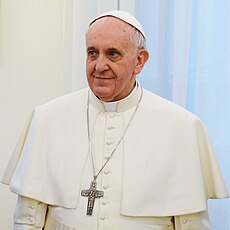
You can’t tell too much from one interview, of course, but the interview Pope Francis gave an Italian Jesuit journal last month, and which was released last week, seems like a blockbuster. Everyone understands this. Progressive Catholics are elated. After long years in the wilderness, they believe, they have one of their own as pope. Traditionalists have been more circumspect, but it’s hard to miss the sense of alienation. Traditionalists are used to thinking that, however much they have to battle with progressives at the local level, the pope has their back. Now, that’s very unclear.

As an outsider, I don’t feel right getting involved in intra-Catholic debates. There’s too much I don’t know, and anyway it’s not polite. But this interview does suggest three observations. First, Pope Francis has a definite vision for the Catholic Church. When he gave his airborne interview on the way back from Brazil last month–the interview in which he famously said, “who am I to judge?”–some traditionalists consoled themselves that he had spoken off the cuff or allowed himself to be misunderstood. After this interview, it’s impossible to think so. He knows what he means and means what he says.

Second, I’m not sure the pope is correct to suggest that the Church has been obsessing over sexuality–abortion, gay marriage, contraception. Catholic friends tell me they almost never hear sermons on these subjects. One might say, with justification, that the wider society is obsessing about these issues and the Church is only responding. If the government adopts a new rule that says you must pay for your employees’ contraceptives and abortifacients, and you think such drugs are gravely wrong as a matter of conscience, what should you do? I suppose you could readjust your priorities and say nothing. But if you were to object to such a rule, you would hardly be “obsessing.”

Third, it’s striking that in a long interview the pope said virtually nothing about politics. Only twice did he refer to the Church’s position on public policy questions, once to state that the Church should stop talking so much about sexuality and once to refer to the proper approach to “social issues”:

When it comes to social issues, it is one thing to have a meeting to study the problem of drugs in a slum neighborhood and quite another thing to go there, live there and understand the problem from the inside and study it. There is a brilliant letter by Father Arrupe to the Centers for Social Research and Action on poverty, in which he says clearly that one cannot speak of poverty if one does not experience poverty, with a direct connection to the places in which there is poverty. The word insertion is dangerous because some religious have taken it as a fad, and disasters have occurred because of a lack of discernment. But it is truly important.

Note a couple of things here. For Pope Francis, the phrase “social issues” connotes what Americans would call “economic issues”–an interesting distinction. More important, to address these issues, Pope Francis did not call for political action. He did not say, “When it comes to social issues, the important thing is to redistribute wealth and nationalize health care.” He may favor such programs, I don’t know. But he apparently does not think political programs are terribly important. The essential thing is for the Church to live among poor people, to share their lives, to minister to them–in order to witness to the Gospel. 

In other words, Pope Francis’s interview does not suggest he would like the Catholic Church to adopt a “progressive” politics any more than a “conservative” politics. It suggests he thinks the Church is beyond politics. To me, this is the key take-away from the pope’s interview. There is an old, old debate in Christianity. Is the faith about healing souls or social justice? It’s about both, of course, but which is more important? If I read him correctly, Pope Francis leans strongly in the first direction: Christianity is an interior matter, a question of salvation, of walking humbly in the company of the Lord and his followers. Christians can never be completely beyond politics, of course, and it will be interesting to see how this all develops. But Pope Francis seems, in his way, a mystic. And mystics don’t do politics.