This week, CLR Director Mark Movsesian and Associate Director Marc DeGirolami will participate in the Annual Law and Religion Roundtable, hosted this year at Stanford Law School. Now in its fourth year, the ALRR “provides a forum for scholars of religious freedom to share cutting-edge works and engage in discipline-shaping conversations.” Movsesian will present an early-stage project on the Psychic Sophie case and the rise of the Nones. DeGirolami will participate in the meeting as a discussant.
Bayir, “Minorities and Nationalism in Turkish Law”
As Walter Russell Mead notes, the recent falling-out between Germany and  Turkey over Turkey’s accession to the EU confirms what Samuel Huntington wrote in the 1990s: Deep civilizational divides continue to exist and are impossible to ignore. Notwithstanding Kemalist dreams of transformation, Muslim-majority Turkey and liberal, secularist Europe represent different ways of being. It was never clear how the two could successfully merge in one political entity. Under Erdogan’s AKP, the marriage seems further away than ever.
A recent book from Ashgate, Minorities and Nationalism in Turkish Law, seems like it would provide helpful background to today’s events. The author, Derya Bayir, is a lawyer who specializes in international human rights and the Turkish legal system. Here’s the publisher’s abstract:
Examining the on-going dilemma of the management of diversity in Turkey from a historical and legal perspective, this book argues that the state’s failure to accommodate ethno-religious diversity is attributable to the founding philosophy of Turkish nationalism and its heavy penetration into the socio-political and legal fibre of the country. It examines the articulation and influence of the founding principle in law and in the higher courts’ jurisprudence in relation to the concepts of nation, citizenship, and minorities. In so doing, it adopts a sceptical approach to the claim that Turkey has a civic nationalist state, not least on the grounds that the legal system is generously littered by references to the Turkish ethnie and to Sunni Islam. Also arguing that the nationalist stance of the Turkish state and legal system has created a legal discourse which is at odds with the justification of minority protection given in international law, this book demonstrates that a reconstruction of the founding philosophy of the state and the legal system is necessary, without which any solution to the dilemmas of managing diversity would be inadequate. Adopting an interdisciplinary approach, this timely book will interest those engaged in the fields of Middle Eastern, Islamic, Ottoman and Turkish studies, as well as those working on human rights and international law and nationalism.
Movsesian on Alito
For CLR Forum readers who would be interested, my chapter on Justice  Samuel Alito appears in the just released, revised edition of Justices of the Supreme Court: Their Lives and Major Opinions (2013), edited by Leon Friedman and Fred Israel. Among other cases, I discuss Alito’s famous opinion for the Third Circuit in the Newark Police Department beard case, Fraternal Order of Police v. City of Newark (3d Cir. 1999), as well his opinion for the Supreme Court in the “Seven Aphorisms” case, Pleasant Grove City. Utah v. Summum (2009), and his dissent in Christian Legal Society v. Martinez (2010).
Christianity and King
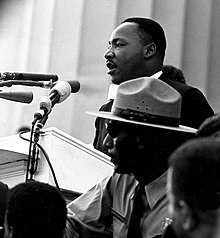 When it comes to mixing religion and politics, I’ve often thought, the principle seems to be, it’s wrong when the other guy does it. For example, conservatives become annoyed when Christians call for liberalizing immigration laws or for universal healthcare. Don’t impose your religious beliefs on society! When Christians argue for abortion restrictions or against same-sex marriage, by contrast, conservatives don’t complain too much. And it works in reverse. In fact, in my experience, liberals have a greater blind spot about the subject. Liberals object vigorously when conservatives like Judge Edith Jones defend capital punishment on religious grounds, but go strangely quiet when liberals, like President Obama, cite Christianity’s influence on their policy positions.
Here’s a good example of the liberal discomfort with religion from a New York Times profile of Barnard College sociologist Jonathan Rieder. According to the Times, Rieder, an expert on Martin Luther King, has focused on an aspect of King’s thought that receives little attention from scholars: King’s Christianity. How, you might ask, could King scholarship ignore Christianity? The man was a Christian minister. The Times explains:
Dr. Rieder’s book stakes very specific turf in the corpus of King scholarship with its relentless focus on Dr. King the preacher. By doing so … Dr. Rieder is restoring the overtly religious element to Dr. King and the freedom movement. While African-Americans readily grasp the link, many white liberals diminish or ignore it out of discomfort with religion being granted a role — even a positive one — in political discourse.
“The image of liberal secular King misses the essential role of prophetic Christianity,” [Rieder] said in a recent interview. “Jesus wasn’t just an interesting historical figure to King. He saw Jesus as a continuation of the prophets. He has a powerful association with Jesus.”
Would America have had the civil rights movement without Christianity? It’s impossible to know, of course, and it’s true that Christian support for King wasn’t uniform. But it’s crazy to ignore Christianity’s profound influence on King and, though him, the movement as a whole. The willingness to do so says a great deal about the state of scholarship in America today.
Annicchino on Religious Autonomy
For our followers who read Italian, CLR Forum guest poster Pasquale Annicchino (European University Institute) has posted a comparative essay on religious autonomy in the US and Europe, The Conflict between the Autonomy of Religious Groups and Other Fundamental Rights: Recent Decisions of the U.S. Supreme Court and the European Court of Human Rights. Here’s the abstract:
The principle of autonomy of religious groups has acquired new importance in the recent decisions of the United States Supreme Court and the European Court of Human Rights. This article will analyze and compare the decisions by these two courts, with a particular focus on the circulation of legal arguments between the two different legal orders.
Nones Across the Globe

The third largest religious affiliation in the United States is “None.” Roughly one-fifth of adult Americans tell surveyors that they have no religious affiliation at all. The rise of the Nones, which began in the 199os, is perhaps the most important development in American religious life today, raising difficult questions for traditional religious institutions and the legal system as well.
We shouldn’t think of the Nones as a uniquely American phenomenon, though. (Only Americans would be tempted to do so, probably). Here’s an interesting report from The Weekly Number, a religion website, on the percentages of Nones worldwide. The overall percentage of Nones across the globe is lower than in the US: 16%. They are distributed very unevenly. Almost 80% live in the Asia-Pacific region. About 60% live in one country, China. The entire continent of North America, by contrast, accounts for only five percent of Nones worldwide. In sub-Saharan Africa, Nones make up about two percent of the population. In the Middle East and North Africa, religiously unaffiliated people are even scarcer, comprising less than one percent of the population.
One might expect that, as China continues to rise, Nones will become an even more powerful global force. But here’s another interesting statistic. Unlike in the US, where Nones are disproportionately young, as a global population, the Nones skew old. The median age of Nones (34) is significantly higher than the median age of the overall global population (28). Who knows? Perhaps the rise of the Nones among America’s youth will be offset by the much-noted rise of Christianity among young people in the global South.
Raphael Lemkin Was a Remarkable Man
When he died, roughly 50 years ago at the age of 59, Raphael Lemkin was  impoverished and embittered, an unnoticed man. Only 7 people attended his funeral. Yet he was one of the most influential international human rights lawyers of the twentieth century. Lemkin, whom Jay Winter describes in a recent piece as a “one-man NGO,” coined the word “genocide” for the destruction of a national, ethnic, racial or religious group, and was the driving force behind adoption of the UN Genocide Convention of 1948.
He came up with the term “genocide” in reflecting on the massacres of Armenian Christians in Ottoman Turkey during World War I–events we now know as the Armenian Genocide–but he had an example closer to home as well. A Polish Jew, he lost about 50 relatives in the Holocaust, and himself escaped the Nazis only after taking a bullet in the hip. He made his way to America, where he joined the law faculty at Duke, wrote his most important book, Axis Rule in Occupied Europe, and worked, successfully, for adoption of the UN Convention.
What explains his bitterness and isolation at the end? Lemkin was a loner and a difficult man; that was part of it, no doubt. And he could surely see, as Winter writes, that naming a crime, even legislating against a crime, does not necessarily reduce its frequency. It’s hard to argue that the Genocide Convention has been a great success. Still, Lemkin’s career had a public impact which most of us, especially in the legal academy, would be proud to claim.
I reflect on all this because, this month, Yale University Press releases Lemkin’s unfinished autobiography, Totally Unofficial: The Autobiography of Raphael Lemkin, edited by historian Donna-Lee Frieze. It looks very interesting. Here’s the publisher’s description:
Among the greatest intellectual heroes of modern times, Raphael Lemkin lived an extraordinary life of struggle and hardship, yet altered international law and redefined the world’s understanding of group rights. He invented the concept and word “genocide” and propelled the idea into international legal status. An uncommonly creative pioneer in ethical thought, he twice was nominated for the Nobel Peace Prize. Although Lemkin died alone and in poverty, he left behind a model for a life of activism, a legacy of major contributions to international law, and—not least—an unpublished autobiography. Presented here for the first time is his own account of his life, from his boyhood on a small farm in Poland with his Jewish parents, to his perilous escape from Nazi Europe, through his arrival in the United States and rise to influence as an academic, thinker, and revered lawyer of international criminal law.
“Orthodox Christianity and Human Rights” (Bruning & van der Zweerde, eds.)
We’re a little late getting to this, but last year Peeters published an interesting  looking collection on the conception of human rights in Orthodox Christianity, particularly in nations from the former Soviet Union: Orthodox Christianity and Human Rights (Bruning & van der Zweerde, eds.). As the Pussy Riot trial showed, the view of human rights in those nations sometime diverges from the Western consensus in a way that leaves everyone a bit confused. This book may help resolve some of that confusion. Here’s the publisher’s summary:
Orthodox theology and the Orthodox Churches had, and continue to have an ambiguous relationship towards the concept of Human Rights: principal approval often stands alongside serious criticism. This is especially true for those Orthodox Churches which have their centre in a country of the former Soviet sphere. On the one hand, especially since the fall of Communism they enjoy religious freedom that forms a central element within the framework of Human Rights. On the other hand, the transformation process of the 1990s and the challenge of pluralism and globalization have all confronted them with aspects of freedom that could not but affect their stance towards the Human Rights concept in general. This also means, that doubts and reservations related to this concept came to the fore again, which had yet existed already decades before. These reservations focused on such issues as Church and secular society, Church and state, furthermore on the understanding of central terms such as “freedom”, “dignity”, “rights” – central also for an Orthodox anthropology, that needs to be reconciled with the partly differing approaches behind the Human Rights concept.
The chapters of this volume try and explore as much the philosophical and theological as the social, historical and practical aspects of this complex relationship. Based either on the discussion of differing theological concepts, or on empirical and concrete case studies respectively, they clearly show the tensions and fractures that do exist. On the other hand, in this way they also hint at possibilities to overcome these tensions, to continue a dialogue that already has begun, and to avoid the numerous misunderstandings between East and West which currently tend to form a hindrance to this dialogue at various points.
State Religious Neutrality and the Point of Departure
A quick followup on Claudia’s very interesting post on state religious neutrality. As Claudia suggests, pretty much every Western democracy nowadays accepts the notion that the state must be “neutral” with respect to religion. But, as Claudia points out, the fact that everyone uses the same word obscures underlying disagreements. In the US, for example, neutrality means that the state may not display sectarian symbols, at least in a manner that seems to endorse the sectarian message. Not so in Europe. There, the ECtHR has made plain, a state may display sectarian symbols as long as the state does not engage in active proselytizing. Thus, according to the recent Lautsi decision, European states may display crucifixes in public school classrooms, conduct that would be unthinkable in the US under current Supreme Court jurisprudence.
In trying to understand the different meanings the same word has in different systems, it’s useful to consider what Tocqueville referred to as a nation’s “point of departure.” Every legal system is embedded in a particular culture with a particular history. In Europe, where links between church and state are traditionally very strong, certain state actions, like placing sectarian symbols in the public space, are simply part of the background, something most people take for granted. In the US, however, a society with a much stronger separationist tradition, such actions are not seen as neutral and innocuous. I explain this all in more depth in a recent article on the Italian crucifix case, “Crosses and Culture: State-Sponsored Religious Displays in the US and Europe,” in the Oxford Journal of Law and Religion. Interested readers can find the article on the journal’s website, here.
Call for Papers: “The New Cosmopolitanism”
The Contending Modernities Global Migration Working Group has issued a call for papers for a conference to take place in London in October, “The new cosmopolitanism: Global migration and the building of a common life”:
The global expansion of migration, within and between the global north and south, and the global resurgence and “publicization” of religion – have combined to bring religious and secular models of citizenship and civic education to the fore. Nonetheless, there is surprisingly little consensus among religious leaders, educators, and policy makers as to what framework might allow people from different religious and ethical backgrounds to live together tolerantly and inclusively. The lack of consensus is all the more vexing in that migration and religious revitalization today have created multicultural and multi-ethical landscapes all over the globe. The question of the place of religion in modern multicultural societies is not an academic one, then, but one of the most pressing ethical challenges of our age.
Details are here.