This month, the University of Texas Press releases “Crescent Over Another Horizon: Islam in Latin America, the Caribbean, and Latino USA,” edited by Maria del Mar Logroño Narbona (Florida International University), Paulo G. Pinto (Universidade Federal Fluminense), and John Tofik Karam (University of Illinois at Urbana-Champaign). The publisher’s description follows:
Muslims have been shaping the Americas for more than five hundred years, yet this interplay is frequently overlooked or misconstrued.  Brimming with revelations that synthesize area and ethnic studies, Crescent over Another Horizon presents a portrait of Islam’s unity as it evolved through plural formulations of identity, power, and belonging. Offering a Latino American perspective on a wider Islamic world, the editors overturn the conventional perception of Muslim communities in the New World, arguing that their characterization as “minorities” obscures the interplay of ethnicity and religion that continues to foster transnational ties.
Bringing together studies of Iberian colonists, enslaved Africans, indentured South Asians, migrant Arabs, and Latino and Latin American converts, the volume captures the power-laden processes at work in religious conversion or resistance. Throughout each analysis—spanning times of inquisition, conquest, repressive nationalism, and anti-terror security protocols—the authors offer innovative frameworks to probe the ways in which racialized Islam has facilitated the building of new national identities while fostering a double-edged marginalization. The subjects of the essays transition from imperialism (with studies of morisco converts to Christianity, West African slave uprisings, and Muslim and Hindu South Asian indentured laborers in Dutch Suriname) to the contemporary Muslim presence in Argentina, Brazil, Mexico, and Trinidad, completed by a timely examination of the United States, including Muslim communities in “Hispanicized” South Florida and the agency of Latina conversion. The result is a fresh perspective that opens new horizons for a vibrant range of fields.
 The Center for Law and Religion invites you to join us for a conversation with United States District Judge Richard J. Sullivan (left) about current and potential issues before the U.S. Supreme Court involving religious freedom. Topics will include the ongoing contraception mandate litigation, conflicts between the rights of same-sex couples and rights of religious conscience, and the future of religious freedom in the United States. Light refreshments will be provided.
 strengthened by the diverse faiths of its peoples. Between 1875 and 1925, liberal Protestant leaders abandoned religious exclusivism and leveraged their considerable cultural influence to push others to do the same. This reorientation came about as an ever-growing group of Americans found their religious faith under attack on social, intellectual, and political fronts. A new generation of outspoken agnostics assailed the very foundation of belief, while noted intellectuals embraced novel spiritual practices and claimed that Protestant Christianity had outlived its usefulness.
 development. The Polygamy Question explores the ways in which indigenous and immigrant polygamy have shaped the lives of individuals, communities, and the broader societies that have engaged with it. The book also considers how polygamy challenges our traditional notions of gender and marriage and how it might be effectively regulated to comport with contemporary notions of justice.
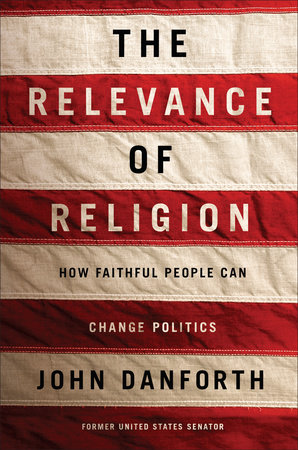 Danforth offers a fascinating, thoughtful, and deeply personal look at the state of American politics today—and how religion can be a bridge over our bitter partisan divide.
 anti-heretical repression in the first half of the fourteenth century, focusing on the figure of Jacques Fournier/Benedict XII (c.1284-1342). Throughout his career as a bishop-inquisitor in Languedoc, theologian, and, eventually, pope at Avignon, Fournier made a multi-faceted contribution to the fight against religious dissent. Making use of judicial, theological, and diplomatic sources, the book sheds light on the multiplicity of methods, discourses, and textual practices mobilized to define the bounds of heresy at the end of the Middle Ages. The integration of these commonly unrelated areas of evidence reveals the intellectual and political pressures that inflected the repression of heretics and dissidents in the peculiar context of the Avignon papacy.
 annual Muslim pilgrimage to Mecca. The first book in any language on the hajj under tsarist and Soviet rule, Russian Hajj tells the story of how tsarist officials struggled to control and co-opt Russia’s mass hajj traffic, seeing it not only as a liability, but also an opportunity. To support the hajj as a matter of state surveillance and control was controversial, given the preeminent position of the Orthodox Church. But nor could the hajj be ignored, or banned, due to Russia’s policy of toleration of Islam. As a cross-border, migratory phenomenon, the hajj stoked officials’ fears of infectious disease, Islamic revolt, and interethnic conflict, but Kane innovatively argues that it also generated new thinking within the government about the utility of the empire’s Muslims and their global networks.
 democracy, and reputation for tolerance amid diversity. Yet scholars poorly understand how these organizations envision the accommodation of religious difference. What does tolerance mean to the world’s largest Islamic organizations? What are the implications for democracy in Indonesia and the broader Muslim world? Jeremy Menchik argues that answering these questions requires decoupling tolerance from liberalism and investigating the historical and political conditions that engender democratic values. Drawing on archival documents, ethnographic observation, comparative political theory, and an original survey, Islam and Democracy in Indonesia demonstrates that Indonesia’s Muslim leaders favor a democracy in which individual rights and group-differentiated rights converge within a system of legal pluralism, a vision at odds with American-style secular government but common in Africa, Asia and Eastern Europe.