Coren, “The Future of Catholicism”

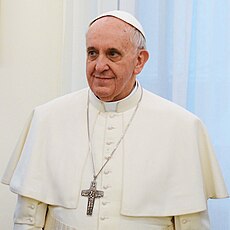
Next month, Random House will publish The Future of Catholicism by Michael Coren.  The publisher’s description follows. Future of Catholicism

 From the author of the bestselling Why Catholics Are Right, a perfectly timed book on the new Vatican — where it is, where it needs to go, and why it is more relevant than ever.

When Cardinal Jorge Mario Bergoglio, Archbishop of Buenos Aires, became Pope Francis in March 2013, there were almost 6,000 journalists in Rome to cover the Papal election. Some of them reported on the conclave with expertise and empathy, but others — either out of ignorance or an agenda — insisted on asking the same questions again and again: Is the Church going to change? Will the new Pope be flexible? Is Catholicism going to adapt to the times and alter its teaching on same-sex marriage, abortion, contraception, female ordination, celibate clergy, and divorce? Interestingly, these questions center on moral and sexual issues rather than directly theological topics, but they are all based on the premise that the Church is wrong, outdated, in need of fundamental transformation.

Does the Church need to change, and if so, where? Where it cannot change, why is this so? In his signature frank style, Coren will explain and outline why the Church believes as it does on many of the most pressing moral issues, giving reasons for teaching and belief, and applying these to contemporary challenges. And for those areas where the Church must change and establish reform — the transparency of leadership and finance; the competence of the curia and Vatican civil service; the approach the Church takes towards media, the way it deals with the detritus of the abuse crisis; and its approach to the developing world band towards others religions, particularly Islam — Coren will offer insight into the faith’s next steps.

The Church is at a crossroads, but perhaps more significantly and accurately, the Western world is at a crossroads, and how the Church reacts to and deals with this phenomenon will decide and define so very much of the future — of our future.

Kontorovich on the Council of Europe’s New Recommendation to Ban Circumcision

Eugene Kontorovich has an interesting and, to my mind, in portions persuasive comment on the Council of Europe’s new recommendation that nations should consider banning circumcision. I say this as someone who disagrees with Professor Kontorovich about the constitutional merits of the test laid out in Employment Division v. Smith. Indeed, as I have written before, there is a largely unfounded optimism in the wisdom and good will of democratic majorities that is presumed in the approach of Smith–a presumption that is borne out beautifully when the majority is with you, but less well when it turns against you. An aristocratic (in the Tocquevillian sense) buffer (see the judiciary) on the moral certitudes of popular, democratic fancy is a healthful thing, particularly when it serves to remind the people of its fundamental, deeply rooted, political traditions.

That is why I have some questions about the first half of Professor Kontorovich’s comment, and it is also the reason that though I sympathize with the final line of his post, I find that the Smith approach is likely to make things much worse. But the second half seems right on target to me. A bit:

Yet from a broader perspective, such measures are [an] historic, epochal, dizzying step backward for religious liberty. They are illiberal and intolerant in the deep sense. Jews have been allowed to fully practice their religion on the Continent since even before the Enlightenment (though subject to other restrictions). Now, at the time of the supposed greatest openness and freedom, the end of religious wars, the central Jewish rite would be banned.

It requires an extraordinary moral certitude to conclude that one established the evil of a universal normative practice of the oldest monotheistic religion, a practice that Europeans, including anti-Semites, have tolerated for as long as Jews have been there. Burkeans they are not, at the Council of Europe.

This represents a massive failure of the liberal imagination. Tolerance requires, perhaps more important than legal restraints, habits of the mind. All religious practices seem odd and bizarre to outsiders. Tolerance requires understanding the importance of these practices to the practitioner – a lack of total certitude . . . .

Indeed, the new European conscience might find circumcision repugnant, but certainly not as repugnant as Protestants and Catholics in Europe for centuries regarded each other’s practices. Yet for over 300 years, they have been able to live and worship fully in each other’s countries. On this backdrop, anti-circumcision legislation shows how far back we have gone while making progress.

It seems that such laws are a product less of an anti-Semitic mind-set than an anti-religious one, in which a practice that seems odd is more likely to be barbaric if it is a religious rite. Today’s secularism may be less forgiving than yesterday’s pietism. . . .

There are important lessons for the U.S. Religious freedom depends in many ways on the tolerance of the majority, if one thinks as I do that Employment Division v. Smith was rightly decided. That tolerance has long existed, more or less, in a predominantly Protestant America, a Christian America, and a simply religious America. But it is not guaranteed.

Religious Division and Identity – Richard III and the Rest of Us – Part II

Thanks again to Mark and Marc for inviting me to guest blog this month.  I hope to use this opportunity to think about a range of questions, and also introduce a bit of my own work.

Back in August, I posted Part I of some mediations on religious division prompted by the minor kerfuffle over whether the newly-discovered remains of Richard III should be reinterred in a Catholic or an Anglican ceremony.  That post looked at the question from a bit of a theological lens. I want now to say a bit about the same problem from the perspectives of history.  (I’ll have one or two more parts to this discussion, so stay tuned.)

So let’s go back to our test case: Was Richard III a “Catholic” in the modern sense of the word that would exclude his membership in the “Church of England”?  For that matter, is the contemporary Church of England in some meaningful sense Catholic and not merely catholic?

Historians, I think, would resist these questions from the get-go. For one thing, they would want to be more contextual and specific.  There is no one answer to the religious identity of either Richard III or the contemporary Church of England.  Are we talking about formal belief structures, lived spiritual premises, personal devotion, liturgical practices, institutional relations, personal networks, political allegiances, or something else?  How does the civil war that Richard fought and lost figure into the equation, if at all?  What about the radically different technology of the time, with its implications for travel and communication?  What about the long, complex, and often violent history of relations between King and clergy that long predated Henry VIII’s split from Rome?  How would Richard III himself have understood the question?  Would he have understood it?

For that matter, historians might find the question too essentialist to begin with.  Yes, categories such as “Catholic” are real and important.  But time is change.  Richard III could not be “Catholic” in the sense we understand the term because nobody in his time – before the Reformation, the Enlightenment, England’s split from Rome, the rise of secularism, and for that matter the advent of modern forms of communication and transportation – was “Catholic” in the sense we understand the term.

All this interests me, not because I’m a historian, but because the question of historical consciousness (and its limits) strikes me as deeply important to all sorts of other puzzles and challenges I’ll be taking up this month.

For now, though, I will leave to the next post or two some thoughts about the possible further theological implications of what I’ve just said about history to the fate of poor Richard III and about how law (this is a law blog, after all) fits into all this, both specifically and more generally.

Around the Web This Week

Some interesting law & religion stories from around the web this week:

Roudometof, “Globalization and Orthodox Christianity”

9780415843737This month, Routledge will publish Globalization and Orthodox Christianity: The Transformations of a Religious Tradition by Victor Roudometof (University of Cyrpus). The publisher’s description follows.

With approximately 200 to 300 million adherents worldwide, Orthodox Christianity is among the largest branches of Christianity, yet it remains relatively understudied. This book examines the rich and complex entanglements between Orthodox Christianity and globalization, offering a substantive contribution to the relationship between religion and globalization, as well as the relationship between Orthodox Christianity and the sociology of religion – and more broadly, the interdisciplinary field of Religious Studies.

While deeply engaged with history, this book does not simply narrate the history of Orthodox Christianity as a world religion, nor does it address theological issues or cover all the individual trajectories of each subgroup or subdivision of the faith. Orthodox Christianity is the object of the analysis, but author Victor Roudometof speaks to a broader audience interested in culture, religion, and globalization. Roudometof argues in favor of using globalization instead of modernization as the main theoretical vehicle for analyzing religion, displacing secularization in order to argue for multiple hybridizations of religion as a suitable strategy for analyzing religious phenomena. It offers Orthodox Christianity as a test case that illustrates the presence of historically specific but theoretically distinct glocalizations, applicable to all faiths.

Giunchi, “Adjudicating Family Law in Muslim Courts”

9780415811859Next month, Routledge will publish Adjudicating Family Law in Muslim Courts by Elisa Giunchi (University of Milan). The publisher’s description follows.

While there are many books on Islamic family law, the literature on its enforcement is scarce. This book focuses on how Islamic family law is interpreted and applied by judges in a range of Muslim countries – Sunni and Shi’a, as well as Arab and non-Arab. It thereby aids the understanding of shari’a law in practice in a number of different cultural and political settings. It shows how the existence of differing views of what shari’a is, as well as the presence of a vast body of legal material which judges can refer to, make it possible for courts to interpret Islamic law in creative and innovative ways.

Welcome Back to Perry Dane

Just a reminder to our readers: Perry Dane of Rutgers-Camden (left), who blogged with us a little this summer, will join us again as a guest this fall. For the month of October, he’ll be posting some of his thoughts on law and religion right here at the Forum. We’re delighted to have him back with us and look forward to his contribution. Welcome!

Reflections from the City of God: On Admonishing the Wicked, Just Punishment, and Fear of Loss

My selection this week from The City of God comes from Book I, Chapter 9, just afterHeavenly City Augustine has been discussing the objection from his pagan adversaries that it does not seem right that Christian divine compassion is extended both to the wicked and the good; likewise, why should the wicked and the good suffer the same evils in the earthly city? What kind of God would inflict the same hurts on the good and the wicked alike?

Augustine first says that what matters is not the event of suffering itself, but the person undergoing the suffering: “though good and bad men suffer alike, we must not suppose that there is no difference between the men themselves, because there is no difference in what they both suffer. For even in the likeness of the sufferings, there remains an unlikeness in the sufferers.” I.8.

Fair enough, one might respond, but if the sufferers are not alike, why should they undergo similar pain? This seems unjust. Augustine argues that it is right that God’s “corrections” be administered in the earthly city to good and bad men alike because these corrections are reminders to good men that “although they be far from the excesses of wicked, immoral, and ungodly men, yet they do not judge themselves so clean removed from all faults as to be too good to suffer in these temporal ills.” I.9.

What are the particular failings of good people that Augustine emphasizes in this chapter–those sins that warrant their suffering in this world, indeed, that warrant their suffering similar pain to the wicked? Here is Augustine’s answer:

For often we wickedly blind ourselves to the occasions of teaching and admonishing them [the wicked], sometimes even of reprimanding and chiding them, either because we shrink from the labor or are afraid to offend them, or because we fear to lose good friendships, lest this should stand in the way of our advancement, or injure us in some worldly matter, which either our covetous disposition desires to obtain, or our weakness shrinks from losing. So that although the conduct of wicked men is distasteful to the good, and therefore they do not fall with them into that damnation which in the next life awaits such persons, yet, because they spare their damnable sins through fear, therefore, even though their own sins be slight and venial, they are justly scourged with the wicked in this world, though in eternity they quite escape punishment. Justly, when God afflicts them in common with the wicked, do they find this life bitter, through love of whose sweetness they declined to be bitter to these sinners.

If anyone forbears to reprove and find fault with those who are doing wrong, because he seeks a more seasonable opportunity, or because he fears they may be made worse by his rebuke, or that other weak persons may be disheartened from endeavoring to lead a good and pious life, and may be driven from the faith–this man’s omission seems to be occasioned not by covetousness, but by a charitable consideration. But what is blameworthy is, that they who themselves revolt from the conduct of the wicked, and live in quite another fashion, yet spare those faults in other men which Read more

Droeber, “The Dynamics of Coexistence in the Middle East: Negotiating Boundaries Between Christians, Muslims, Jews and Samaritans in Palestine”

Next month, I.B. Tauris will publish The Dynamics of Coexistence in the Middle51FqH03UlRL._SY300_ East: Negotiating Boundaries Between Christians, Muslims, Jews and Samaritans in Palestine, by Julia Droeber (An-Najah University, Palestine). The publisher’s description follows.

Palestine is often viewed, from afar, through the frame of insurmountable difference and violent conflict along religious and ethnic lines. Julia Droeber looks beyond this, as she draws out the way in which sameness and difference is constructed and dealt with in the day to day relationships and practices of different religious communities in the West Bank town of Nablus. She follows the reality of coexistence and the constant negotiation of boundaries between Christians, Muslims and one of the last remaining Samaritan communities worldwide, and how these relationships are complicated by an occupler perceived as ‘Jewish.’ This is a sensitive and nuanced study of cultural and religious space in a much-contested region. It illustrates how differences are reconciled, accommodated and emphasized, while existing alongside a common sense of belonging. Droeber’s findings resonate beyond the town of Nablus, and the West Bank, and into the broader fields of Middle East Studies, Anthropology, Comparative Religion and Peace and Conflict Resolution Studies.