Töpfer & Gerlach (eds.), “The Role of Religion in Eastern Europe Today: Interdisciplinary Perspectives”

This July, Springer VS published The Role of Religion in Eastern Europe Today: Interdisciplinary Perspectives, edited by Jochen Töpfer (University of Liechtenstein) and Julia Gerlach (Free University of Berlin). The publisher’s description follows.

​While religion was expelled from the public space during Communist times and became a secret form of “inner emigration”, it entered the empty public space again in Post-Communist times. Public interest in religious issues and the public prestige of religion have dramatically increased. The book “Under Construction. The Role of Religion in Eastern Europe Today” deals with the (re-)emergence of religion in Eastern Europe and its impact on the economy, the society, and the state in 15 essays. The authors represent various fields of science related to human interaction – Economics, Political Science, Sociology, and Law. The added value is an up-to-date and interdisciplinary perspective on religion and its effects in major spheres of the societies in Eastern Europe today.

Tocqueville on Religion and the Limits of the Political Imagination

In my last post, I argued that despite the existence of important areas of agreement, Tocqueville rejected (what he took to be) Machiavellianism because he found that it left the ruler “capable of doing anything.” For Tocqueville, it appeared, there were certain inviolable moral limits to political action. Without such limits, Tocqueville feared, a society’s liberty would be lost. The question thus arises: how did Tocqueville think that such limits were to be defined and enforced?

The most obvious answer would seem to be: through religion. Indeed, by restraining political leaders and democratic peoples from pursuing certain courses of action, Tocqueville argues, religion performs one of its greatest services for human society. This is especially so in a democracy, for whose vitality religious beliefs are “more necessary” than they are in other systems. Democracy in America at 632 (Bevan trans.).

Tocqueville’s thinking on this point seems to have deepened in the five years that separated the publication of Part I of Democracy (1835) and Part II (1840). In a passage in Part I, he suggested that religion and morality usually regulated political action effectively in America, even when a democratic majority supported such action. He wrote (id. at 465; emphasis added):

Republicans in the United States value customs, respect beliefs, recognize rights. They hold the view that a nation must be moral, religious, and moderate in proportion as it is free. What is called a republic in the United States is the quiet rule of the majority, which is the communal source of power once it has had the time to acknowledge and confirm its existence. But the majority is not all-powerful. Above it, in the world of moral issues, lie humanity, justice, and reason; in the world of politics lie rights acquired. The majority acknowledges both these limits. . . .

If the majority should ever fail to observe such moral and political limits, Tocqueville says, “it is because, like any individual, it has its passions and . . . it can act badly even though it knows what is good.” Id. The American people, in other words, may, in episodic fits of “passion,” suffer from weakness of will; but “know[ing] what is good,” it will eventually correct itself.

In Part II of Democracy (published in 1840), Tocqueville offered a more penetrating analysis. Here he argues that the strength and pervasiveness of Christianity in America ensure that the American people and their leaders will observe certain defined moral limits. Christianity operates to set bounds to the moral imagination, so that certain courses of action become literally Read more
No Catholic Burial for Richard III

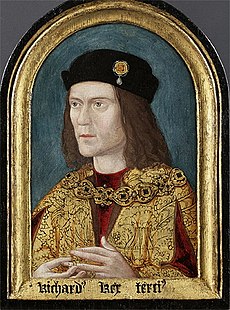
I imagine some of our readers already know this, but here’s a follow up on a story we covered earlier this year. In February, archaeologists confirmed that they had discovered the remains of King Richard III beneath a parking lot in Leicester. Richard died in battle at Bosworth Field in August 1485; the Tudor victors gave him a rather unceremonious burial in what was then a local abbey. Richard will now be re-interred in Leicester’s Anglican cathedral, most likely next May. Back in February, some Catholics objected that Richard, who was Catholic, should by rights be buried in a Catholic ceremony in a Catholic sanctuary. According to the Law and Religion UK blog, however, the Catholic Church in the UK will not insist. The Catholic Bishop of Nottingham states:

The Bishop is pleased that the body of King Richard III has been found under the site of Greyfriars Church in Leicester, in which it was buried following the Battle of Bosworth in 1485, and that it will be reinterred with dignity in the city where he has lain for over five hundred years. Richard III was one of the last Catholic monarchs of England and his death was a decisive moment in British history, but the ultimate decision as to what form the interment takes lies with the Government and the Church of England, since he will be buried in Leicester Cathedral. In accordance with long-established ecumenical practice, Bishop Malcolm will be happy to take part in any form of ceremony which takes place to mark his final burial.

A little hard to follow, but the meaning seems to be, as the government has already decided to bury Richard in the Church of England, the government can also decide on the ceremony. So that’s that. The event will surely be less tense than Richard’s coronation. But will they serve strawberries at the reception?

Robinson, “Citizen Strangers: Palestinians and the Birth of Israel’s Liberal Settler State”

This September, Stanford University Press will publish Citizen Strangers: Palestinians and the Birth of Israel’s Liberal Settler State by Shira Robinson 0804788006(George Washington University).  The publisher’s description follows.

Following the 1948 war and the creation of the state of Israel, Palestinian Arabs comprised just fifteen percent of the population but held a much larger portion of its territory. Offered immediate suffrage rights and, in time, citizenship status, they nonetheless found their movement, employment, and civil rights restricted by a draconian military government put in place to facilitate the colonization of their lands. Citizen Strangers traces how Jewish leaders struggled to advance their historic settler project while forced by new international human rights norms to share political power with the very people they sought to uproot.

For the next two decades Palestinians held a paradoxical status in Israel, as citizens of a formally liberal state and subjects of a colonial regime. Neither the state campaign to reduce the size of the Palestinian population nor the formulation of citizenship as a tool of collective exclusion could resolve the government’s fundamental dilemma: how to bind indigenous Arab voters to the state while denying them access to its resources. More confounding was the tension between the opposing aspirations of Palestinian political activists. Was it the end of Jewish privilege they were after, or national independence along with the rest of their compatriots in exile? As Shira Robinson shows, these tensions in the state’s foundation—between privilege and equality, separatism and inclusion—continue to haunt Israeli society today.

Ryan, “Decoding Al-Qaeda’s Strategy”

This month, Columbia University Press published Decoding Al-Qaeda’s Strategy: The Deep Battle Against America by Michael W. S. Ryan (Jamestown appFoundation).  The publisher’s description follows.

By consulting the work of well-known and obscure al-Qaeda theoreticians, Michael W. S. Ryan finds jihadist terrorism strategy has more in common with the principles of Maoist guerrilla warfare than mainstream Islam. Encouraging strategists and researchers to devote greater attention to jihadi ideas rather than jihadist military operations, Ryan builds an effective framework for analyzing al-Qaeda’s plans against America and constructs a compelling counternarrative to the West’s supposed “war on Islam.”

Ryan examines the Salafist roots of al-Qaeda ideology and the contributions of its most famous founders, Osama Bin Laden and Ayman al-Zawahiri, in a political-military context. He also reads the Arabic-language works of lesser known theoreticians who have played an instrumental role in framing al-Qaeda’s so-called war of the oppressed. These authors readily cite the guerrilla strategies of Mao, Che Guevara, and the mastermind of the Vietnam War, General Giap. They also incorporate the arguments of American theorists writing on “fourth-generation warfare.” 

Through these texts, readers experience events as insiders see them, and by concentrating on the activities and pronouncements of al-Qaeda’s thought leaders, especially in Yemen, they discern the direct link between al-Qaeda’s tactics and trends in anti-U.S. terrorism. Ryan shows al-Qaeda’s political-military strategy to be a revolutionary and largely secular departure from the classic Muslim conception of jihad, adding invaluable dimensions to the operational, psychological, and informational strategies already deployed by America’s military in the region.

Tocqueville and Machiavellianism

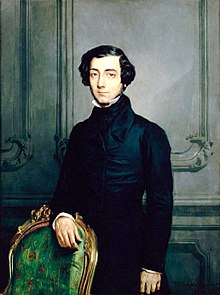
Alexis de Tocqueville

In my last post, I discussed Tocqueville’s personal religious opinions. Here I extend that discussion by considering his relationship to Machiavellianism.

Few theorists have emphasized the usefulness of religious belief for government and society as strongly as Tocqueville. Yet, if the interpretation of his private views that I sketched out in my previous post is correct, it would seem unlikely that Tocqueville was an advocate of a purely “civil religion.” To be more precise: Tocqueville did not advocate the “Machiavellian” position that the “magistrate” ought to inculcate religion in the “populace” because of its social utility, even while disbelieving it himself.

There are at least three ways by which Tocqueville reached this conclusion: through logic, through personal observation and through the study of history.

The Illogic of the Utilitarian Case for Religion

First, it would have been especially difficult to have advocated this “Machiavellian” policy for America. In the United States, the sovereign “People,” which Tocqueville described as acting “in the American political world like God over the universe,” see Democracy in America at 71 (Bevan trans.), was itself at once magistrate and populace. Hence, to have any chance of being effective, the policy would have required collective self-deception on a mass scale. (Note, however, that one of Tocqueville’s subtlest and most profound interpreters seems to think that this was indeed Tocqueville’s view. See Pierre Manent, Tocqueville and the Nature of Democracy 92 (John Waggoner trans. 1996)).

Furthermore, if the American public generally accepted religion solely for its utilitarian consequences, then its faith would be unable to produce the desired effects: religion can only serve social utility if the public generally believes it to be true. Just as a placebo will do good only if the patient believes that it is a medicine and not a placebo, so religious belief will promote public welfare only Read more

Do You Like Us?

The ABA is compiling its annual list of the 100 best legal blogs–that’s “blawgs,” for you uninitiated–and is soliciting reader suggestions. If you like the work we’re doing here at CLR Forum–the Commentary, Scholarship Roundup, the Weekly Top Five List and Web Roundup, the Conversations, and Guest Posts from law professors and other experts–please nominate us. The nomination form is here and the deadline is August 9. Thanks!

Conversations: Rodney Stark

Last week, we reviewed a recent book by Baylor University sociologist Rodney Stark, America’s Blessings. In the book, Stark (left) critiques public opinion surveys that purport to show the decline of religion in America and an increase in Americans without a religious affiliation, the so-called “Nones.” This week, Stark kindly agrees to answer some questions. He talks about church attendance in America, now at an all-time high; the surprisingly traditional beliefs of the Nones; and the reasons why the media and academy often ignore the socially beneficial effects of religion–lower crime rates, for example. He also explains why regular church goers may report greater satisfaction in their marriages, and talks about his future projects.

CLR Forum: Rod, we’ve heard a great deal in the past year about the rise of the “Nones.” According to reports, about 20% of Americans, the highest percentage ever, tell surveyors that they have no religious affiliation. Yet in America’s Blessings you note that 70% of Americans, also the highest percentage in our history, belong to religious congregations. What explains these two, apparently contradictory, developments?

Stark: First of all, few of the “Nones” aren’t religious.  Most of them even pray. What they mean when they say “None” is that they do not belong to a specific church. As for the increase in their numbers over the past 20 years, that probably is mostly caused by the decline in the percentage of Americans willing to take part in a survey. Those who do are very disproportionately the less affluent and less educated. Believe it or not, repeated studies going back to the 1940s always show that this is the group least likely to belong to a local church—the more educated Americans are the more religious segment (excluding PhDs). Meanwhile, partly because Americans move less often than they used to, and many more remain in their home towns as adults, membership in local churches has been rising—now estimated at 70 percent, the all-time high.

CLR Forum: You point out that the large majority of the Nones are rather religious, in their own way. How would you describe the religion of the religiously unaffiliated? What are its salient features?

Stark: The unaffiliated are religious in the traditional ways. They believe in God and in life after death–many believe in guardian angels. But, since they do not attend a local church (and probably never attended Sunday school) their faith is unsophisticated and often includes non-Christian supernaturalism—belief in ghosts and the like.

CLR Forum: You criticize the academy and media for ignoring many reliable surveys that suggest the socially beneficial aspects of religion, while focusing on unreliable surveys that show the anti-social impact of religion. Why is this, do you think? How do you think these academics would respond to your criticisms?

Stark: Surveys have demonstrated the irreligiousness of the media and of academics (especially social scientists and at the elite schools).  I am Read more

The Top Five New Law & Religion Papers on SSRN

From SSRN’s list of most frequently downloaded law and religion papers posted in the last 60 days, here are the current top five.  Since last week, Alvare has remained at #1, Perry has remained at #2, Newman has remained at #3, Sepper joins the list at #4, and Smith & Corbin’s exchange moves down to #5, replacing Berg’s article.

1. No Compelling Interest: The ‘Birth Control’ Mandate and Religious Freedom by Helen M. Alvare (George Mason U., School of Law) [209 downloads]

2. The Morality of Human Rights by Michael J. Perry (Emory U., School of Law) [208 downloads]

3. On the Trinity Western University Controversy: An Argument for a Christian Law School in Canada by Dwight G. Newman (U. of Saskatchewan, College of Law) [150 downloads]

4. Contraception and the Birth of Corporate Conscience  by Elizabeth Sepper (Washington U., School of Law [103 downloads]

5. Debate: The Contraception Mandate and Religious Freedom by Steven Douglas Smith (U. of Miami School of Law) and Caroline Mala Corbin (U. of San Diego School of Law) [84 downloads]

The Economist on Christian Sorrows

Photo from The Economist

The Economist has a couple of interesting stories this week on the continuing plight of Christians in the Middle East. First, from the magazine’s valuable religion blog, Erasmus, is this story about the continued disappearance of two bishops in Syria. One hundred days ago, Islamists in the Syrian opposition kidnapped the two clerics, one from the Greek Orthodox and the other from the Syriac Orthodox Church. Their whereabouts have not been revealed; some reports say they have already been murdered, though that is very unclear.  A Jesuit priest from Italy, who has been working in Syria for 20 years, has also gone missing recently. Meanwhile, the magazine reports that a court in Trabzon, Turkey, has agreed with Turkey’s ruling AKP party that the Byzantine Church of the Holy Wisdom (above) in that city should be reconverted to a mosque. The church had been converted to a mosque after the Ottoman conquest in the 15th Century; in the 20th Century, under the Kemalist regime, it became a museum. Turkey’s tiny Greek Orthodox population worries that another Byzantine church by the same name, Istanbul’s famous Hagia Sophia, may be next.