Leustean & Madeley (eds.), “Religion, Politics and Law in the European Union”

religion in euThis August, Routledge will publish Religion, Politics and Law in the European Union edited by Lucian N. Leustean (Aston U.) and John T.S. Madeley (London School of Economics and Political Science).  The publisher’s description follows.

EU enlargement – to countries in Central and Eastern Europe in 2004, the inclusion of Bulgaria and Romania in 2007, and increasing debates on Turkey’s membership – has dramatically transformed the European Union into a multi-religious space. Religious communities are not only shaping identities but are also influential factors in political discourse. This edited volume examines the activities of religious actors in the context of supranational European institutions and the ways in which they have responded to the idea of Europe at local and international levels. By bringing together scholars working in political science, history, law and sociology, this volume analyses key religious factors in contemporary EU architecture, such as the transformation of religious identities, the role of political and religious leaders, EU legislation on religion, and, the activities of religious lobbies.

This book was published as a special issue of Religion, State and Society.

Crouch, “Law and Religion in Indonesia”

This September, Routledge will publish Law and Religion in Indonesia: Faith, Conflicts and the Courts by Melissa Crouch (National University of Singapore). The publisher’s description follows.

Understanding and managing inter-religious relations, particularly between Muslims and Christians, presents a challenge for states around the world. This book investigates legal disputes between religious communities in the world’s largest majority-Muslim, democratic country, Indonesia. It considers how the interaction between state and religion has influenced relations between religious communities in the transition to democracy.

The book presents original case studies based on empirical field research of court disputes in West Java, a majority-Muslim province with a history of radical Islam. These include criminal court cases, as well as cases of judicial review, relating to disputes concerning religious education, permits for religious buildings and the crime of blasphemy. The book argues that the democratic law reform process has been influenced by radical Islamists because of the politicization of religion under democracy and the persistence of fears of Christianization. It finds that disputes have been localized through the decentralization of power and exacerbated by the central government’s ambivalent attitude towards radical Islamists who disregard the rule of law.

Examining the challenge facing governments to accommodate minorities and manage religious pluralism, the book furthers understanding of state-religion relations in the Muslim world. This accessible and engaging book is of interest to students and scholars of law and society in Southeast Asia, was well as Islam and the state, and the legal regulation of religious diversity.

Bannerman, “Islam in Perspective (RLE Politics of Islam): A Guide to Islamic Society, Politics and Law”

islamThis May, Routledge published Islam in Perspective (RLE Politics of Islam): A Guide to Islamic Society, Politics and Law edited by Patrick Bannerman Omer (Notre Dame). The publisher’s description follows.

There has been a significant upsurge of western interest in the political manifestations and significance of Islam in the last decade, fuelled by the notion of Islamic ‘revival’, the Iranian revolution and by events in countries as diverse as Egypt, Pakistan and Sudan.

Oil power and its effect on the international economic order, the relationship of Muslim countries with the superpowers and the continuation of the Arab-Israeli conflict have also served to focus attention on Islamic politics and, in particular, on the notion of Islamic reassertion.

As the author of this book argues, one result of this interest has been the development of a view of Islam as monolithic and implacable. He takes a broad view of the intellectual and cultural history of Islam, emphasising the extraordinary diversity of Islamic societies and the ways in which the ideal is often pragmatically adapted to reality. In this wider social and historical context, the nature of Islamic revival is then reassessed.

Faith Healing and Criminally Negligent Homicide

In previous posts, I offered some arguments against the propriety of a charge of reckless murder (or depraved heart/indifference murder) in cases where parents who believe in faith healing fail to get medical assistance to prevent the death of their child. There may be some circumstances where such a charge is warranted, but if one stipulates that the parents truly believed in the power of faith healing and also truly believed that interfering with that power would damage the child’s chances of recovery, then I have a difficult time seeing how reckless murder–at least of the sort that is codified in New York and Pennsylvania–is the right charge. If you haven’t seen it, you should also have a read of Peter Berger’s latest column in which he discusses the issue of faith healing, law, and the power of courts to define reality. Professor Berger’s reflections, as one might expect, are less legal and more sociological. As always, they are fascinating.

In another faith healing case decided last Monday by the Oregon Court of Appeals (Oregon’s intermediate appellate court), State v. Beagley, the court upheld a conviction of criminally negligent homicide for two parents who had failed to provide medical care to their 16 year old child. The child, who was afflicted with a congenital abnormality causing progressive deterioration of the kidney, died after a three month period in which he became increasingly weak. The parents’ defense was that they (and their child) believed that faith healing–“prayer, the laying on of hands, and anointment with oil”–would cure the child. The opinion raises very interesting and difficult issues. It’s worth a read.

One of the defendants’ arguments on appeal was that a conviction for criminally negligent homicide under these circumstances violated their federal and state constitutional and/or state statutory religious liberty. That argument was rightly rejected. But it helps to highlight and, I think, clarify a confusion that sometimes crops up in cases like this. To say that a defendant does not have the requisite mens rea for murder is not the same thing as saying that he is “exempted” from a homicide charge on account of his religious beliefs. The first statement is attempting to pin down his precise mens rea within the framework of homicide under Oregon law; the second statement is saying that irrespective of his mens rea, a constitutional (or statutory) deus ex machina swoops down to lift him out of the state’s criminal justice framework altogether.

Oregon defines criminal negligence in a fairly typical way: failure to be aware of a substantial and unjustifiable risk that (in this case) the result will occur, where the risk is of such a nature and degree that failure to be aware of it constitutes a gross deviation from the standard of care that a reasonable person would observe in the situation. And Oregon recognizes that omissions can serve as the actus reus where the defendant had a duty to act (as parents do, for example). Oregon has a statute on the books related to faith healing which the court had previously interpreted to mean the following: “[T]he statutes permit a parent to treat a child by prayer or other spiritual means so long as the illness is not life threatening. However, once a reasonable person should know that there is a substantial risk that the child will die without medical care, the parent must provide that care, or allow it to be provided, at the risk of criminal sanctions if the child does die.”

In upholding the conviction, the court distinguished a very interesting, but also very confusing, case decided by the Oregon Supreme Court in 1995, Meltebeke v. Bureau of Labor and Industries, involving a civil sanction imposed by the Oregon Bureau of Labor and Industries on an employer who was accused of religious discrimination by “creating an intimidating and offensive working environment” after proselytizing an employee. The Oregon Supreme Court held that because proselytizing was a constitutionally protected religious “practice,” the state could not enforce its labor rule against the employer without violating the state constitution unless it could prove that the employer “knew” that the conduct would result in forbidden discrimination. But–and this is the confusing part–the Oregon Supreme Court distinguished between “conduct motivated by one’s religious beliefs” and “conduct that constitutes a religious practice.” Proselytism was a religious practice, and therefore demanded that the state prove a knowing state of mind. Other kinds of conduct which are not religious practices themselves but are only “motivated by religious beliefs” do not demand that the state prove a knowing state of mind.

The defendants in Beagley argued that in light of Meltebeke, they could not be convicted of criminally negligent homicide without suffering a constitutional violation. The state, they argued, had to prove that they knew that their child would die by engaging in faith healing and failing to get medical care for him. But the Oregon Court of Appeals rejected that argument. Though it expressed some justified puzzlement at the distinction in Meltebeke between a religious “practice” and “conduct motivated by religious belief,” it nevertheless held that “allowing a child to die for lack of life-saving medical care is clearly and unambiguously–and, as a matter of law–conduct that ‘may be motivated by one’s beliefs.'”

I’m not sure that this statement, however forcefully expressed, is persuasive, but the Court of Appeals was to some extent hemmed in by the confusing language of Meltebeke (Meltebeke was also limited to civil cases).

Setting aside the specifics of Oregon case law, however, there is another fact in Beagley that makes for an interesting parallel with the Philadelphia case. In Beagley, there was evidence that three months before their sons’ death, the parents’ granddaughter also died from lack of medical care. That evidence was admitted, the court said, to show that it was more probable that the defendants should have known that their son was in danger. It also showed, the court claimed, that the defendants did know that their son was in danger.

I agree with the proposition that this is further evidence that the defendants “should have known” that their son was in danger. But without more facts, I am not certain that I agree with the statement that evidence of the granddaughter’s death shows that they “did know” of their son’s danger. More evidence about their state of mind would be necessary before concluding that they were conscious of the risks that they were taking.

But in any event, charges of criminally negligent homicide or reckless manslaughter (but not reckless murder) both seem to me to be within the plausible range. And in both cases, Professor Berger is right to say that “by admitting the case[s] in the first place the court[s] already decided that divine healing as a substitute for modern medicine is ruled out by the legal definition of reality.” “Reality” here is brought to bear in these cases by the criminal law through the baseline mechanism of criminal negligence: one is criminally negligent if one should have been aware of certain risks and where one’s lack of awareness deviates in an extreme way from what reasonable people would do in the face of medical reality.

Says Who?

Just in time for my post on symbols, the New York Times picks up the topic as well. So this is page A1 news! Of course, the underlying issue—the treatment of religious symbols in the public sphere—is hardly new. But it continues to be contested and rich and fascinating to study in comparative perspective.

Let me focus in this post on the question of attribution and the role of individual religious expression as opposed to expression of a religious viewpoint or identity by the state. The Times story opens with a Roman Catholic archbishop reminiscing about visiting Brussels and encountering there “the insistently secular bureaucracy of the European Union.” The story continues with the statement “’They let me in wearing my cross,’ the archbishop recalls.” Should he have been surprised? The story then continues with “the rude surprise” that ensued after the Commission objected to crosses on commemorative Euro coins. But should that be surprising?

None of this should be surprising to anyone accustomed to the U.S. concept of a free exercise and establishment distinction. Attribution is a central threshold question in the United States. We are very familiar with the attribution issue, because deciding whether the message is one attributable to the state or the individual determines whether the message is fully protected as a matter of free speech and free exercise or whether it is subject to Establishment Clause limits (which, by the way, does not automatically indicate a violation on the merits). When I talk about religious messages in the U.S. context, I must therefore distinguish between messages of the government and messages of individuals. (I’ve written about the intricacies of that question in the U.S. context in more detail here.)

This (from the U.S. perspective) familiar question of attribution is also gaining importance in the European context, and what makes it particularly interesting there is that we do not have this split into free exercise and nonestablishment in most systems. Take, for instance, the European Convention on Human Rights. The Convention itself contains no Establishment Clause-type provision. But in the case law of the European Court of Human Rights (ECtHR) an interesting development is occurring. Article 9 contains the Convention’s religious freedom provision. In Article 9(2) we find the limitations clause (also a typical feature of continental constitutions). It states: “Freedom to manifest one’s religion or beliefs shall be subject only to such limitations as are prescribed by law and are necessary in a democratic society in the interests of public safety, for the protection of public order, health or morals, or for the protection of the rights and freedoms of others.”

As I’ve discussed here, recent case law seems to be slowly developing the meaning of the limitations clause beyond the limit on individual free exercise that it originally was by focusing on the type of democratic society envisioned by the Convention. An indicator of that development is the ECtHR’s emphasis on pluralism in the sense of allowing citizens of all faiths as well as nonreligious citizens to flourish in a democratic society. And that leads to a limit to religious identification imposed on the state itself, as opposed to limit on the individual’s free exercise. In short, the clause might become a limit on the state’s identification with religion. This is where we ask the attribution question. And in a system without a distinction between free exercise and nonestablishment, the interesting point to me is that we’re now starting to ask this question in the first place.

So if we ask about attribution—a question that has not traditionally been asked in the European context precisely because those systems tend not to have an establishment clause-like provision—we ask about the state’s actions, or religious expressions, as distinct from the individual’s actions or messages. And if we set the problem up this way, we are creating a dichotomy that many European national systems do not recognize. And so I find myself wondering whether national concepts of the public sphere may be on a collision course with what the European Court of Human Rights appears to be tending toward.

Around the Web This Week

Some interesting law & religion stories from around the web this week:

Hammarberg, “The Mormon Quest for Glory”

9780199737628_200This July, Oxford University Press will publish The Mormon Quest for Glory: The Religious World of the Latter-Day Saints by Melvyn Hammarberg (University of Pennsylvania). The publisher’s description follows.

The Church of Jesus Christ of Latter-day Saints has 6 million members in the United States today (and 13 million worldwide). Yet, while there has been extensive study of Mormon history, comparatively little scholarly attention has been paid to contemporary Mormons. The best sociological study of Mormon life, Thomas O’Dea’s The Mormons, is now over fifty years old. What is it like to be a Mormon in America today? Melvyn Hammarberg attempts to answer this question by offering an ethnography of contemporary Mormons. In The Mormon Quest for Glory, Hammarberg examines Mormon history, rituals, social organization, family connections, gender roles, artistic traditions, use of media, and missionary work. He writes as a sympathetic outsider who has studied Mormon life for decades, and strives to explain the religious world of the Latter-day Saints through the lens of their own spiritual understanding. Drawing on a survey, participant observation, interviews, focus groups, attendance at religious gatherings, diaries, church periodicals, lesson manuals, and other church literature, Hammarberg aims to present a comprehensive picture of the religious world of the Latter-day Saints.

Movsesian on Alito

For CLR Forum readers who would be interested, my chapter on Justice Samuel Alito appears in the just released, revised edition of Justices of the Supreme Court: Their Lives and Major Opinions (2013), edited by Leon Friedman and Fred Israel. Among other cases, I discuss Alito’s famous opinion for the Third Circuit in the Newark Police Department beard case, Fraternal Order of Police v. City of Newark (3d Cir. 1999), as well his opinion for the Supreme Court in the “Seven Aphorisms” case, Pleasant Grove City. Utah v. Summum (2009), and his dissent in Christian Legal Society v. Martinez (2010).
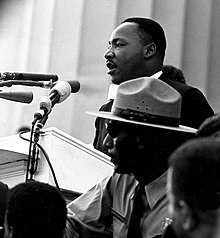
Christianity and King

When it comes to mixing religion and politics, I’ve often thought, the principle seems to be, it’s wrong when the other guy does it. For example, conservatives become annoyed  when Christians call for liberalizing immigration laws or for universal healthcare. Don’t impose your religious beliefs on society! When Christians argue for abortion restrictions or against same-sex marriage, by contrast, conservatives don’t complain too much. And it works in reverse. In fact, in my experience, liberals have a greater blind spot about the subject. Liberals object vigorously when conservatives like Judge Edith Jones defend capital punishment on religious grounds, but go strangely quiet when liberals, like President Obama, cite Christianity’s influence on their policy positions.

Here’s a good example of the liberal discomfort with religion from a New York Times profile of Barnard College sociologist Jonathan Rieder. According to the Times, Rieder, an expert on Martin Luther King, has focused on an aspect of King’s thought that receives little attention from scholars: King’s Christianity. How, you might ask, could King scholarship ignore Christianity? The man was a Christian minister. The Times explains:

Dr. Rieder’s book stakes very specific turf in the corpus of King scholarship with its relentless focus on Dr. King the preacher. By doing so … Dr. Rieder is restoring the overtly religious element to Dr. King and the freedom movement. While African-Americans readily grasp the link, many white liberals diminish or ignore it out of discomfort with religion being granted a role — even a positive one — in political discourse.

“The image of liberal secular King misses the essential role of prophetic Christianity,” [Rieder] said in a recent interview. “Jesus wasn’t just an interesting historical figure to King. He saw Jesus as a continuation of the prophets. He has a powerful association with Jesus.”

Would America have had the civil rights movement without Christianity? It’s impossible to know, of course, and it’s true that Christian support for King wasn’t uniform. But it’s crazy to ignore Christianity’s profound influence on King and, though him, the movement as a whole. The willingness to do so says a great deal about the state of scholarship in America today.

Annicchino on Religious Autonomy

For our followers who read Italian, CLR Forum guest poster Pasquale Annicchino (European University Institute) has posted a comparative essay on religious autonomy in the US and Europe, The Conflict between the Autonomy of Religious Groups and Other Fundamental Rights: Recent Decisions of the U.S. Supreme Court and the European Court of Human Rights. Here’s the abstract:

The principle of autonomy of religious groups has acquired new importance in the recent decisions of the United States Supreme Court and the European Court of Human Rights. This article will analyze and compare the decisions by these two courts, with a particular focus on the circulation of legal arguments between the two different legal orders.