Bonney, “Monarchy, Religion and the State: Civil Religion in the United Kingdom, Canada, Australia and the Commonwealth”

This November, Manchester University Press will publish Monarchy, Religion and the State: Civil Religion in the United Kingdom, Canada, Australia and the Commonwealth by Norman Bonney (Edinburgh Napier University). The publisher’s description follows.

This most thorough and contemporary examination of the religious features of the UK state and its monarchy argues that the long reign of Elizabeth has led to a widespread lack of awareness of the centuries old religious features of the state that are revealed at the accession and coronation of a new monarch. It is suggested that the next succession to the throne will require major national debates in each realm of the monarch to judge whether the traditional rituals which require professions of Christianity and Protestantism by the new monarch are appropriate, or whether they might be replaced by alternative secular or interfaith ceremonies.

It will be required reading for those who study the government and politics of the UK, Canada, Australia and the other 13 realms of the monarch. It will also appeal to as well as students and lecturers in history, sociology and religious studies and citizens interested in the monarchy and contemporary religious issues.

Movsesian Essay Appears in New Anthology on Public Religion

This month, Ashgate releases Volume III of Religion in the Public Space, part of its Library of Essays on Law and Religion series. The volume is edited by Silvio Ferrari (Milan) and Rinaldo Cristofori (Milan), and contains essays by, among others, Jürgen Habermas, Charles Taylor, Mary Ann Glendon, and, I blush to say, yours truly–my essay, Crosses and Culture, on religious displays in the US and Europe. Here’s the publisher’s description:

Religion in the public sphere is one of the most debated issues in the field of law and religion. This volume brings together articles which address some of the more prominent recent cases relating to religion and education, religion and the workplace, family law and religious symbols. The essays discuss the meaning of secularism today and the difficult issue of religion in the public sphere and reflect a wide variety of viewpoints. This volume maps the key elements of this multi-faceted problem, offers essential material and provides an important starting point for an understanding of the issues in this century old debate.

“The Religious in Responses to Mass Atrocity” (Brudholm & Cushman, eds.)

9781107624757This November, Cambridge University Press will publish The Religious in Responses to Mass Atrocity: Interdisciplinary Perspectives edited by Thomas Brudholm (University of Copenhagen) and Thomas Cushman (Wellesley College). The publisher’s description follows.

A peculiar and fascinating aspect of many responses to mass atrocities is the creative and eclectic use of religious language and frameworks. Some crimes are so extreme that they “cry out to heaven,” drawing people to employ religious vocabulary to make meaning of and to judge what happened, to deal with questions of guilt and responsibility, and to re-establish hope and trust in their lives. Moreover, in recent years, religious actors have become increasingly influential in worldwide contexts of conflict-resolution and transitional justice. This collection offers a critical assessment of the possibilities and problems pertaining to attempts to bring religious – or semi-religious – allegiances and perspectives to bear in responses to the mass atrocities of our time: When and how can religious language or religious beliefs and practices be either necessary or helpful? And what are the problems and reasons for caution or critique? In this book, a group of distinguished scholars explore these questions and offer a range of original explanatory and normative perspectives.

Howard, “Law and the Wearing of Religious Symbols: European Bans on the Wearing of Religious Symbols in Education”

This June, Routledge published Law and the Wearing of Religious Symbols: 9780415602648European Bans on the Wearing of Religious Symbols in Education by Erica Howard (Middlesex University, UK). The publisher’s description follows.

Written in accessible language, Law and the Wearing of Religious Symbols is a comprehensive analysis of a topical subject that is being widely debated across Europe. The book provides an overview of emerging case law from the European Court of Human Rights as well as from national courts and equality bodies in European countries on the wearing of religious symbols in educational settings. The author persuasively argues that bans on the wearing of religious symbols in educational institutions in Europe constitutes a breach of an individual’s human rights and contravenes existing anti-discrimination legislation. The book offers a discussion of developments in Europe, including the French ban on Islamic head scarves which came into force in April 2011. In addition to an in depth examination of recent bans, the book also assess the arguments used for imposing them as well as the legal claims that can potentially be made to challenge their validity. In doing this, the book will go beyond merely analyzing the bans in place to suggest ways in which educational institutions can most fairly respond to requests for accommodation of the wearing of religious symbols and whether perhaps the adoption of other provisions or measures are necessary in order to improve the present situation.

This book will be of particular interest to students and academics in the disciplines of law, human rights, political science, sociology and education, but will also be of considerable value to policy makers and educators as well.

Christianity and King

When it comes to mixing religion and politics, I’ve often thought, the principle seems to be, it’s wrong when the other guy does it. For example, conservatives become annoyed  when Christians call for liberalizing immigration laws or for universal healthcare. Don’t impose your religious beliefs on society! When Christians argue for abortion restrictions or against same-sex marriage, by contrast, conservatives don’t complain too much. And it works in reverse. In fact, in my experience, liberals have a greater blind spot about the subject. Liberals object vigorously when conservatives like Judge Edith Jones defend capital punishment on religious grounds, but go strangely quiet when liberals, like President Obama, cite Christianity’s influence on their policy positions.

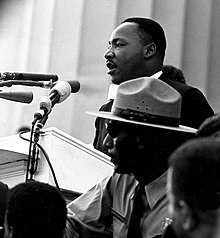
Here’s a good example of the liberal discomfort with religion from a New York Times profile of Barnard College sociologist Jonathan Rieder. According to the Times, Rieder, an expert on Martin Luther King, has focused on an aspect of King’s thought that receives little attention from scholars: King’s Christianity. How, you might ask, could King scholarship ignore Christianity? The man was a Christian minister. The Times explains:

Dr. Rieder’s book stakes very specific turf in the corpus of King scholarship with its relentless focus on Dr. King the preacher. By doing so … Dr. Rieder is restoring the overtly religious element to Dr. King and the freedom movement. While African-Americans readily grasp the link, many white liberals diminish or ignore it out of discomfort with religion being granted a role — even a positive one — in political discourse.

“The image of liberal secular King misses the essential role of prophetic Christianity,” [Rieder] said in a recent interview. “Jesus wasn’t just an interesting historical figure to King. He saw Jesus as a continuation of the prophets. He has a powerful association with Jesus.”

Would America have had the civil rights movement without Christianity? It’s impossible to know, of course, and it’s true that Christian support for King wasn’t uniform. But it’s crazy to ignore Christianity’s profound influence on King and, though him, the movement as a whole. The willingness to do so says a great deal about the state of scholarship in America today.

Kaskowitz, “God Bless America”

god blessIn July, Oxford University Press will publish God Bless America: The Surprising History of an Iconic Song by Sheryl Kaskowitz (Harvard). The publisher’s description follows.

“God Bless America” is a song most Americans know well. It is taught in American schools and regularly performed at sporting events. After the attacks on September 11th, it was sung on the steps of the Capitol, at spontaneous memorial sites, and during the seventh inning stretch at baseball games, becoming even more deeply embedded in America’s collective consciousness.

In God Bless America, Sheryl Kaskowitz tells the fascinating story behind America’s other national anthem. It begins with the song’s composition by Irving Berlin in 1918 and first performance by Kate Smith in 1938, revealing an early struggle for control between composer and performer as well as the hidden economics behind the song’s royalties. Kaskowitz shows how the early popularity of “God Bless America” reflected the anxiety of the pre-war period and sparked a surprising anti-Semitic and xenophobic backlash. She follows the song’s rightward ideological trajectory from early associations with religious and ethnic tolerance to increasing uses as an anthem for the Christian Right, and considers the song’s popularity directly after the September 11th attacks. The book concludes with a portrait of the song’s post-9/11 function within professional baseball, illuminating the power of the song – and of communal singing itself – as a vehicle for both commemoration and coercion. A companion website offers streaming audio of recordings referenced in the book, links to videos of relevant performances, appendices of information, and an opportunity for readers to participate in the author’s survey.

Based on extensive archival research and fieldwork, God Bless America sheds new light on cultural tensions within the U.S., past and present, and offers a historical chronicle that is full of surprises and that will both edify and delight readers from all walks of life

National Day of Prayer

You might not have noticed it, but today is the National Day of Prayer. I should say, a National Day of Prayer, as that’s what the US Code calls it. Every year, by law, the President issues a proclamation “designating the first Thursday in May as a National Day of Prayer on which the people of the United States may turn to God in prayer and meditation at churches, in groups, or as individuals.” President Obama’s proclamation this year is rather moving. It stresses the comfort that Americans draw, in times of suffering, from the simple fact that other Americans are praying for them:

Prayer brings communities together and can be a wellspring of strength and support. In the aftermath of senseless acts of violence, the prayers of countless Americans signal to grieving families and a suffering community that they are not alone. Their pain is a shared pain, and their hope a shared hope. Regardless of religion or creed, Americans reflect on the sacredness of life and express their sympathy for the wounded, offering comfort and holding up a light in an hour of darkness.

The proclamation itself ends with a prayer: “I join the citizens of our Nation in giving thanks, in accordance with our own faiths and consciences, for our many freedoms and blessings, and in asking for God’s continued guidance, mercy, and protection.”

The day is not without its critics. The Freedom from Religion Foundation once filed a lawsuit, dismissed on standing grounds, arguing that a National Day of Prayer violates the Constitution, and the American Humanist Association hosts a competing National Day of Reason every year. (You might not have noticed that, either.) Orthodox theists of various sorts might find the day objectionable as well. To whom or what are Americans being invited to pray? Doesn’t officially-encouraged prayer to a nondescript deity lead to confusion and least-common-denominator religion? Not everyone finds generic prayers so harmless.

I’m not sure what the answer is, except to say that designating a National Day of Prayer seems entirely American. Public religious references of a nonsectarian character have long been a part of the American tradition, for better or worse, and there’s no stopping them now. The wisdom of our ancestors is in such things, as Dickens once observed in another context, and if we disturb them, the Country’s done for. Purists, of the secular and orthodox variety, have to adjust.

Walhof on Religion and the Public Sphere

Darren R. Walhof (Grand Valley State University) has posted Habermas, Same-Sex Marriage and the Problem of Religion in Public Life. The abstract follows.

This article addresses the debate over religion in the public sphere by analysing the conception of ‘religion’ in the recent work of Habermas, who claims to mediate the divide between those who defend public appeals to religion without restriction and those who place limits on such appeals. I argue that Habermas’ translation requirement and his restriction on religious reasons in the institutional public sphere rest on a conception of religion as essentially apolitical in its origin. This conception, I argue, remains embedded in a standard secularization framework, despite Habermas’ claim to offer a new account of secularization. This approach betrays the complex reality of the political constitution of religion and the religious constitution of politics, as demonstrated by the current debate about marriage rights in the USA. In mischaracterizing the inherently public and political dimensions of religion, Habermas undermines the effectiveness of his normative framework.

The Rise of the “Stars and Stripes” Cardinals in Rome

The College of Cardinals began its pre-conclave meetings (the so-called Congregazioni Generali) this week in Rome, with 153 members in attendance. Of them, 115 are under the age of 80, and therefore eligible to participate in the papal election. The question popping up in every Italian newspaper article and commentary is, of course, the same: who will be the new Pope?

While, for obvious reasons, it is impossible to predict the most likely outcome of the cardinals’ decision, it is true that European, and especially Italian, media have devoted particular attention to Cardinal Timothy Dolan and to American cardinals in general. For instance, two days ago the daily Corriere della Sera, the most influential Italian newspaper, had a long interview with the Archbishop of New York . Yesterday, La Repubblica published a long article on the “Stars and Stripes cardinals” and how they are approaching the conclave.

Why are American cardinals receiving so much attention? One obvious, and superficial, reason is that they are much more skilled, as compared to other cardinals, in communicating and establishing relationships with the media. But there is another factor. The United States’ ability to preserve a vocal religious presence in the public sphere has always raised interest and curiosity in Rome, and especially now, in a time when the secularization of Europe is growing at an unprecedented level. It is not to reveal a secret to say that Benedict XVI himself, on many occasions, expressed appreciation for the “American model,” a model in which religious arguments in the public sphere are heard and debated much more than in Europe.

Why did this American model fit better with Benedict XVI’s approach and teachings? According to John L. Allen, Jr., Benedict XVI, contrary to the conventional narrative, tried to shape his teachings on the basis of an “affirmative orthodoxy.” In a conversation with Archbishop Dolan (A People of Hope, Image Books, 2011) Allen defined affirmative “in the sense of being determined to present the building blocks of orthodoxy in a positive key.” The emphasis would therefore be on “what Catholicism embraces and affirms, what it says ‘yes’ to, rather  than what it opposes and condemns.” This affirmative orthodoxy works much better in a social context, like America’s, which welcomes religion in the public sphere and in which religious arguments are heard.

Today, the real challenge for the Catholic Church, especially according to many European cardinals, is religious indifference and the coming of a post-Christian world represented by a new type of man: the homo indifferens. As a result, the American experience, which represents, in many accounts, a hopeful and affirming Catholicism,  is seen as a success story in Rome. This does not mean that in a few days we will have an American Pope. But  I’m sure, like it or not, that the “American model” will matter in discussions on the future of the Church.

Panel on Bronx Household of Faith (Feb. 20)

The New York Lawyers Chapter of the Federalist Society will host a panel discussion, “Can Government Deny the Use of Public Space for Religious Services? Bronx Household of Faith v. NYC Department of Education,” in New York on Wednesday, February 20. Speakers include Jordan Lorence (Alliance Defending Freedom) and CLR Forum Guest Author Nelson Tebbe (Brooklyn Law School). Details are here.