For some time now, legal scholars have been engaged in a project that seeks to examine law (and business practice as well insofar as that practice concerns law) through the lens of Catholic Social Thought. As part of my own interest in the subject, I have been making my way through this book, with the hopes of writing a longer review. I would like to use a few blog posts to develop some preliminary points to help shape my thinking.
The book, edited and selected by Ronald J. Rychlak, applies a Catholic perspective to a number of legal areas, such as torts, family law, and legal ethics. The contributions provide a good overview of the state of Catholic-inflected legal scholarship. The Catholic tradition has a number of principles, such as subsidiarity, solidarity, the common good, and the value and dignity of work, that at the level of scholarship can fruitfully engage American legal norms.
Whether you think this project worthwhile as a practical exercise – that is, whether Catholic thought can help lawyers in their day to day practice – may depend on whether you see the American legal landscape friendly to arguments rooted in that tradition. Some Catholics think the American experiment is opposed to Catholicism, especially in light of Obergefell and Roe. As Gerard Bradley of Notre Dame, who wrote the preface, notes, Catholicism has had little formally to do with American law, if by that we mean laws directly inspired by Catholic principles (the laws protecting priest-penitent privilege being an interesting exception). What positive laws there are in America oftentimes seem opposed to Catholics, from the public school cases of the nineteenth century to the HHS mandate.
Others, however, take a different view. Some excellent work has been done in this area, especially as it concerns “religious lawyering;” my friend Amy Uelmen has written on how a lawyer can insert her religious perspective even into a big corporate law firm practice. The Catholic tradition allows, indeed requires, Catholics to bring their faith to everyday interactions. On a more scholarly level, the book contains helpful analyses of, for example, the Eighth Amendment in light of Catholic teaching on the death penalty. As Robert George of Princeton notes in his essay, Catholic reflection on positive law assumes some connection to natural law. Without that connection, law becomes mere power relations and an instrument for injustice. Given cases like Roe, the Catholic intellectual tradition today must serve to limit that sense, common among the ruling legal elites, that law comprises its own morality rather than serving as a tool to further the common good.
For centuries the Catholic Church was able to impose her ethical rules in matters related to the intimate, that is, questions concerning life (from its beginning until its end) and the family, in the so-called Catholic countries in Western Europe. When the polity started to introduce legislation that was in opposition to the Catholic ethic, the ecclesiastical authorities and part of the population reacted. The media reported massive manifestations in France against same-sex marriages and in Spain against the de-penalization of abortion. In Italy the Episcopal conference entered the political field in opposition to the relaxation of several restrictive legal rules concerning medically assisted procreation and exhorted the voters to abstain from voting so that the referendum did not obtain the necessary quorum. In Portugal, to the contrary, the Church made a “pact” with the prime minister so that the law on same-sex marriages did not include the possibility of adoption. And in Belgium the Episcopal conference limited its actions to clearly expressing with religious, legal, and anthropological arguments its opposition to such laws, which all other Episcopal conferences did also.
In this book, the authors analyse the full spectrum of the issue, including the emergence of such laws; the political discussions; the standpoints defended in the media by professionals, ethicists, and politicians; the votes in the parliaments; the political interventions of the Episcopal conferences; and the attitude of professionals. As a result the reader understands what was at stake and the differences in actions of the various Episcopal conferences. The authors also analyse the pro and con evaluations among the civil population of such actions by the Church. Finally, in a comparative synthesis, they discuss the public positions taken by Pope Francis to evaluate if a change in Church policy might be possible in the near future.
Research by GERICR (Groupe européen de recherche interdisciplinaire sur le changement religieux), a European interdisciplinary research group studying religious changes coordinated by Alfonso Pérez-Agote.
As Gerard V. Bradley, Professor of Law at the University of Notre Dame, asks in his foreword: “What then should one expect to learn from a volume about American law from a Catholic perspective?” His answer is a straightforward one: “One should expect a critical guide to the moral evaluation of laws,” noting of the essays collected in American Law from a Catholic Perspective: Through a Clearer Lens: “The moral evaluative perspective which unfolds in succeeding pages illumines, justifies, and critiques America’s laws.”
Edited by Ronald J. Rychlak, American Law from a Catholic Perspective is one of the most comprehensive surveys of American legal topics by a gathering of major Catholic legal scholars. Contributors explore, among other subjects, bankruptcy, bioethics, corporate law, environmental law, ethics, family law, immigration, intellectual property, international human rights, labor law, legal education, legal history, military law, the philosophy of law, property, torts, and several different aspects of constitutional law, including religious freedom, privacy rights, and free speech.
Here readers will find probing arguments that bring the critical perspective of Catholic social thought to bear on American legal jurisprudence. Essays include Michael Ariens’ account of Catholicism in the intellectual discipline of legal history; William Saunders’ assessment of human rights and Catholic social teaching; Hadley Arkes’ look at the place of Catholic social thought with respect to bioethics; Lucia Silecchia’s examination of a Catholic understanding of stewardship with respect to environmental laws; Dorie Klein’s consideration of the place of Catholic views on the death penalty and Eighth Amendment jurisprudence; and many others on major legal topics in American jurisprudence—and their intersection with Catholic social teaching.
American Law from a Catholic Perspective: Through a Clearer Lens is essential reading for all Catholic lawyers, judges, and law students, as well as an important contribution to non-Catholic readers seeking guidance from a faith tradition on questions of legal jurisprudence. Based on well-developed and established ideas in Catholic social thought, the evaluations, suggestions, and remedies set forth offer ample food for thought and a basis for action in the realm of legal scholarship.
Rod Dreher’s post at The American Conservative, Ghosts of Colson & Neuhaus, is exceptionally interesting. It summarizes the discussions at a recent seminar hosted by First Things editor Rusty Reno, including both Catholics and non-Catholics, on the state of the culture, and more particularly on the state of the American Catholic Church. Much of the focus was on the current generation of students. There’s a lot here, but one issue stood out for me: the real debate within American Catholicism.
As one of the participants at the seminar argued, there really is not, despite the media, a major debate between “liberal” and “conservative” American Catholics. There is indeed a political debate between liberals and conservatives, but it does not map on to any important debate within the American Church. “Liberal” Catholics are Catholics on their way out the door. Their children will be either non-Catholic or else serious Catholic believers. “Liberal” Catholicism is like “liberal” Protestantism: a way station to something else. At best, it will survive as a cultural inflection; it has no chance of being a living faith.
The deeper and more fascinating debate is between those who think that American Catholicism is compatible with this country’s political regime, and the “radicals” who deny it. The accommodationists, to call them that, trace back to Fr John Courtney Murray and nowadays include people like Robert George and George Weigel. The radicals include Alistair Macintyre and others less well known to me. The accommodationists think that there is a lot wrong, to be sure, with American culture and politics, and that the problems may have begun as long ago as the Progressive Era; but they also think institutional reform is both necessary and (still) possible. They want to reinvigorate core institutions of American civil society like the family, the Church, and other voluntary associations.
The accommodationists can point to a period like the 1940s and 1950s to show that American society can be, not just tolerant, but even receptive, to Catholicism. They would probably distinguish between two kinds of American liberalism – the classical liberalism of the Founders, and the liberalism of the present. The former regarded government as, essentially, a scaffolding or a set of neutral procedures, allowing citizens to pursue their private projects peaceably within an agreed-upon framework. The latter kind of liberalism posits that the State exists to pursue certain substantive goods. Both forms of liberalism rest on a conception of the sovereignty of the individual, but the latter form assumes that the State must play a more active role in bringing about the conditions in which individual choice can flourish. Since that form of liberalism regards the family and the Church as inimical to the sovereignty of the individual, it is inimical to Catholicism. But the earlier, historic kind of liberalism is not hostile to such institutions, and indeed draws sustenance from them. (This, of course, was Tocqueville’s argument.) Thus, for the accommodationists, the task ahead for American Catholics seems to be to restore the pristine form of liberalism to American politics.
The radicals regard the 1940s and 50s not as “ordinary time” but as an exceptional and ephemeral truce between Catholicism and American liberalism. They see today’s form of liberalism as the natural or organic outgrowth of classical liberalism, not as an aberration from it. Thus, the antagonism between Catholicism and American liberalism has always been there, even if at times it has been latent. For the radicals, the fundamental flaw in American liberalism has existed since the Founding: liberalism has a false anthropology. It assumes an atomistic conception of the individual, who extricates himself or herself from loneliness and reaches society through a series of bargains. We are not made for society; we construct it. We are not naturally altruistic; we are utterly self-seeking. We are not natively good, nor do we even have natural propensities towards the good. We are incorrigibly evil, but with cleverly devised institutions, we can sometimes produce good effects from evil causes. Political outcomes, like market ones, are guided by an invisible hand, which transubstantiates private vice into public virtue. In essence, the radical Catholics think that American liberalism is founded on a Calvinist, and hence false, conception of human nature. For them, such liberalism both starts and ends in what Burke called “the dust and powder of individuality” which sooner or later is “dispersed to all the winds of heaven.”
There are problems for each side of the Catholic debate. The radicals will have to explain more clearly how the liberalism of the present is continuous with, indeed grows out of, the classical liberalism of the early Republic. They will have to demonstrate the historical and conceptual linkages between the Calvinist and consumerist conceptions of human nature, and how the one eventually developed into the other.
The radicals will also have to explain how the American Catholic Church of the 1950s and 60s achieved such rapport with American society. Ancient, metaphysical, hierarchical, dogmatic, and other-worldly as it was, it nevertheless exerted a powerful influence over a society that was self-consciously modern, pragmatic, tolerant, democratic and secular – an influence far greater than that exercised by the American Church of the present. The Church may have been like a gorgeous if barnacled Spanish galleon, cast ashore by careless waves on some cold New England beach; but however incongruously, it fitted the landscape. Was that “ordinary time,” or is this?
The accommodationists will have to explain why things went wrong and how they can be corrected. Given the stupendous efforts that have been made in the “culture wars” of the past forty years to recapture American culture or even just to hold the line against its further deterioration, they will have to show how, in much less promising circumstances, further efforts will bring tangible improvements.
Unquestionably, this is a serious and important debate – one that calls the ultimate assumptions of the American regime into question. Many of us are shocked and depressed by the current state of America – its hardness of heart to the most vulnerable; its contempt for the poor; its violence abroad and at home; its corrupt sexual morality; its increasing intolerance and persecutory zeal (with ourselves as targets); and so on. But for these debating Catholics, the question is whether the American situation is curable, by some kind of reform program; or incurable, inherently tending to self-destruction.
The parties to the Catholic debate are thinking foundationally – a sure sign that we are in crisis. They are asking: Do we continue to engage the legal and political system? Or do we break off and try to create sheltered communities of our own, like the hidden church under the Roman Empire? What can we learn from the adaptive strategies of other religious minorities (a particularly interesting observation in Dreher’s posting came from an Orthodox Jew)? Is America a disappointing friend, or is it an enemy? If it’s an enemy, how do we deal with it?
Well, I said you couldn’t tell much from one interview.
Last week, I posted about Pope Francis’s much discussed interview in an Italian Jesuit journal. I observed that the Pope seemed to be a mystic trying to place the Catholic Church outside politics–either progressive or conservative politics. He seemed to me to be advocating a radical Christian orthodoxy, a return to saving souls. Some of my friends told me I was mistaken. “There’s no getting the Church away from politics,” they said. What I perceived as introspection was really progressivism.
Pope Francis has now given another interview, this time to La Repubblica, and my friends are saying, “We told you so.” And I have to concede this new interview suggests Pope Francis is more of a straightforward progressive than I appreciated. Some things he said in the interview are a frankly a little shocking. He told the interviewer, Eugenio Scalfari, “Proselytism is solemn nonsense.” That’s a rather dismissive way to treat millennia of Christian apologetics. The pope’s views on conscience were also odd, from a Christian perspective. “Everyone has his own idea of good and evil and must choose to follow the good and fight evil as he conceives them,” the pope said. “That would be enough to make the world a better place.” With respect, “do what you think is right” is not the Christian view of conscience. That sounds more like Anthony Kennedy than St. Paul. And would the world really be a better place if everyone did what he thought was right? How about jihadis?
All this being said, I don’t think this second interview completely disproves my first assessment of Pope Francis. You have to put it in context. When you read the whole interview, you see how cleverly and gently Pope Francis is nudging Scalfari, a non-believer, to a Christian perspective. Combativeness is not necessarily the mark of piety. And I suspect future pronouncements will clear up some of the more questionable things the pope said. On proselytism, for example,Pope Francis this week gave a sermon in which he quoted his predecessor, Pope Benedict XVI, as saying that the Church doesn’t grow through “proselytism,” but “attraction” and “witness.” I believe this refers to Pope Benedict’s statement that the best testimonies for Christianity have been art and the lives of the saints. In other words, the Christian appeal is more about intuition than intellect. At least from my own Orthodox perspective, there doesn’t seem anything terribly wrong with that. I imagine Pope Francis will have more to say about conscience at some future time.
How about mysticism? It’s true that in the La Repubblica interview, the pope rather coyly denies being mystical (“What do you think?”). But that doesn’t prove he isn’t. Read his description of the great light that filled him as he contemplated whether to accept his election. Besides, would you really trust someone who told you he was a mystic? Such a declaration would pretty clearly show the speaker wasn’t a mystic.
Finally, it does seem Pope Francis’s politics are quite progressive, at least when it comes to economics, and that he wishes to emphasize that aspect of the Church’s social teaching rather than others, like sexual ethics. He talked about the worldwide economic crisis, said it was an urgent matter for the Church, and that he personally faulted unrestrained liberalism–that is, free market capitalism. He said the state might have to intervene in some circumstances to correct extreme inequalities.
The pope also said, however, more than once, that the Church should not deal in politics. Political institutions are “secular by definition” and operate in a sphere different from religion–all his recent predecessors had said so, he told Scalfari. Individual Catholics could engage in politics and carry their values with them. But the Church would “never go beyond its task of expressing and disseminating its values, at least as long as I’m here.” What the Pope seems to mean is that the Church as an institution should avoid getting involved in the workings of government and political parties, but that its prophetic role remains.
You can’t tell too much from two interviews, either. It will be interesting to see how all this develops. One thing hasn’t changed since the first interview, though. Pope Francis seems a remarkable and profound man with real spiritual charisma, a pastor. And he apparently answers letters.
With 1.2 billion members, the Catholic Church is the world’s largest organization and perhaps its most controversial. The Church’s obstinacy on matters like clerical celibacy, the role of women, birth control, and the child abuse scandal has alienated many Catholics, especially in the West. Yet in Africa, Asia, and Latin America, the Church is highly esteemed for its support of education, health, and social justice. In this deeply informed book, Robert Calderisi unravels the paradoxes of the Catholic Church’s role in the developing world over the past 60 years.
Has the Catholic Church on balance been a force for good? Calderisi weighs the Church’s various missteps and poor decisions against its positive contributions, looking back as far as the Spanish Conquest in Latin America and the arrival of missionaries in Africa and Asia. He also looks forward, highlighting difficult issues that threaten to disrupt the Church’s future social role. The author’s answer to the question he poses will fascinate Catholic and non-Catholic readers alike, providing a wealth of insights into international affairs, development economics, humanitarian concerns, history, and theology.
Via First Things and Mirror of Justice, I learn of the passing of Professor Jean Bethke Elshtain. I was fortunate to get to know Jean a little bit in the last few years. She was an incisive interlocutor. And she was an important and distinctive voice in political and moral theory. My Catholic Social Thought students will know her essay on human dignity, “The Dignity of the Human Person and the Idea of Human Rights: Four Inquiries,” which begins as an exploration of Professor Michael Perry’s work and then branches off into its own territory.
One of my favorite Elshtain essays is “The Perils of Legal Moralism,” published in the Journal of Law and Politics in 2004 and delivered as the Meador Lecture at the University of Virginia–a lecture on religion and law. I am on record as expressing skepticism about the epithet “legal moralism,” which is often said to mean implausible things that no serious person could possibly believe (e.g., the view that morality and legality should actually be co-terminous, or that all “sins” should be criminalized) and then promptly hurled at those whose views of morality differ from those of the author.
But Jean’s essay takes a subtle approach to the question of legal moralism, describing it more as a tendency or a cast of mind than as a fully worked out theoretical position. Legal moralism in her essay is the tendency to believe that the only way to have a moral life is through law: “Responsible citizenship means that moral adults can realize a life of freedom understood as ordered liberty–of both self and society. But, as a society, we seem to think people are stuck rather permanently in a stage of moral infancy or, at best, adolescence, as we rush to “make a law” to cover every contingency, thereby blanketing all of life with a moralistic mandate.” Here is a useful example of the legal moralist cast of mind and the way in which it stunts and deforms a society’s moral life:
Another AP story, this time out of South Dakota. A “teen-ager who flipped up his middle finger and mouthed the f-word several times at a school official was properly convicted of disorderly conduct, the state Supreme Court majority ruled.” The story makes it clear that the boy and his brother dogged the principal and his family as they were leaving a grocery store. In a pick-up truck, the boys followed the van driven by the principal for about a mile before veering off. What is fascinating about this case is that, rather than focusing on the potential dangers of following another vehicle through traffic–although in South Dakota there isn’t very much of that–or the danger of cutting off the car driven by the principal in the grocery store parking lot, it was the rude gesture that incurred censure. I am not a free speech absolutist, but it seems strange to charge the teenager for a gesture and for mouthing an admittedly rude word and equally strange for his defense to call the word and gesture a form of “free speech”–legal moralisms from both sides, in other words, as the ante is upped. In the process, speech is trivialized and rude teen behavior is treated as an actionable offense in the legal sense rather than as the occasion for some serious intervention by responsible adults: a legal occasion rather than a teaching occasion, let’s say.
Viewed as an orientation or a cast of mind, legal moralism’s greatest flaw is its tendency toward mapping out of the moral life by codifying it. A society in which the legal moralist cast of mind is ascendant has great difficulty understanding and processing true goodness and true evil:
We are all wary of those who go outside the code or go too far, even in an undeniably “good” direction. Who among us could really live the life of Blessed Mother Theresa of Calcutta, going into the filthy, urine and fecal saturated gutters of New Delhi to pluck dying untouchables from what bade to be their deathbeds in order to care lovingly for them in their last days on earth? We admire–but from a safe distance. Something in us tells us that this is going too far; our codes don’t require this sort of thing. So we invent categories like “supererogation” for those who go beyond what the code requires.
At the other end of the scale of possibility, we have great difficulty dealing with evil when it walks among us or stalks us from afar. What Taylor calls ‘Providential Deism,’ a one-sided “definition of Christianity” took over in the West–a kind of “liberal, sanitized Christianity” which knows not how to deal with suffering or sin or evil.
Quoting Charles Taylor, Elshtain writes that “‘modern nomolatry’–the idolatry of the law–‘dumbs us down, morally and spiritually.”
I cannot do justice to the entire essay in this post. It contains other insights about codified ethical systems, the role of religion, and many other matters. Instead, and since we have had a Tocqueville bonanza in the past period, I will quote from Professor Elshtain’s conclusion:
Alexis de Tocqueville, in his masterwork, Democracy in America, sees the law, as well as religion, as essential to democracy’s decent functioning. Lawyers have a concern with proper order and formalities as one way to achieve a certain distance from the tumult and from ill-considered passions. Years of study, Tocqueville opines optimistically, breed in lawyers an intimate feel for a complex form of knowledge. Lawyers, in other words, form an epistemic community of sorts. A problem emerges if a comprehensive ideology or code is thrown over the law, occluding or short-circuiting its unique function and practices.
Law concerns people in their concreteness. It speaks to this moment, that event, that body, that person holding a gun. It speaks to our highest aspirations for human decency and rights and these, too, involve, not abstract, but flesh and blood human beings with whom we share a community, a nation, a fragile globe. Human rights are about blood and bones and rotting corpses and speaks directly to such realities. The law must make thick and thin distinctions of the sort comprehensive moralisms disdain. Interestingly enough, this understanding of the concrete role of the law meshes with the emphasis in Christian theology on the concreteness of being a member of a community of the faithful. [Dietrich] Bonhoeffer, again, is instructive. What Christians profess, he insisted, is not some metaphysical abstraction but a concrete belief in a God-man who died a very human death. If we fly to the heavens or to the metaphysical ether too quickly, we lose the moralities and ethics that are the very heart of the matter, for citizens and for religious believers alike.
The concept of human dignity is crucial both in Catholic Social Thought and as a pillar supporting the architecture of international human rights. It is less central, but nevertheless increasingly important, in the American constitutional tradition of civil rights. Here is a new book by the philosopher Christopher Kaczor on the subject, A Defense of Dignity: Creating Life, Destroying Life, and Protecting the Rights of Conscience (Notre Dame Press 2013). The publisher’s description follows.
Questions about the dignity of the human person give rise to many of the most central and hotly disputed topics in bioethics. In A Defense of Dignity: Creating Life, Destroying Life, and Protecting the Rights of Conscience, Christopher Kaczor investigates whether each human being has intrinsic dignity and whether the very concept of “dignity” has a useful place in contemporary ethical debates. Kaczor explores a broad range of issues addressed in contemporary bioethics, including whether there is a duty of “procreative beneficence,” the ethics of ectopic pregnancy, and the possibility of “rescuing” human embryos with human wombs or artificial wombs. A Defense of Dignity also treats issues relevant to the end of life, including physician-assisted suicide, provision of food and water to patients in a persistent vegetative state, and how to proceed with organ donation following death. Finally, what are the duties and prerogatives of health care professionals who refuse in conscience to take part in activities that they regard as degrading to human dignity? Should they be forced to do what they consider to be violations of the patient’s well being, or does patient autonomy always trump the conscience of a health care professional?
Grounded in the Catholic intellectual and moral tradition, A Defense of Dignity argues that all human beings from the beginning to the end of their lives should be treated with respect and considers how this belief should be applied in controversial cases.
Later this month, Fordham’s Institute on Religion, Law & Lawyer’s Work will host a lecture, “Law and the Gospel of Life,” by legal scholar Erika Bachiochi:
The “feminist” question is at the heart of much debate in law and politics today, with ever-rancorous division on the issues of abortion, contraception, the role of women and men in the family and wider society. Bachiochi will explore the respective presuppositions of secular feminists and “new (Catholic) feminists”, discuss trends in abortion law and sexual economics, and consider common goals and potential opportunities for collaboration.
The European sovereign debt crisis is far from over and it is, as recent Italian elections have shown, at the center of European political debates. One of the main actors in the crisis has been the European Central Bank under the leadership of the Italian President Mario Draghi.
On February 27, Draghi gave an important speech at the Katholische Akademie in Bayern (Germany). The speech may be interesting for those studying the relationships among Catholic Social Doctrine, economics, and public policy. In the speech, Draghi reminds listeners how important it is not to separate economic from moral concerns and stresses that: “Ultimately, we must be guided by a higher moral standard and a profound belief in creating an economic order that serves every person.” He quotes Cardinal Reinhard Marx: “the economy is not an end in itself, but is in the service of all mankind”. According to Draghi, one of the central mechanisms to manage the current crisis is subsidiarity: the shared responsibility and mutual support between the EU supranational level and the different member states. For Draghi: “Catholic Social doctrine makes absolutely clear that subsidiarity has to be paired with support. But what binds these together is trust.” In sum, it is a speech worth reading to understand the euro-crisis from a Catholic Social Doctrine perspective.
 (from its beginning until its end) and the family, in the so-called Catholic countries in Western Europe. When the polity started to introduce legislation that was in opposition to the Catholic ethic, the ecclesiastical authorities and part of the population reacted. The media reported massive manifestations in France against same-sex marriages and in Spain against the de-penalization of abortion. In Italy the Episcopal conference entered the political field in opposition to the relaxation of several restrictive legal rules concerning medically assisted procreation and exhorted the voters to abstain from voting so that the referendum did not obtain the necessary quorum. In Portugal, to the contrary, the Church made a “pact” with the prime minister so that the law on same-sex marriages did not include the possibility of adoption. And in Belgium the Episcopal conference limited its actions to clearly expressing with religious, legal, and anthropological arguments its opposition to such laws, which all other Episcopal conferences did also.

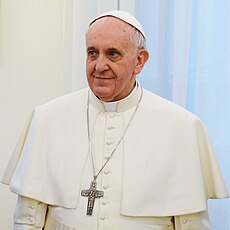 Well, I said you couldn’t tell much from one interview.
 Church and World Development