

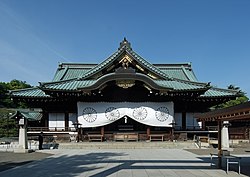

Japan’s neighbors, China and Korea, perceive official visits to the shrine as an outrageous insult and a sign that Japan has not fully repudiated the imperialism of its past. (In response to last week’s visits, China sent a fleet of patrol ships into Japanese territorial waters.) The latest controversy erupted when top officials in Prime Minister Shinzo Abe’s cabinet, as well more than 150 parliamentarians, visited the shrine for the annual Shinto Spring Ceremony–the largest official delegation in decades. In response to Chinese and Korean complaints, Abe doubled down, declaring in a parliamentary debate, “It’s only natural to honor the spirits of those who gave their lives for the country. Our ministers will not cave in to any threats.” Abe doubtless feels buoyed by opinion polls showing that he has a 70% approval rating from the Japanese public.
Official participation in ceremonies at Yasukuni have been controversial inside Japan as well. The Japanese Constitution, adopted after the war, disestablished Shintoism and effected, in the words of the Japanese Supreme Court, the “separation of state and religion.” In fact, in 1997 the Supreme Court ruled that the government officials could not make financial contributions to Yasukuni for use in Shinto ceremonies. With respect to this month’s visits, the officials involved were careful to point out that they were participating only as private citizens, not government officials, but that explanation has not satisfied critics. “”It doesn’t matter how or in what role Japanese leaders visit the Yasukuni shrine,” a Chinese spokesman said. “We feel it is in essence a denial of Japan’s history of militarist invasion.” And Japanese legal scholar Keisuke Abe (no relation to the Prime Minister, I believe) argues in a symposium in the St. John’s Law Review that most Japanese wouldn’t recognize the distinction, either. “Whatever the purpose of” a visit to the shrine, he writes, “the general public is likely to consider it as the government giving special support to Shintoism, associated with ancestor worship.”